Deep Space Telemetry: Mapping the Triangulum Spiral
New imaging data from the Astronomy Picture of the Day archive profiles Messier 33, the Triangulum Galaxy, providing a detailed look at one of the Local Group's primary spiral structures.
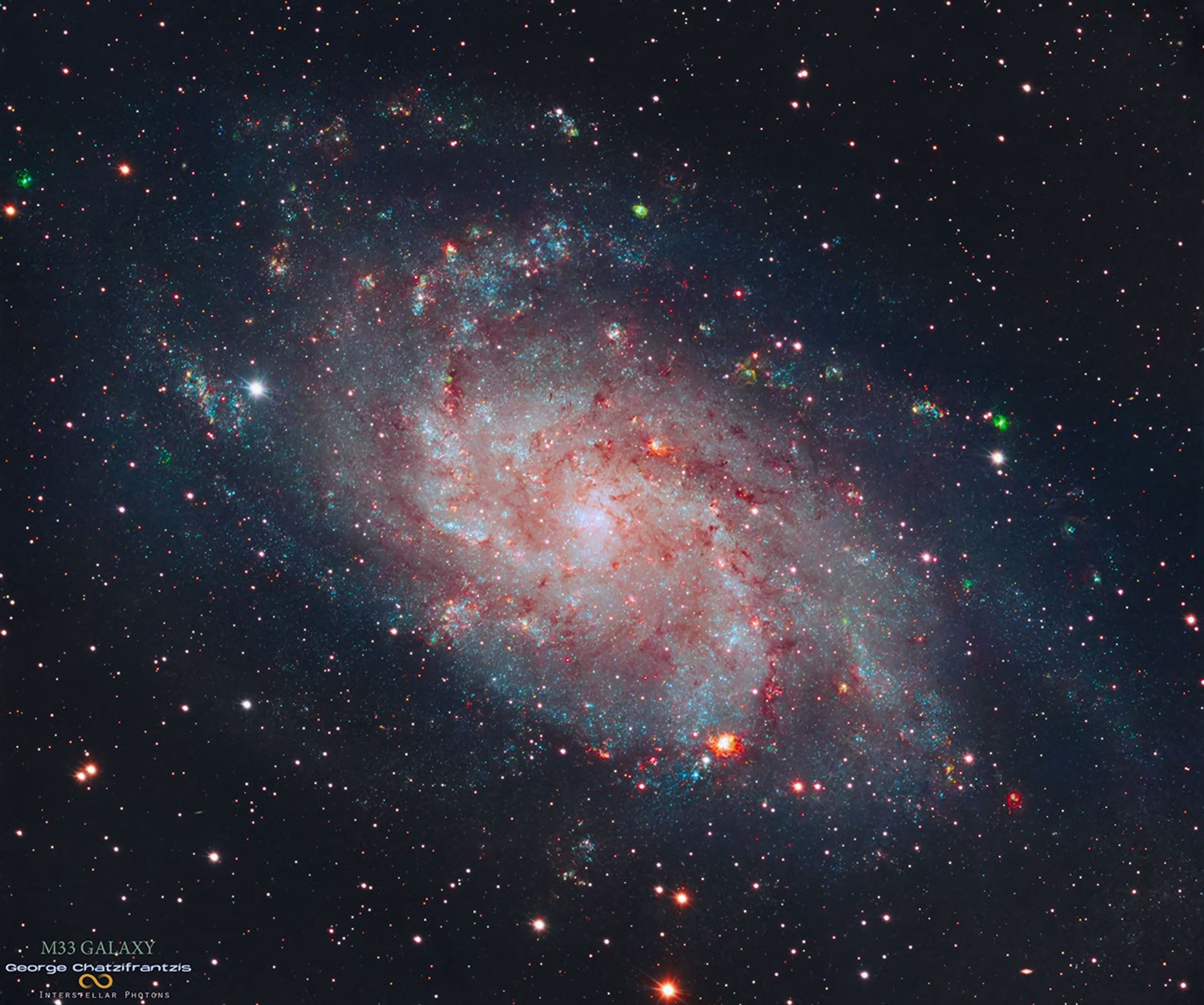
Data Profile: Messier 33
Recent telemetry published via NASA Breaking News highlights the structural complexities of Messier 33 (M33), more commonly known as the Triangulum Galaxy. Located approximately 3 million light-years from Earth, M33 stands as a critical member of our Local Group, trailing only the Andromeda Galaxy (M31) and the Milky Way in scale.
Structural Analysis
According to NASA Breaking News, the Triangulum Galaxy remains a primary target for astrophysical study due to its distinct spiral morphology. Unlike the massive Andromeda, M33 offers a clearer view of internal star-forming regions and loose spiral arms. Observation data suggests that while M33 is a satellite of the larger Andromeda galaxy, it maintains a robust independent star-formation rate.
Scientific Significance
The latest imagery released on September 18, 2026, emphasizes the distribution of gas clouds and star clusters throughout the Triangulum’s disk. These observations are vital for calibrating our understanding of galactic evolution within the Local Group. The proximity of M33 allows for high-resolution mapping of stellar populations that would be impossible in more distant deep-space targets. As the third-largest galaxy in our immediate cosmic neighborhood, Triangulum serves as a laboratory for studying the gravitational interactions that will eventually lead to the merger of the Local Group members in the distant future.