Deep Field Deployment: Roman Space Telescope Achieves Orbit
NASA’s Nancy Grace Roman Space Telescope has successfully launched, initiating a wide-field survey mission to map dark energy, dark matter, and exoplanetary systems.
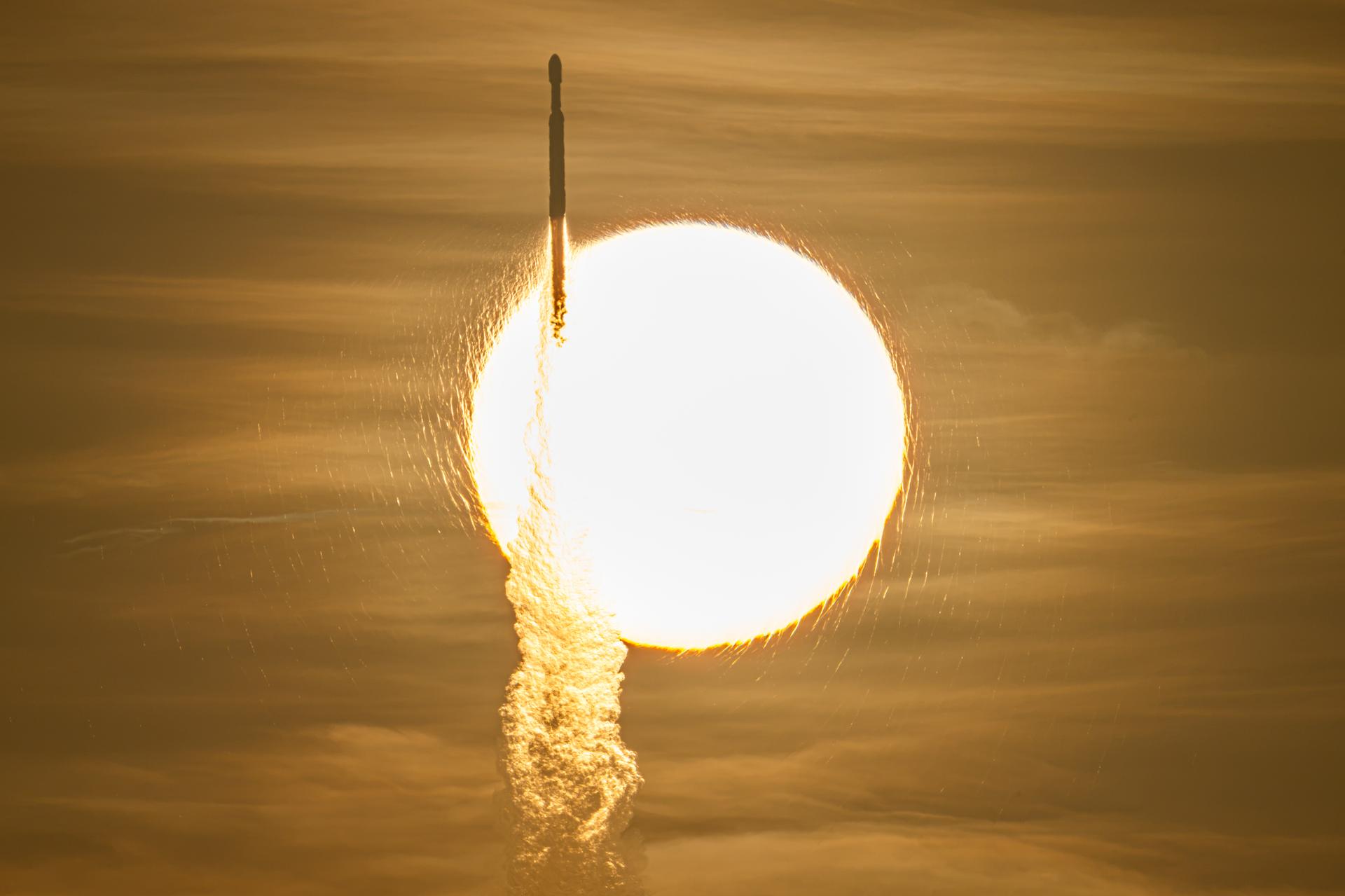
Mission Status: Nominal
According to NASA Breaking News, the Nancy Grace Roman Space Telescope has successfully departed Earth, marking the start of a critical survey mission into the 'Dark Universe.' The observatory, formerly known as the Wide Field Infrared Survey Telescope (WFIRST), is now en route to its operational station at the second Lagrange point (L2).
Wide-Field Capability
The Roman telescope is engineered for high-cadence, large-scale observation. While it shares the 2.4-meter mirror size of the veteran Hubble Space Telescope, its primary instrument provides a field of view 100 times larger. This allows the mission to capture massive swaths of the sky in a single exposure, effectively creating a high-resolution map of the cosmos to detect signals previously lost to narrow-view optics.
Core Objectives
The mission profile centers on three primary scientific pillars:
1. Dark Energy and Dark Matter: By measuring the distribution and expansion of galaxies over time, Roman aims to quantify the unseen forces accelerating the universe's expansion.
2. Exoplanet Demographics: Utilizing gravitational microlensing, the telescope will monitor millions of stars to identify rogue planets and terrestrial worlds far from their host stars.
3. Direct Imaging: The spacecraft carries a technology-demonstration coronagraph, designed to suppress starlight and allow the direct observation of distant planets.
As the observatory begins its commissioning phase, data flow is expected to provide unprecedented insights into the large-scale structure of the universe. For spacechannel.eu, this launch represents the next evolution in orbital infrared astronomy.