DATASTREAM: Perseverance Decodes Martian Dust Dynamics
New data from the Mars 2020 mission provides critical insights into the Martian atmospheric cycle, offering a survival blueprint for future crewed surface operations.
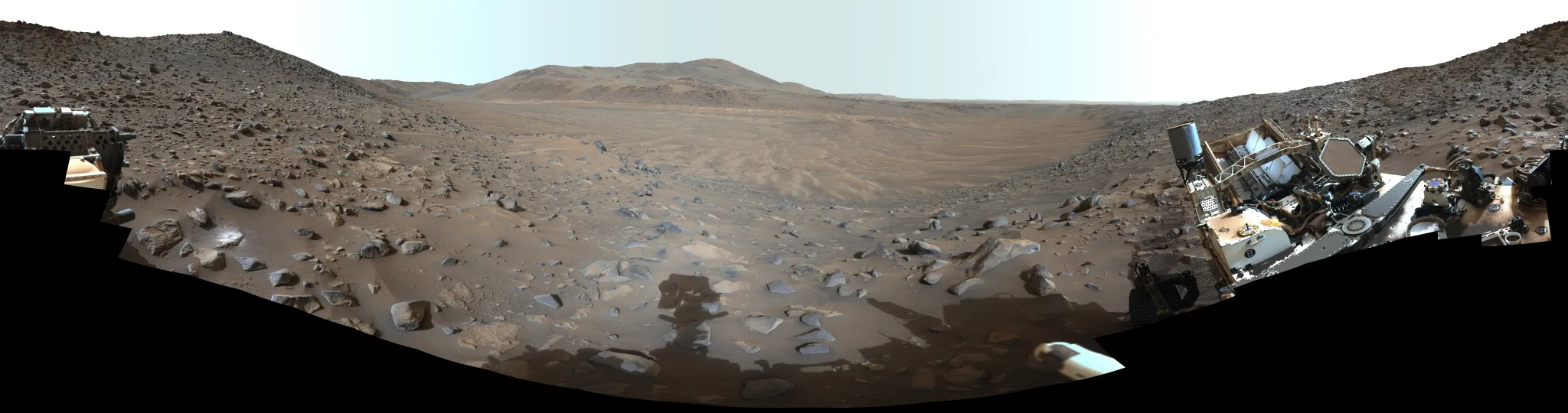
ATMOSPHERIC ANALYSIS: MARS SURFACE
Recent telemetry from the Perseverance rover is providing a foundational understanding of the Martian dust cycle, an environmental factor that remains a primary threat to long-duration human presence on the Red Planet. According to NASA Breaking News, the mission is identifying the mechanics behind how dust enters the atmosphere, its suspension duration, and how it settles on critical infrastructure.
SENSOR SUITE DYNAMICS
To map these cycles, Perseverance utilizes its Mars Environmental Dynamics Analyzer (MEDA). The sensor suite tracks wind speed, pressure, and temperature gradients that trigger localized dust devils and large-scale regional storms. By correlating these triggers with the accumulation rate on the rover’s own hardware, mission controllers can predict the performance degradation of solar arrays and mechanical seals.
HABITATION IMPLICATIONS
Dust on Mars is not merely a visibility issue; the particles are abrasive and chemically reactive. Prolonged exposure can compromise life-support filtration systems and degrade the integrity of spacesuit seals. Data suggests that monitoring the thermal and pressure fluctuations that precede high-velocity dust events will allow future crews to initiate protective protocols for hardware and habitat modules well in advance.
Integrating these findings into mission architecture will define the operational envelope for the first human arrivals. If we can predict the behavior of the Martian atmosphere, we can build more resilient systems to withstand its volatility.