DATA RECOVERY: 4.4 BILLION-YEAR-OLD MARTIAN FRAGMENT REVEALS CRUSTAL EVOLUTION
New analysis of the 'Black Beauty' meteorite, Northwest Africa 7034, provides a chronological record of the Martian crust from 4.4 billion years ago, offering a rare window into the Red Planet's early geological stability.
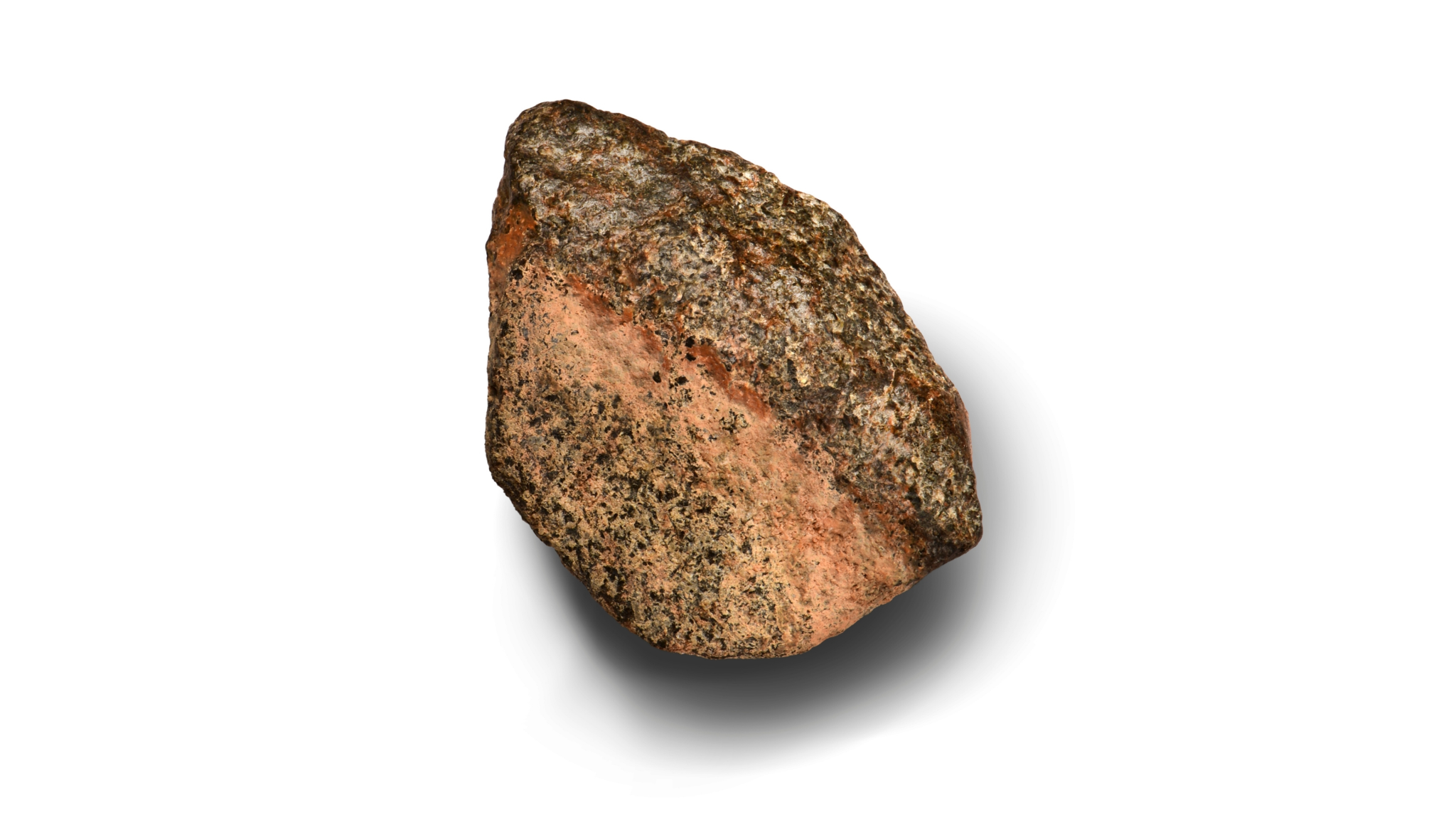
CHRONOLOGICAL ANOMALY: NWA 7034
Recent analysis funded by NASA has decoded the geological history of Northwest Africa (NWA) 7034—famously known as "Black Beauty." According to NASA Breaking News, this specimen represents one of the oldest Martian meteorites ever identified, providing a physical link to the Red Planet's infancy.
While most Martian meteorites are relatively young igneous rocks, NWA 7034 is a breccia: a composite of diverse rock fragments cemented together. This structural complexity allows scientists to sample multiple eras of Martian history within a single 320-gram mass. The study confirms that the oldest components within the stone solidified approximately 4.4 billion years ago.
CRUSTAL STABILITY AND EVOLUTION
Data retrieved from the meteorite suggests the Martian crust was already established and stable shortly after the planet's formation. Isotopic analysis of the mineral zircon within the sample reveals that the early Martian crust underwent significant recycling and volcanic activity. This contradicts previous models that suggested a more stagnant early geological phase.
Researchers utilized advanced mass spectrometry to isolate the chemical signatures of the fragments. By comparing these results to data from the Mars Reconnaissance Orbiter, the team linked the meteorite's origin to the heavily cratered Southern Highlands of Mars.
TERMINAL SUMMARY
The findings offer a high-fidelity record of the planet's transition from a molten state to a differentiated world with a distinct crust. As orbital sensors and ground-based laboratories refine their calibration, NWA 7034 remains a critical calibration point for understanding the thermal evolution of terrestrial planets in our solar system.