DATA RECONNAISSANCE: OVERLAP ZOO TARGETS COSMIC DUST
A new citizen science initiative, Overlap Zoo, is recruiting global volunteers to identify overlapping galaxies in Hubble data to map the elusive distribution of cosmic dust.
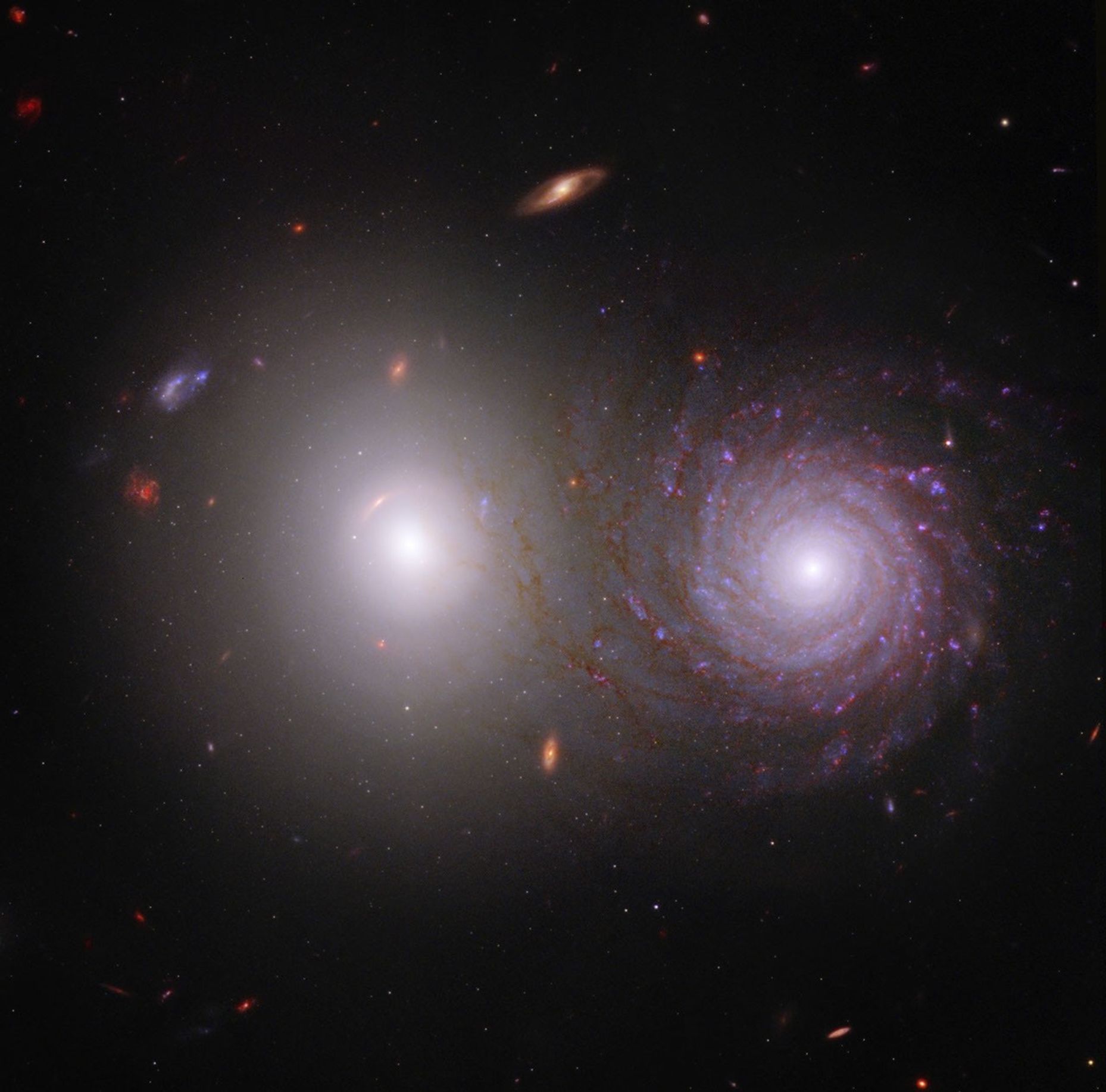
# DEEP SPACE DIAGNOSTICS: MAPPING THE DUST ARCHITECTURE
STATUS: ACTIVE
SOURCE: NASA BREAKING NEWS
Astrophysicists are initiating a new phase of data analysis to solve a persistent obstacle in deep-space observation: the obscuring effects of cosmic dust. According to NASA Breaking News, the Overlap Zoo project is now operational, inviting the public to contribute to high-priority citizen science.
The initiative focuses on a specific celestial phenomenon where a foreground galaxy partially overlaps a more distant background galaxy. These "overlapping pairs" act as natural backlights. By observing how the background light is filtered and reddened as it passes through the foreground system, researchers can calculate the exact distribution and density of interstellar dust—information that is otherwise difficult to extract from isolated systems.
PROJECT OBJECTIVES
- IDENTIFICATION: Volunteers must scan vast datasets from the Hubble Space Telescope to locate candidate overlapping pairs.
- ANALYSIS: Participants categorize the visual characteristics of the overlap to determine suitability for dust-mapping models.
- MAPPING: The resulting data will help refine our understanding of how cosmic dust impacts light transit across the vacuum.
TECHNICAL REQUIREMENTS
No specialized astrophysical background is required for participation. The Overlap Zoo interface provides the necessary visual training to distinguish between true overlaps and simple clusters. By crowdsourcing this visual verification, the project bypasses the current limitations of automated image-recognition software in complex gravitational fields.
Successful mapping of this dust will enable more precise distance measurements and clearer reconstructions of galactic evolution. For those monitoring the orbital data feeds, this is a critical call to action to assist in clearing the view of the observable universe.