DATA LOG: WEBB DECODES SUPERNOVA DUST ARCHIVES
The James Webb Space Telescope has successfully mapped dust reservoirs within supernova remnants, providing new data on how stellar explosions seed the cosmos with the building blocks of planets and life.
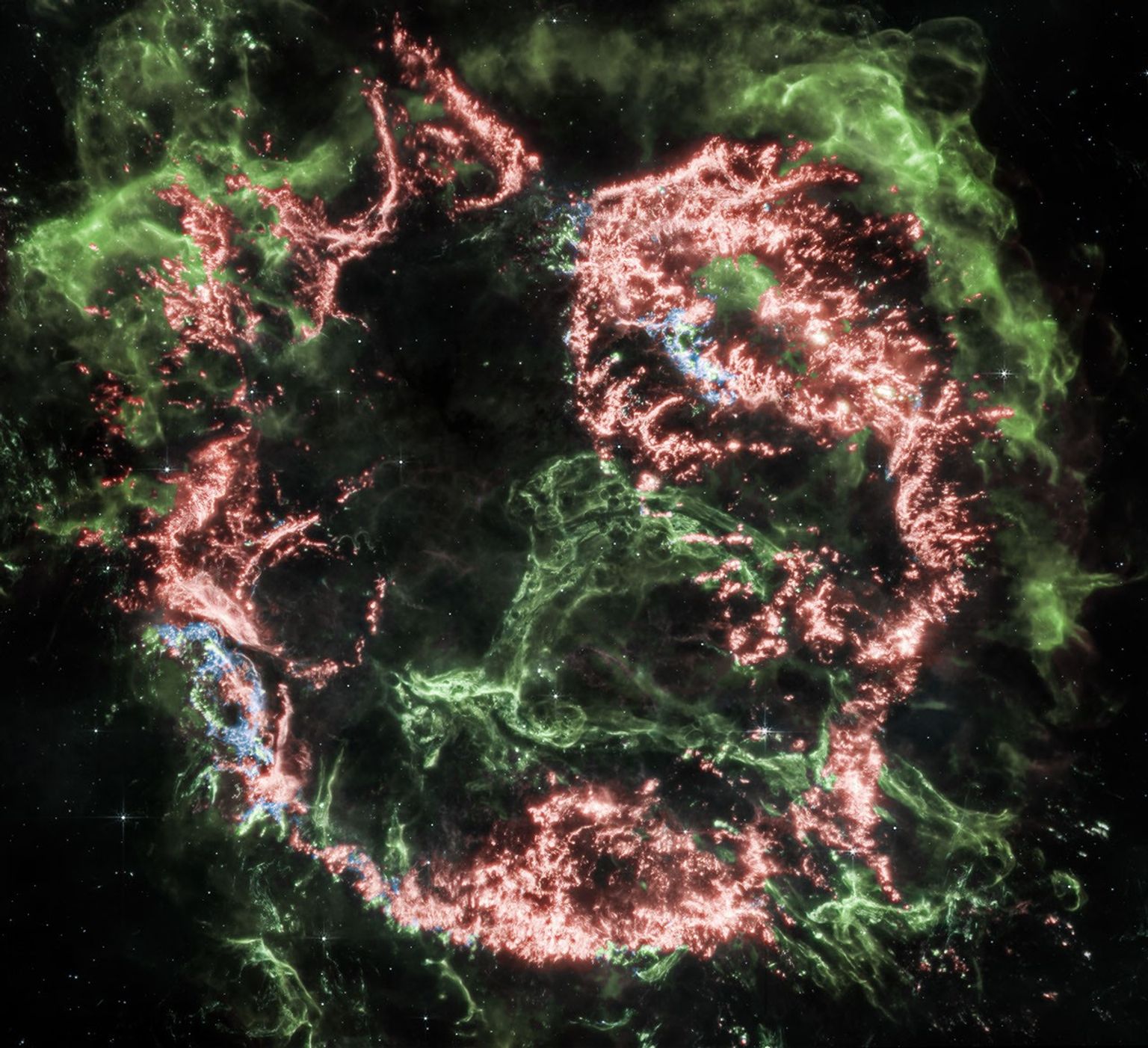
CORE TELEMETRY: STELLAR RECYCLING
Data retrieved via the James Webb Space Telescope (JWST) has confirmed a critical link between stellar expiration and the formation of celestial bodies. According to NASA Breaking News, new observations of supernova remnants—the terminal debris fields of massive stars—demonstrate how these explosions serve as primary manufacturing hubs for cosmic dust.
ANALYZING THE DUST RESERVOIRS
Cosmic dust is the fundamental substrate for planets and organic chemistry. However, astronomers have long faced a "missing dust" problem: the observed volume of dust in the early universe exceeds the predicted output of known sources. Webb’s Mid-Infrared Instrument (MIRI) has successfully penetrated the obscuring gas clouds of supernova remnants, revealing massive, previously undetected reservoirs of cold dust.
SYSTEM IMPACT: CASSIOPEIA A AND BEYOND
By focusing on specific targets such as Cassiopeia A (Cas A), Webb’s high-resolution sensors have mapped the distribution of silicate and carbonaceous grains. The data indicates that supernovae do not merely destroy local matter; they synthesize and protect new material in the cooling wake of the shockwave. These findings suggest that the early universe’s rapid maturation was driven by high-frequency supernova events, which saturated young galaxies with heavy elements.
ARCHIVAL SIGNIFICANCE
This research effectively chronicles the lifecycle of matter from the interior of a dying star to the eventual accretion disks of new solar systems. The infrared sensitivity of the JWST allows for a census of dust that was invisible to previous generations of orbital observatories, closing the gap in our understanding of galactic evolution and the chemical heritage of our own solar system.