DATA LOG: Orion Sector Nebula Analysis
New imaging data from NASA highlights the structural complexity of the Horsehead and Flame Nebulas, showcasing the intersection of high-energy radiation and interstellar dust.
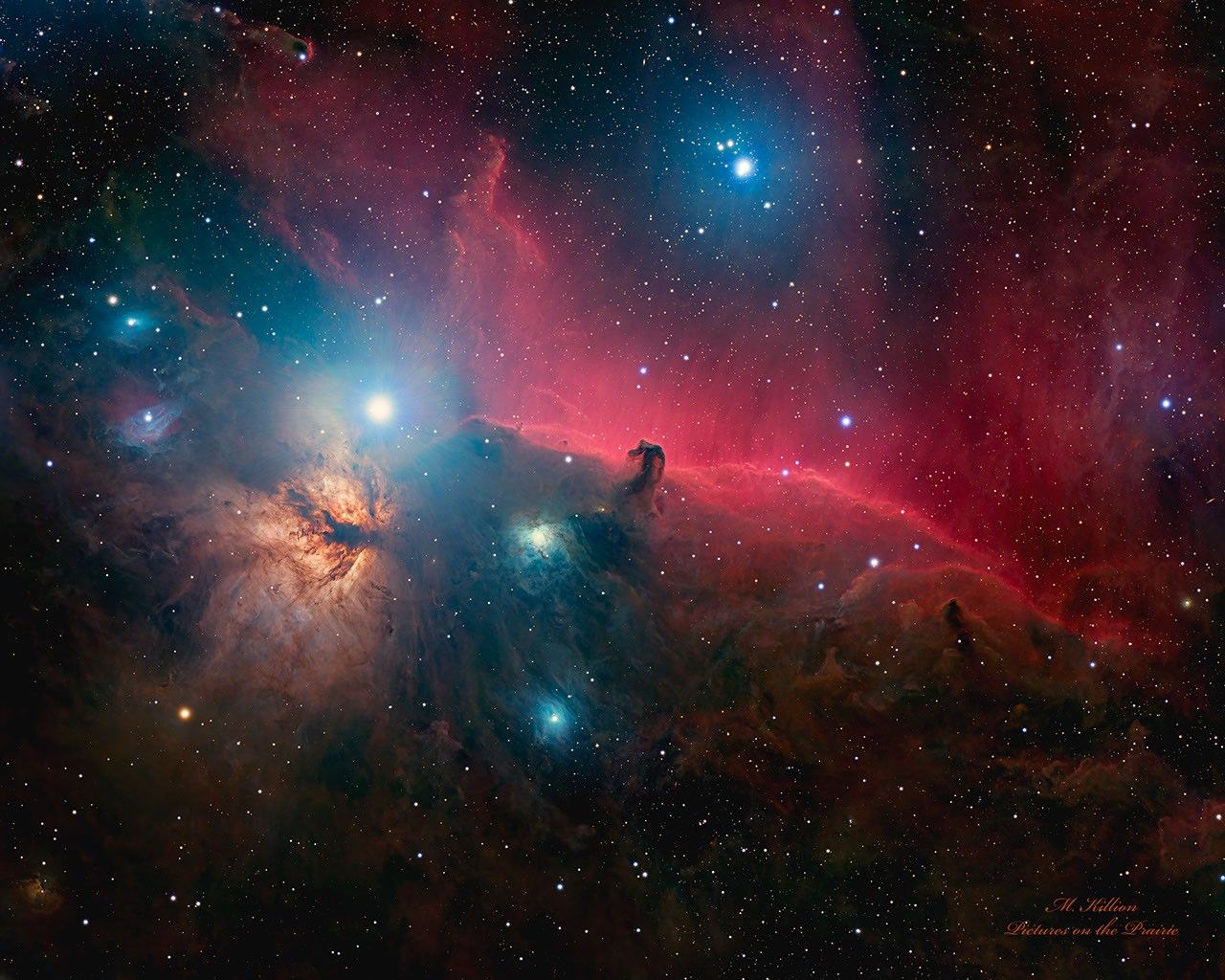
Terminal Entry: Deep Space Imaging
Latest telemetry from the NASA Astronomy Picture of the Day (APOD) archive, dated 19 November 2026, presents high-fidelity visual data of the Orion Molecular Cloud Complex. According to NASA Breaking News, the imaging focuses on two primary stellar nurseries: the Horsehead Nebula (Barnard 33) and the Flame Nebula (NGC 2024).
Structural Analysis
The Horsehead Nebula, situated approximately 1,500 light-years from Earth, remains one of the most identifiable dark nebulae in the local sector. Its silhouette is formed by a dense concentration of interstellar dust, obscuring the background glow of ionized hydrogen. Data confirms its distinctive shape is a result of erosion caused by the intense ultraviolet radiation from the nearby star Sigma Orionis.
Contrasting this, the Flame Nebula appears as a vibrant emission sector. Its luminosity is driven by Alnitak, the easternmost star in Orion’s Belt. The high-energy photons from Alnitak ionize the surrounding hydrogen gas, which then emits light as electrons recombine with nuclei. The dark, vein-like structures bifurcating the nebula are caused by intervening filaments of cold gas and dust.
Mission Context
This release coincides with broader NASA initiatives, including the upcoming Roman Space Telescope deployment and ongoing Voyager 1 long-range communication protocols. The observation of these stellar nurseries provides critical baseline data for understanding the lifecycle of stars and the chemical evolution of the interstellar medium.
Source: NASA Breaking News