DATA LOG: ARP 78 INTERACTION ANALYSIS
New imaging data from NASA Breaking News details the peculiar galaxy Arp 78 in the Aries constellation, revealing a complex gravitational interaction and stellar disruption.
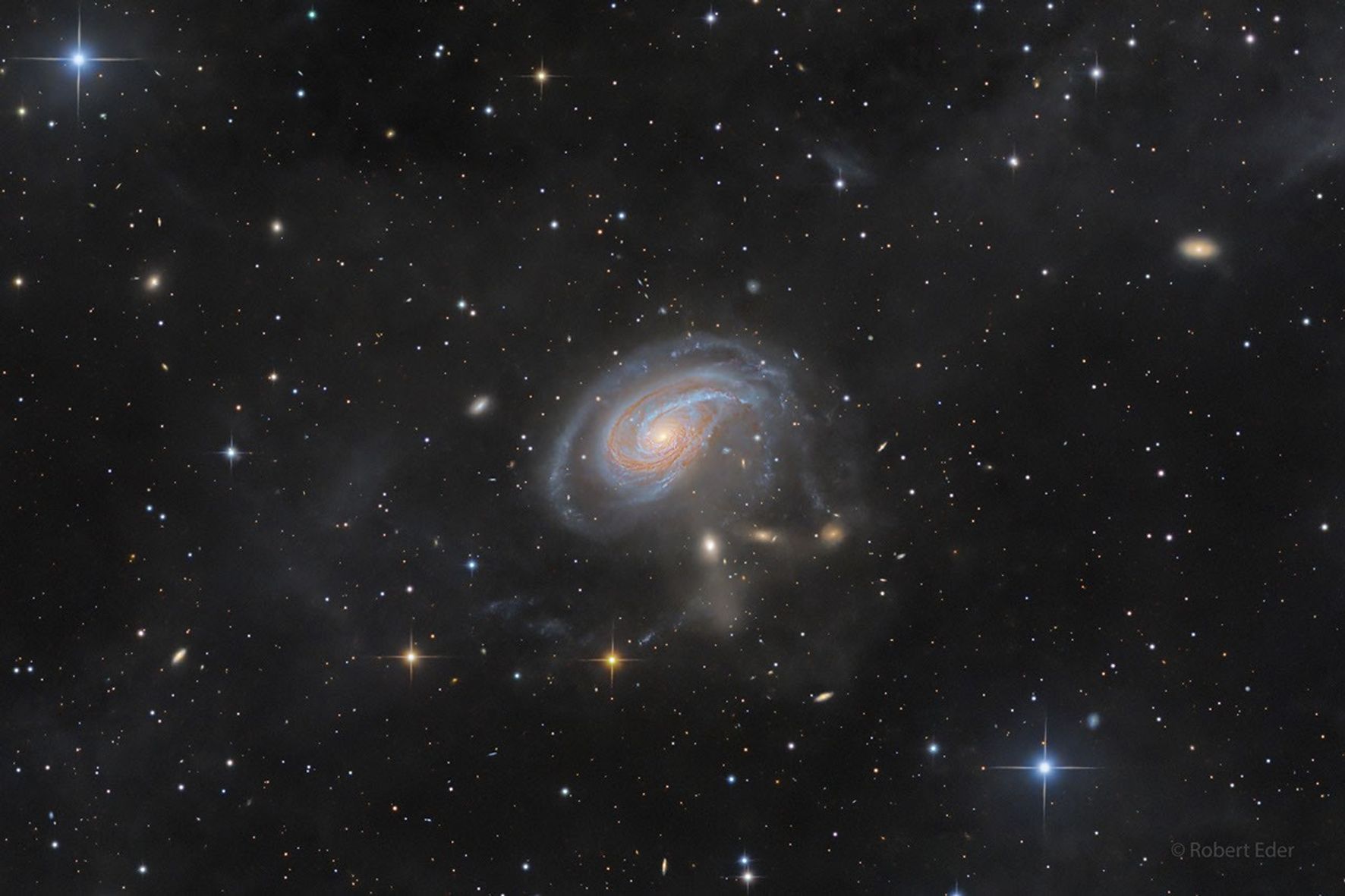
ANALYSIS SUMMARY
Latest telemetry and imaging assets have confirmed the distinctive morphological characteristics of Arp 78, a peculiar galaxy situated within the boundaries of the Aries constellation. According to NASA Breaking News, this cosmic structure—also designated as NGC 772—serves as a primary example of gravitational disruption caused by external satellite bodies.
MORPHOLOGICAL DATA
Arp 78 is characterized by a prominent, elongated spiral arm that extends significantly further than standard galactic radial parameters. Analysis indicates this structural anomaly is the direct result of tidal interactions with its smaller companion galaxy, NGC 770. The gravitational drag exerted by the satellite has effectively unraveled the outer layers of NGC 772, stretching its gas and dust into a singular, warped appendage.
Located approximately 100 million light-years from Earth, the system displays intense star-forming regions triggered by these tidal forces. While NGC 772 is a massive spiral galaxy, its companion NGC 770 remains a compact, elliptical neighbor. The contrast between the two underscores the violent nature of galactic evolution and the inevitable consequences of proximity in high-density sectors.
INSTRUMENTATION STATUS
Deep-space imaging captured the intricate dust lanes and star clusters that define the elongated arm. These features provide essential data for understanding how galactic mass is redistributed during close encounters. The observations continue to support existing models of peculiar galaxy classification, highlighting the transient yet destructive beauty of gravitational resonance.
Source: NASA Breaking News