DATA FEED: ESA SENTINEL-2 CONFIRMS 2026 CLIMATE ANOMALIES
Satellite telemetry from August 2026 confirms severe hydrological stress and thermal anomalies across Northern Europe, specifically targeting river systems in Southern Norway.
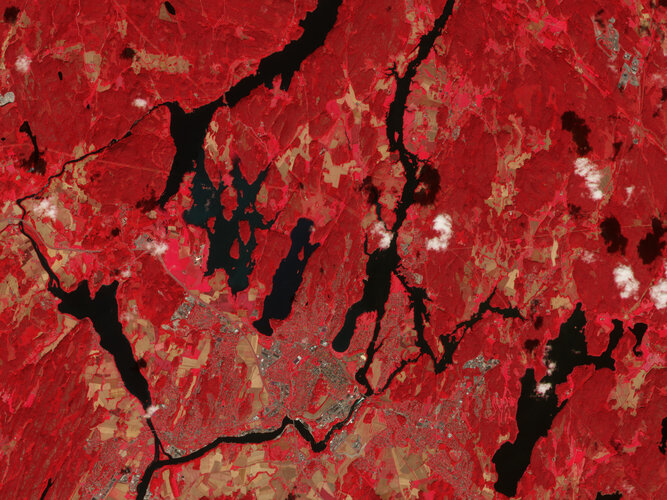
# ANOMALY DETECTED: 2026 THERMAL AND HYDROLOGICAL STRESS
STATUS: ACTIVE MONITORING
According to data recently downlinked from the European Space Agency (ESA), the year 2026 has been marked by a series of high-intensity climate anomalies. Earth observation assets have confirmed a convergence of wildfires, prolonged drought, and extreme heat across the continent, with particular focus on the Scandinavian sector.
TELEMETRY ANALYSIS: SOUTHERN NORWAY
Orbital imagery captured by the Sentinel-2 satellite—part of the Copernicus program—reveals a significant decline in water levels within Southern Norway. Analysts processed these false-colour images using the satellite's near-infrared channel to differentiate between moisture-rich vegetation and exposed riverbeds. The results indicate that multiple river systems are currently experiencing critical hydrological deficits, reflecting broader regional patterns of extreme heat and a lack of precipitation.
SYSTEM CAPABILITIES
ESA’s FutureEO program continues to utilize these spaceborne sensors to monitor environmental resilience. The objective remains the provision of actionable data for European citizens and global policy makers. These mission profiles are essential for tracking the escalation of wildfire risk as arid conditions continue to facilitate ignition and spread across traditionally temperate zones.
ORGANIZATIONAL OVERSIGHT
As Europe’s gateway to space, ESA coordinates these observations across its 23 Member States. Current operations, overseen by the newly appointed Director of Resilience, Navigation, and Connectivity, Laurent Jaffart, emphasize the integration of space assets into disaster mitigation strategies. The Agency maintains that continuous investment in space-based infrastructure is the only viable method for quantifying the velocity of terrestrial climate shifts.