DATA BLACKOUT: U.S. WEATHER READOUTS FACE MISSION FAILURE
As legacy satellites reach end-of-life, American meteorological capabilities face a severe capability gap that threatens both military operations and domestic safety.
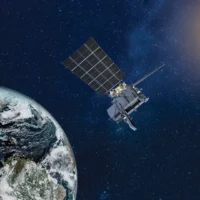
SYSTEM STATUS: DEGRADING
A critical failure point is approaching for United States meteorological infrastructure. According to Payload, the Department of Defense’s Defense Meteorological Satellite Program (DMSP) is scheduled to reach its formal end-of-life next month. When these legacy sensors terminate operations, forecasters expect to lose up to 50% of the high-fidelity scans necessary for atmospheric modeling.
STRATEGIC BLIND SPOTS
This erosion of orbital capability creates immediate tactical risks. Weather data is not merely a civilian convenience; it is a force multiplier that dictates flight windows, equipment loadouts, and mission timing for the Pentagon. Beyond the military, NOAA’s polar-orbiting instruments are aging out faster than replacements can be deployed, just as global weather patterns turn increasingly volatile.
GLOBAL PARITY SHIFTS
While U.S. capacity wanes, international competitors are expanding their footprint. China’s Fengyun constellation is now the world’s largest government-operated weather network. Simultaneously, the European Centre for Medium-Range Weather Forecasts continues to set the global benchmark for predictive accuracy. The U.S. government’s traditional procurement cycle—taking decades and billions to field a single satellite—is currently ill-equipped to bridge this widening gap.
PROPOSED RECOVERY: HYBRID ARCHITECTURE
The proposed solution is a pivot to a hybrid architecture: integrating commercial "data-as-a-service" with remaining government assets. Private industry already has microwave sounding constellations in orbit, ready for immediate integration. Despite symbolic support from NOAA and the Space Force, funding for commercial procurement remains a "rounding error" compared to legacy budgets. Analysts warn that unless Congress appropriates significant capital to these commercial partnerships in the current budget cycle, the U.S. will enter the next major storm season or military conflict with its eyes closed.