CURIOSITY TRAVERSES GEDIZ VALLIS RIDGE TOWARD MAJOR STRATIGRAPHIC DISCONTINUITY
NASA’s Curiosity rover continues its ascent of Mount Sharp, targeting the Gediz Vallis Ridge to investigate a geological contact point between distinct ancient Martian eras.
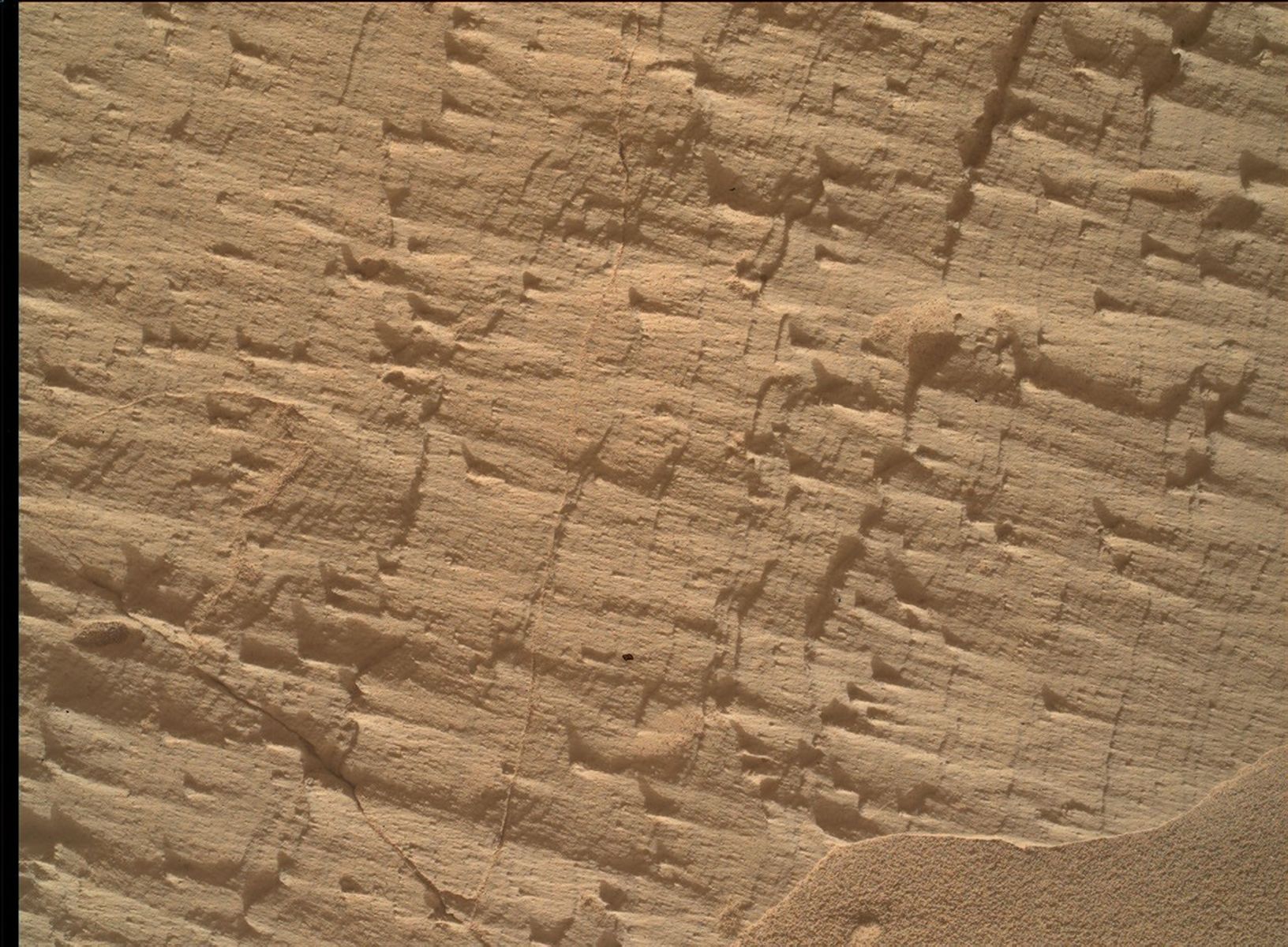
MISSION UPDATE: SOLS 4968-4974
NASA’s Curiosity rover has entered a critical phase of its ascent up Mount Sharp, navigating the rugged terrain of the Gediz Vallis Ridge. According to NASA Breaking News, the primary objective for this operational window is reaching "the discontinuity"—a major geological boundary marking a shift in the planet's environmental history.
The rover is currently inspecting high-angle slopes characterized by diverse sedimentary structures. Science teams are utilizing the Mars Hand Lens Imager (MAHLI) and the Chemistry and Camera (ChemCam) instrument to analyze the chemical composition of rocks at the current elevation. These samples are vital for determining the transition from clay-rich minerals to sulfate-bearing units, which indicate a drying period in Mars' ancient past.
Terrain navigation remains challenging. The mission controllers are prioritizing stable positioning to facilitate drilling operations and high-resolution imaging of the upper canyon walls. The Gediz Vallis Ridge is hypothesized to be one of the youngest features on Mount Sharp, likely formed by debris flows or water-carried deposits long after the primary mountain layers were deposited.
As the rover approaches the contact point, data acquisition will focus on the contact between the Stimson formation and the underlying basement rock. The upcoming sols involve complex pathfinding to ensure the rover maintains sufficient traction on the loose, rocky slopes of the ridge while positioning for long-distance ChemCam Remote Micro-Imager (RMI) mosaics of the peak above.