CURIOSITY TRACKING GEOLOGICAL DISCONTINUITY AT MT. SHARP
NASA's Curiosity rover approaches a potential stratigraphic break in the Martian rock record, providing a rare opportunity to study the transition between ancient environmental eras.
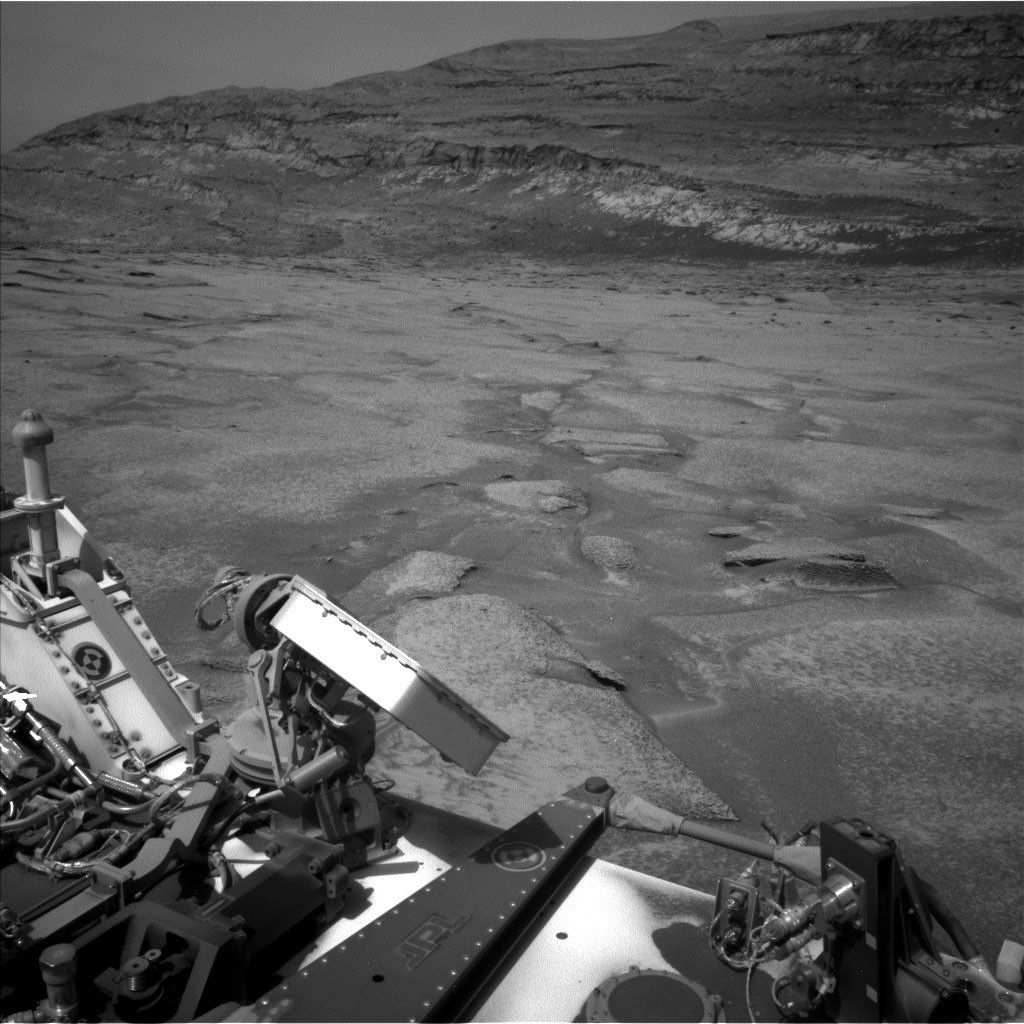
# DATA LOG: SOLS 4961-4967
According to NASA Breaking News, the Curiosity rover is currently navigating a critical geological boundary within the Gale Crater. As the robotic explorer continues its ascent of Mount Sharp, mission controllers have identified what appears to be a significant "break" in the rock record—a stratigraphic unconformity that could represent a lost epoch of Martian history.
STRATIGRAPHIC ANOMALY
Curiosity is presently positioned at a junction between distinct geological units. The primary objective for Sols 4961 through 4967 is to characterize the transition from the sulfate-bearing unit to overlying strata. This gap in the sedimentary timeline indicates a period where rock was either never deposited or was eroded away before the next layer formed. Identifying the nature of this contact is vital for reconstructing the paleoclimate of Mars.
SENSOR SUITE ACTIVATION
To analyze this transition, the rover is utilizing its full tactical instrument array:
MAHLI & APXS: Focused on close-up imaging and elemental analysis of bedrock targets to detect geochemical shifts.
ChemCam (LIBS): Executing laser-induced breakdown spectroscopy to determine the composition of the vertical rock face.
* Mastcam: Capturing high-resolution multispectral mosaics to map the physical geometry of the break.
OPERATIONAL STATUS
Following the completion of the imaging survey, the rover will perform a short drive to reach a stable position for future drilling operations. Atmospheric monitoring remains a secondary background task, ensuring the integrity of long-term environmental datasets as the vehicle enters this new geological domain.