CURIOSITY SECURES NEW SUBSURFACE MARTIAN SAMPLES
NASA’s Curiosity rover has successfully drilled and collected new geological samples from the Martian surface, advancing our understanding of the planet's ancient habitability.
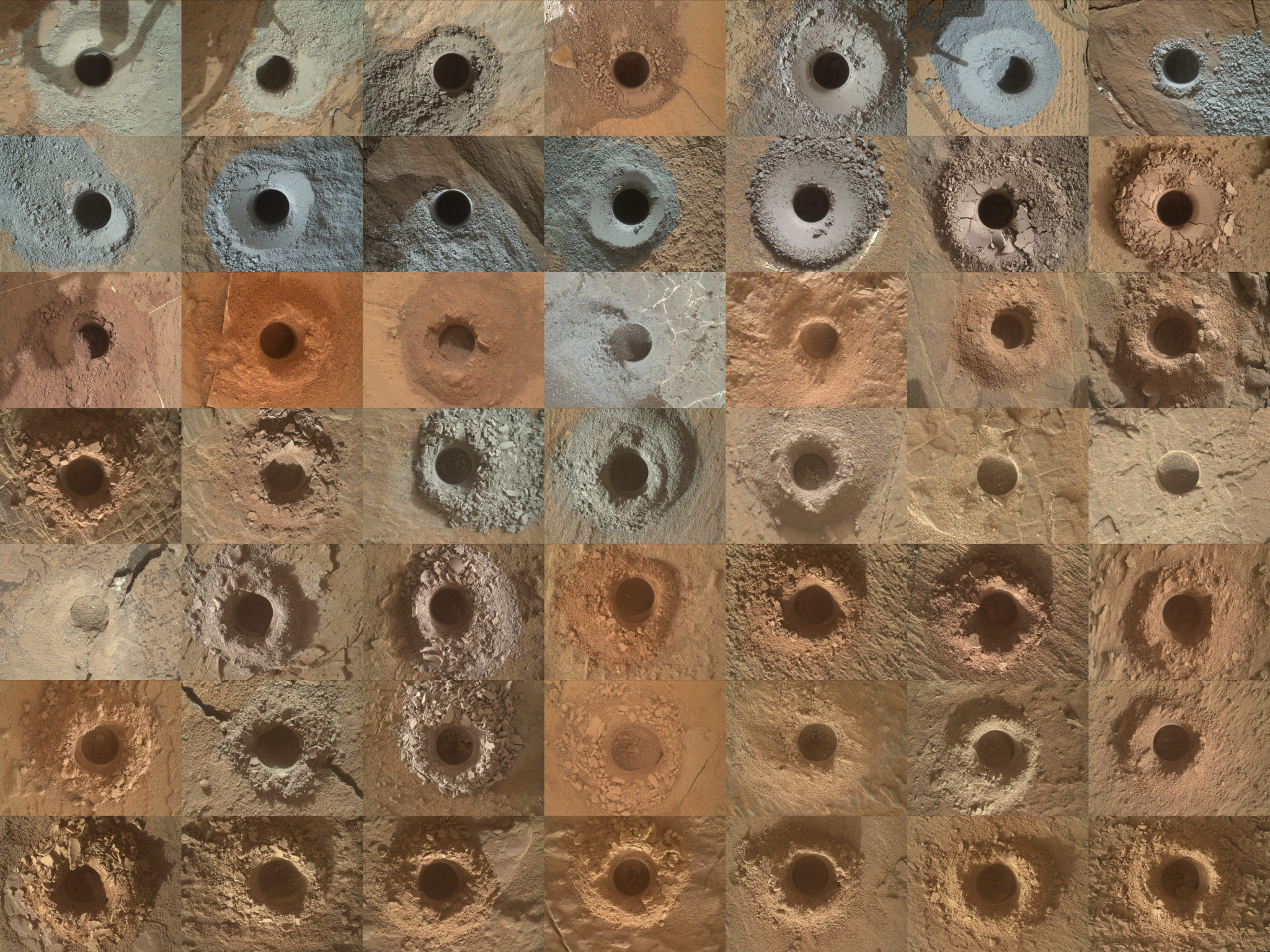
DATA LOG: RED PLANET OPERATIONS
NASA’s Curiosity rover has successfully completed its latest sampling cycle on the Martian surface. According to NASA Breaking News, the robotic explorer has deployed its percussion drill to extract material from a high-priority geological target, securing fresh subsurface samples for onboard analysis.
ANALYSIS PROTOCOLS
Curiosity, which has been traversing Gale Crater since 2012, continues to investigate the transition of the local environment from potentially habitable aqueous conditions to the arid wasteland observed today. The newly collected pulverized rock will be delivered to the rover's internal laboratories: the Chemistry and Mineralogy (CheMin) instrument and the Sample Analysis at Mars (SAM) suite. These systems specialize in detecting chemical signatures and mineral compositions that may indicate ancient organic compounds.
MISSION STATUS
Despite the extreme thermal swings and abrasive dust environments of the Martian landscape, the rover’s sampling hardware remains operational. This latest successful extraction reinforces the longevity of the Curiosity platform as it climbs Mount Sharp, a central peak composed of sedimentary layers that act as a chronological record of the planet's history. The telemetry confirmed that the sample handling arm and internal sieving mechanisms performed within nominal parameters during the transfer of the Martian regolith.
This mission phase provides critical contextual data for the ongoing search for life and informs future human-crewed expeditions by identifying the chemical distribution of the Martian crust.