CURIOSITY LOGS RARE MARTIAN TWILIGHT CLOUDS
NASA's Curiosity rover captures drifting noctilucent clouds over Gale Crater, providing new data on the Martian atmospheric composition and high-altitude weather patterns.
DATA LOG: ATMOSPHERIC ANALYSIS
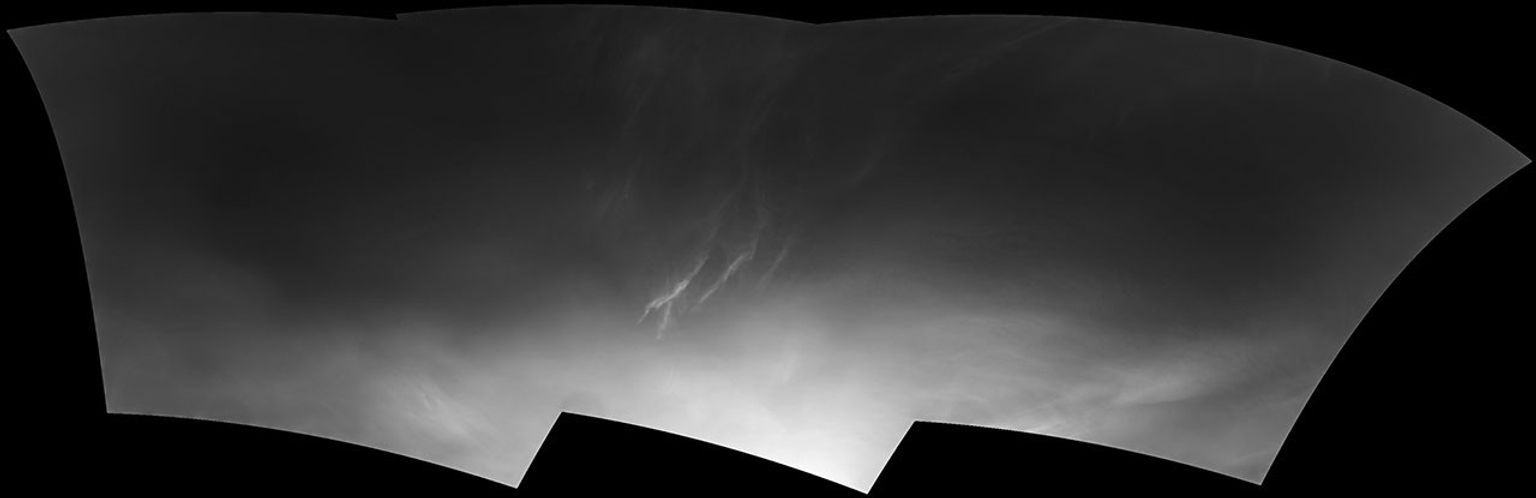
According to NASA Breaking News, the Curiosity rover has successfully imaged a series of drifting clouds during the Martian twilight. These high-altitude structures were captured using the rover’s Navigation Cameras (Navcams) as part of an ongoing study into the planet’s volatile atmospheric cycles.
TECHNICAL OVERVIEW
Martian clouds are typically composed of water ice and hover at altitudes of approximately 60 kilometers. However, the specific luminosity and altitude of the formations observed in this sequence suggest they may be located even higher in the atmosphere. Scientists hypothesize that these ultra-high-altitude clouds could be composed of frozen carbon dioxide (dry ice), which requires extreme cooling to condense into visible vapor.
OBSERVATIONAL METHODOLOGY
The imaging sequence was timed for the "twilight" window—shortly after the sun dips below the horizon but still illuminates high-altitude particles. This phenomenon, similar to Earth’s noctilucent clouds, allows Curiosity to detect faint atmospheric structures that are otherwise invisible against the glare of the daytime sky. By analyzing the speed and direction of the drift, mission controllers can refine models of Martian wind speeds at the edge of space.
MISSION IMPACT
Understanding the frequency and composition of these clouds is critical for future orbital entry, descent, and landing (EDL) operations. Variations in atmospheric density caused by such formations can influence thermal shielding requirements for upcoming robotic and crewed hardware. Curiosity continues its ascent of Mount Sharp, monitoring Gale Crater's environment for shifts in seasonal weather patterns.