Curiosity Investigates Ancient Fluviatile Relics on Mars
NASA's Curiosity rover executes a high-precision multi-day science plan at Gale Crater, targeting 'pinstriped' sedimentary layers across Sols 4941-4947.
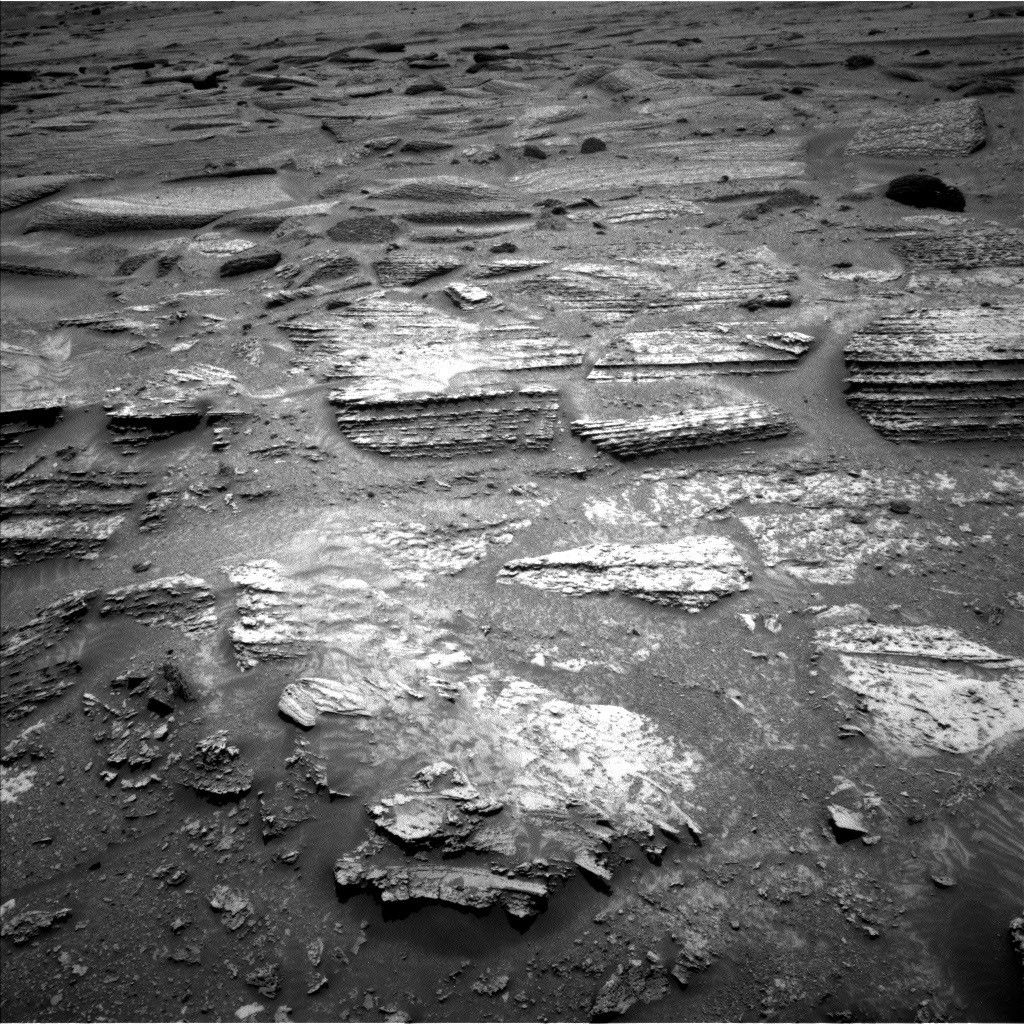
Mission Status: Gale Crater
Operational logs from Sols 4941 through 4947 indicate that the Curiosity rover has successfully transitioned into a specialized science phase targeting the Gediz Vallis channel. According to NASA Breaking News, the rover utilized the early July window to perform high-resolution imaging and contact science on a series of distinct sedimentary outcrops characterized by intense, linear laminations—unofficially dubbed 'pinstripes.'
Scientific Objectives
These geological features are of significant interest to the Mars Science Laboratory (MSL) team. The 'pinstripe' textures represent potential evidence of ancient high-energy water flows or wind-driven depositional cycles. By analyzing the chemistry of these layers, researchers aim to reconstruct the environmental stressors that defined the late-stage transition of the Martian climate. During the 4941-4947 sequence, the rover deployed its Alpha Particle X-ray Spectrometer (APXS) and Mars Hand Lens Imager (MAHLI) to conduct close-range inspections of the bedrock.
Remote Sensing Operations
In addition to contact science, the Mastcam and Chemistry and Camera (ChemCam) units were utilized to capture long-distance mosaics of the surrounding terrain. These data sets provide the necessary context for the rover’s upcoming ascent further into the sulfate-bearing unit of Mount Sharp. The mission remains on schedule, with power levels and instrumentation functioning within nominal parameters for the duration of the multi-day pinstripe campaign.