Curiosity Discovers Elemental Sulfur Field on Mars
A localized anomaly in Gale Crater has revealed high-purity elemental sulfur crystals, a first for the Curiosity rover mission.
DATA LOG: GALE CRATER
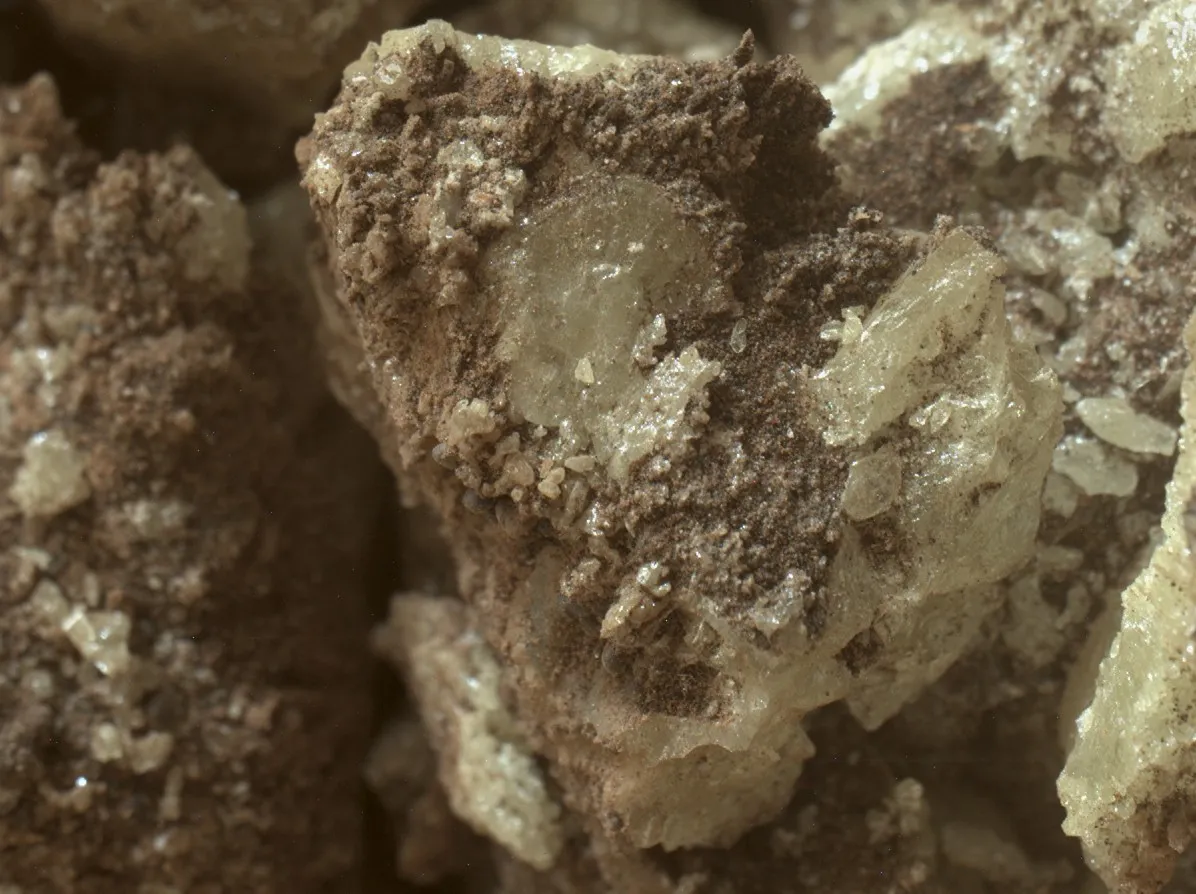
According to NASA Breaking News, the Curiosity rover has encountered a field of high-purity elemental sulfur—a discovery that has upended previous geological models of the Gediz Vallis channel. While sulfur-based compounds like sulfates are common on Mars, the presence of pure, elemental sulfur is an unprecedented find for the mission.
//The Discovery
The encounter was circumstantial. On May 30, the 1-ton rover crushed a rock during maneuvering, exposing yellow crystals. Spectroscopic analysis confirmed the material is pure sulfur. Typically, sulfur on Mars exists as a chemical component of minerals formed during water evaporation. Pure sulfur, however, requires specific, high-intensity conditions—such as hydrothermal activity or extreme volcanic events—to form independently.
//Site Analysis
The Gediz Vallis channel is a region of significant interest for planetary geologists, as it appears to have been carved by ancient water and debris flows. The discovery of a field of similar rocks suggests that the crushed sample was not an isolated fragment but part of a larger, localized deposit. Curiosity is now positioned to investigate why such a concentrated stash of sulfur exists in a region previously thought to be dominated by mixed-mineral debris.
//Technical Implications
Mission scientists are currently recalibrating their understanding of the local geochemistry. The presence of elemental sulfur suggests a specific set of environmental conditions that were previously unmapped in this sector of Gale Crater. Further drilling and chemical analysis are requisite to determine the exact origin of the deposit and the chronological sequence of the local water activity.