Cosmic Hall of Mirrors: NASA Prepares for Wide-Field Galactic Surveys
NASA’s upcoming Roman Space Telescope is set to revolutionize deep-space observation by utilizing gravitational lensing to map dark matter and distant cosmic structures.
Surveillance Protocol: Deep Space Mapping
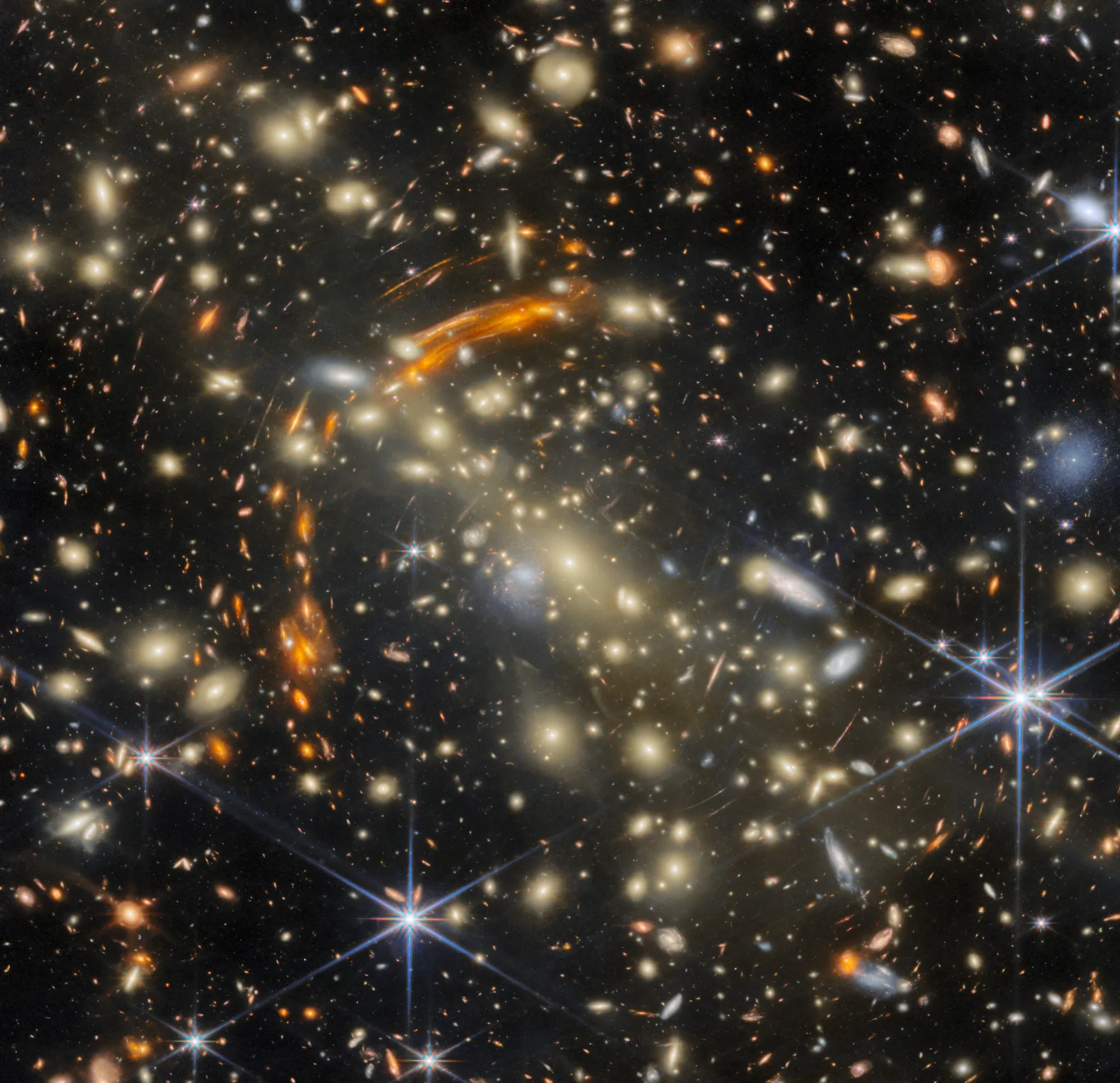
Data streams from NASA Breaking News indicate a significant shift in deep-field observation strategies. The agency is currently finalizing preparations for the Nancy Grace Roman Space Telescope, a mission designed to function as a high-resolution wide-field surveyor. Unlike the narrow-focus optics of the James Webb Space Telescope, Roman will capture panoramic views of the cosmos, effectively utilizing a phenomenon known as the 'Cosmic House of Mirrors.'
Gravitational Lensing Analysis
This gravitational lensing occurs when massive foreground objects—such as galaxy clusters—distort the space-time fabric behind them. This distortion acts as a natural magnifying glass, bending light from more distant, ancient galaxies. According to NASA, this effect allows astronomers to peer deeper into the early universe than would be possible with conventional sensors.
By analyzing these warped images, the mission aims to map the distribution of invisible dark matter. Because dark matter exerts gravitational pull but does not emit light, its presence is detected only through the way it bends the light of objects behind it.
Technical Objectives
The Roman mission is also critical for the development of the 'Moon Base' infrastructure, as long-range cosmic surveillance remains a primary requirement for orbital stability and navigational safety. The telescope’s ability to observe millions of galaxies simultaneously will provide the statistical scale necessary to understand the expansion of the universe and the influence of dark energy. Current projections suggest this wide-angle capability will complement the high-sensitivity, point-target data currently provided by the ISS and Webb platforms.