Cosmic Graveyard: NASA Details Five Stellar Remnants
New deep-space imaging captures the 'ghosts' of five massive supernovas, offering a terminal view of the violent lifecycle of heavy stars and the structural echoes they leave in the interstellar medium.
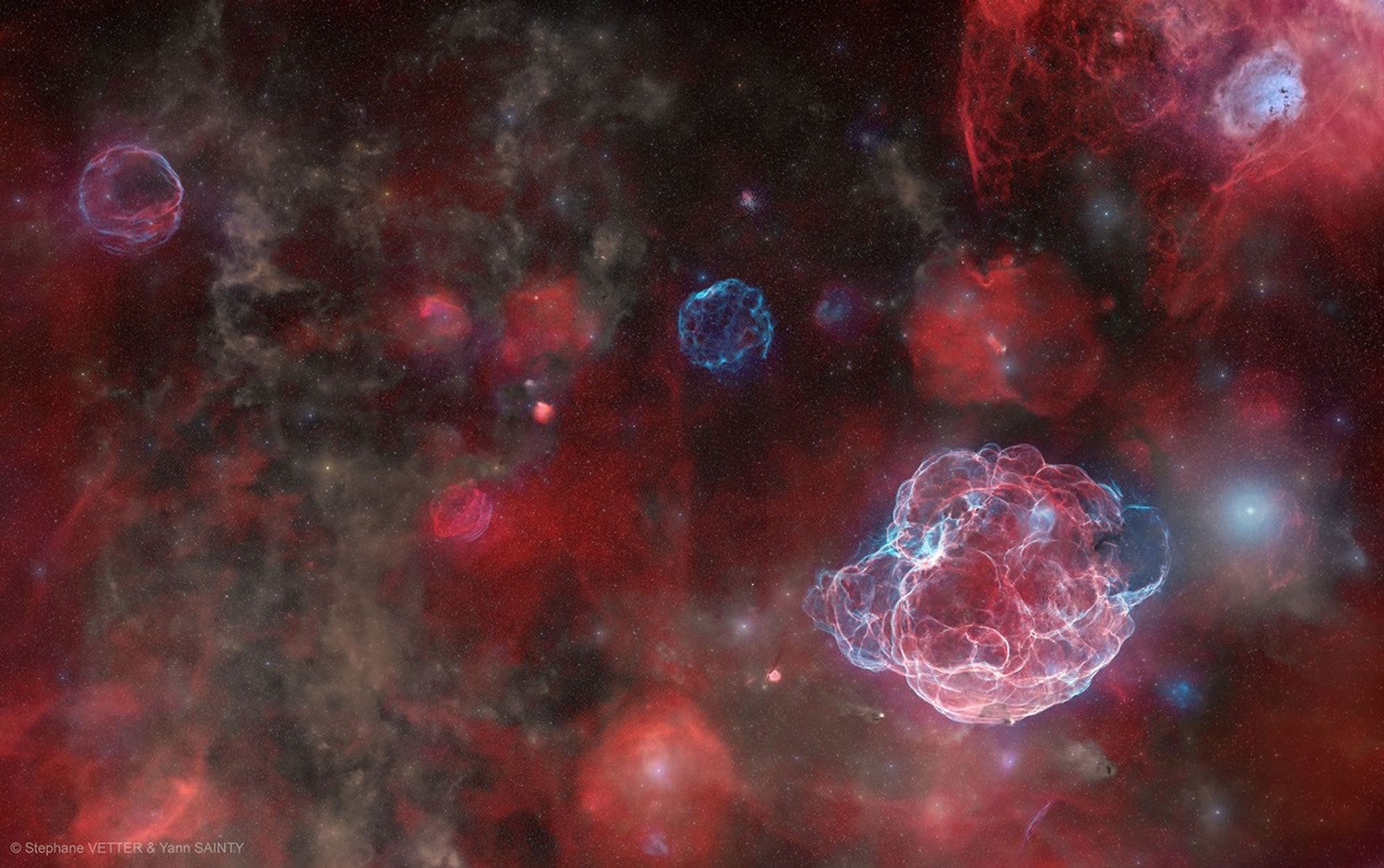
# Remnants of Ruin: The Supernova Quintet
Deep-space observational data has isolated the structural echoes of five distinct supernova events, designated as the "Ghosts of Five Supernovas." According to NASA Breaking News, these imaging assets provide a high-resolution window into the terminal phases of massive stellar evolution and the violent distribution of heavy elements across the cosmos.
Kinetic Echoes
These remnants represent the skeletal remains of high-mass stars that have exhausted their nuclear fuel, resulting in gravitational collapse and subsequent cataclysmic explosions. The captured data highlights the interaction between expanding shockwaves and the surrounding interstellar medium. The thermal and kinetic signatures mapped by NASA assets illustrate how the energy from these five events continues to shape local galactic geography long after the initial flash.
Structural Analysis
The "ghosts" are not merely visual anomalies; they are complex shells of plasma and gas. The diversity among the five remnants suggests varied progenitor types and environmental densities. By analyzing the morphology of these nebular structures, astrophysicists can reconstruct the conditions of the original stars. These observations serve as a critical diagnostic tool for understanding how supernova-driven enrichment provides the raw materials—such as carbon, oxygen, and iron—necessary for the formation of subsequent solar systems.
Current Research Context
This update coincides with recent findings involving complex life thriving in extreme heat environments and the detection of ancient water systems on Mars. The mapping of these five supernovas adds a macro-scale layer to our understanding of the universe’s life-cycle, linking the death of stars to the chemical foundations of planetary science.