COSI Instrument Integration Commences at NASA Goddard
Integration of the Compton Spectrometer and Imager (COSI) is underway at NASA’s Goddard Space Flight Center, marking a critical milestone for the next-generation gamma-ray observatory.
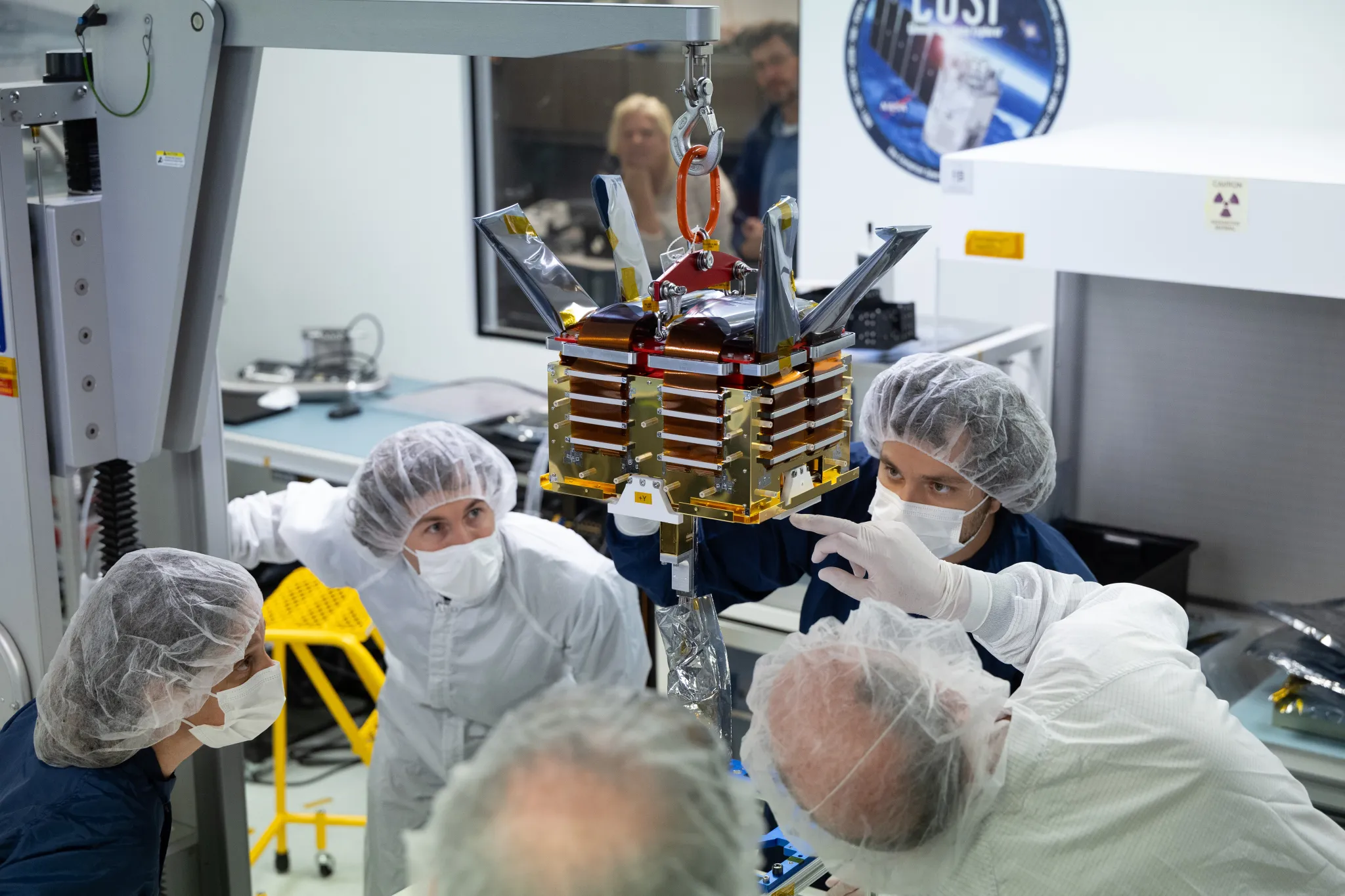
Mission Status: COSI Integration Phase
Technical operations have transitioned to a critical phase at NASA’s Goddard Space Flight Center in Greenbelt, Maryland. According to NASA Breaking News, engineers have commenced the formal integration of the Compton Spectrometer and Imager, or COSI. This next-generation wide-field gamma-ray telescope is designed to survey the soft gamma-ray sky with unprecedented sensitivity.
Technical Objectives
The COSI mission is engineered to probe the high-energy processes of the Milky Way and beyond. Its primary scientific objectives include:
- Nucleosynthesis Tracking: Mapping the radioactive decay of elements to understand where chemical building blocks are forged in our galaxy.
- Positron Dynamics: Investigating the mysterious origins of antimatter (positrons) within the galactic center.
- Polarimetry: Measuring the polarization of gamma-ray bursts and compact objects to reveal the underlying physics of extreme magnetic environments.
Assembly Protocols
The current integration stage involves the meticulous mating of the detector subsystems with the spacecraft bus. This hardware must withstand the rigors of a 2027 launch and subsequent long-duration operations in Low Earth Orbit (LEO). By utilizing advanced germanium detectors, COSI will provide a significant leap in resolution over its predecessors, filling a vital gap in the electromagnetic spectrum coverage.
Following the successful physical assembly, the team will initiate a battery of environmental tests, including thermal vacuum and vibration cycling, to ensure flight readiness. COSI represents a pivotal tool in the astrophysics community’s effort to decode the high-energy evolution of the universe.