CNSA Deploys ELINT Assets and Next-Gen Relay in Dual Launch Operations
China has activated its first third-generation Tianlian relay satellite and deployed two secretive TJS-27 spacecraft into unconventional orbits, signaling an expansion of its electronic intelligence and orbital tracking capabilities.
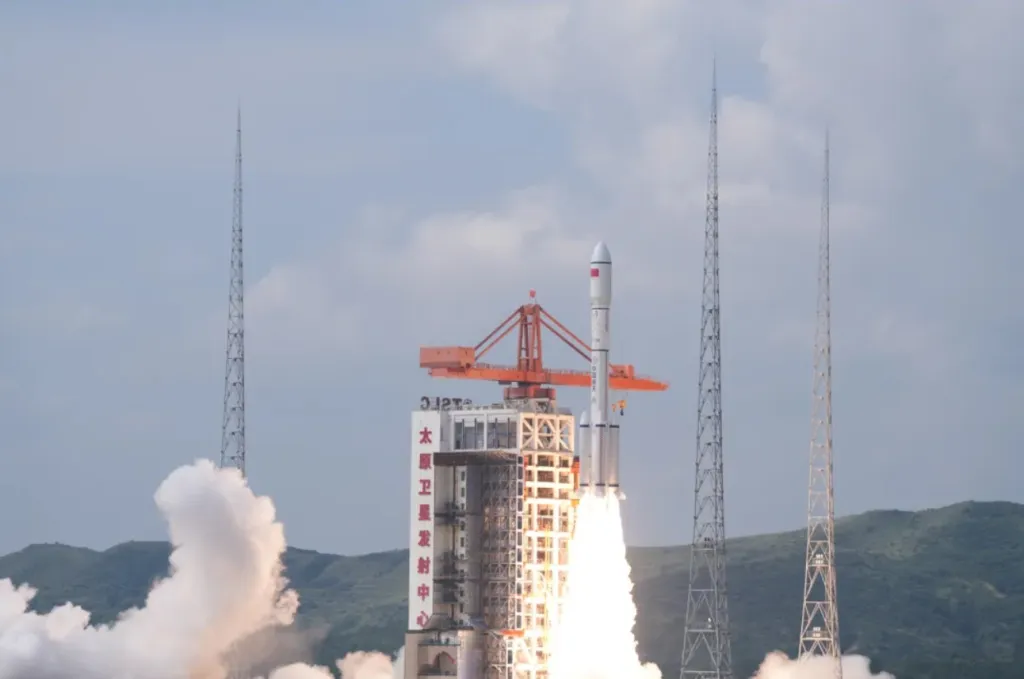
According to SpaceNews, China’s aerospace sector executed a rapid-fire launch sequence this week, deploying both strategic communication upgrades and secretive reconnaissance assets.
On July 29, a Long March 6A lifted off from Taiyuan, placing the TJS-27A and TJS-27B satellites into an 1,153-kilometer altitude orbit at an inclination of 64.8 degrees. While official statements from the China Aerospace Science and Technology Corporation (CASC) describe the payloads as “communication technology test satellites,” orbital trackers suggest a different reality. Former astrophysicist Jonathan McDowell noted that the flight path is characteristic of time-delay-of-arrival (TDOA) electronic intelligence (ELINT) gathering, a mission profile typically reserved for the Yaogan series or the U.S. Naval Ocean Surveillance System (NOSS).
The TJS series has historically focused on geosynchronous orbits for signals intelligence and satellite inspection. This shift to a lower, specific inclination indicates a diversification of the PLA’s space-based surveillance architecture. Notably, the Long March 6A carrier has previously been scrutinized for orbital debris issues following similar deployments.
Hours prior, a Long March 7A launched from Wenchang, successfully delivering Tianlian-3 (01) to a geosynchronous transfer orbit. This spacecraft represents the first of China’s third-generation data relay network. Based on the enhanced DFH-4E bus, it is designed to provide near-continuous telemetry, tracking, and control (TT&C) for the Tiangong space station and other high-priority orbital missions. This launch follows the recent deployment of Tianlian-2 (06), effectively hardening China’s orbital communications backbone.