Chasing the Moon’s Shadow: NASA APOD Highlights Precision Solar Tracking
According to NASA Breaking News, recent astronomical documentation has highlighted the complex logistics of intercepting lunar shadows during solar eclipse events, a priority for planetary science and orbital mechanics.
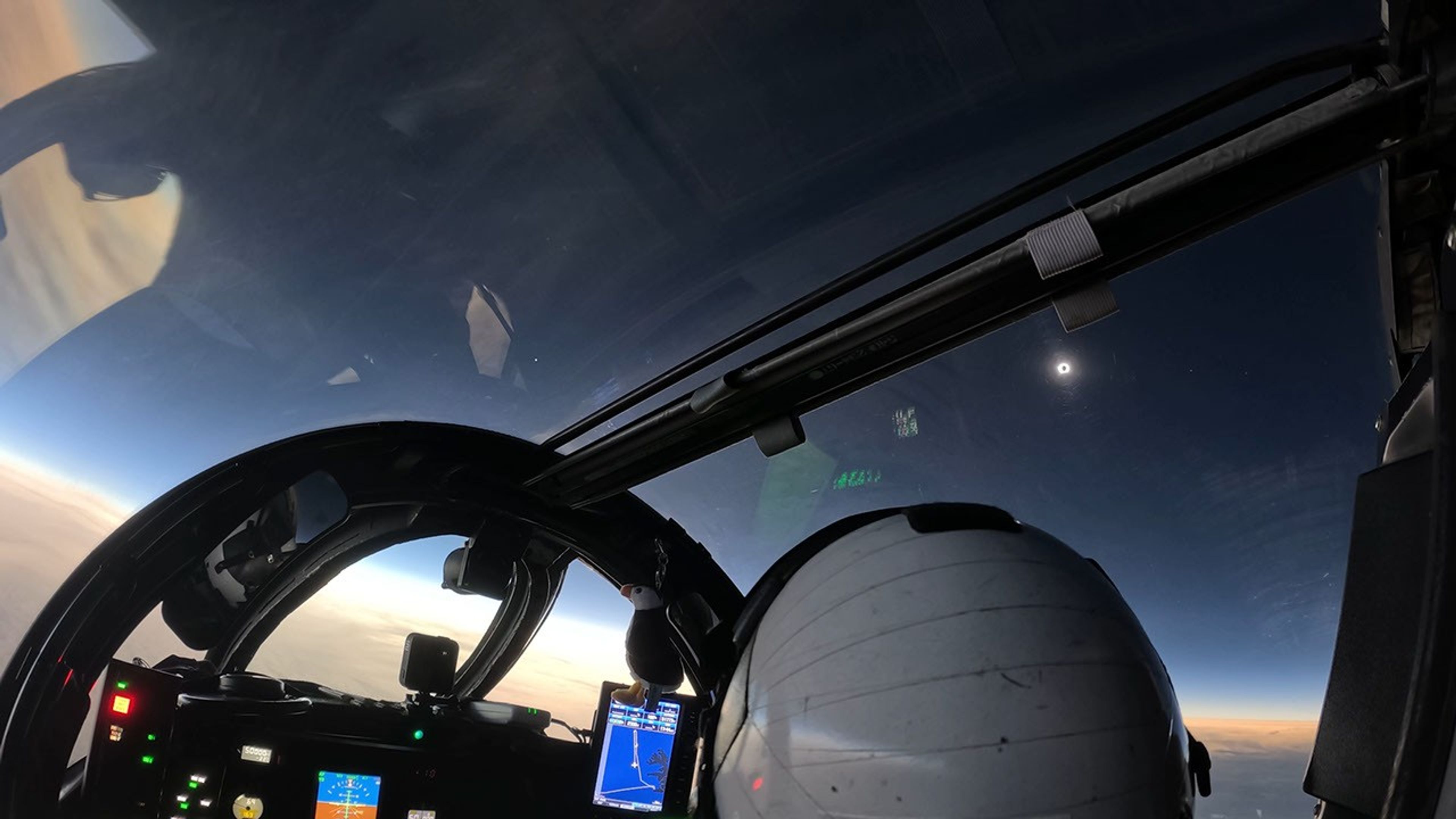
# LUNAR INTERCEPT: TRACKING THE UMBRA
DATA FEED: 2026-09-05
Recent intelligence from NASA Breaking News highlights the ongoing scientific commitment to high-precision solar observations. The agency’s Astronomy Picture of the Day (APOD) for September 5, 2026, focuses on the logistical and technical rigor required for "chasing the moon’s shadow." This operation involves positioning sensors and imaging equipment directly within the path of totality to capture atmospheric and solar phenomena impossible to observe under standard conditions.
SYSTEM ANALYSIS
The intercept of a lunar shadow requires sub-second synchronization between orbital mechanics and ground-based or airborne assets. As the moon passes between the Earth and the Sun, the resulting umbra travels at supersonic speeds across the planetary surface. For researchers, this narrow corridor offers a critical window to study the solar corona, gravitational lensing, and terrestrial atmospheric responses to sudden thermal drops.
MISSION LOGISTICS
NASA’s focus on these events aligns with broader objectives across several key sectors:
Planetary Science: Evaluating the moon's topographical influence on the Baily’s beads effect.
Heliophysics: High-resolution imaging of solar flares and the magnetic structure of the corona.
* Technology: Testing rapid-response imaging systems in extreme lighting transitions.
According to NASA Breaking News, these efforts are not merely aesthetic pursuits. They represent vital data-gathering missions that inform our understanding of the Earth-Moon-Sun system. The agency continues to integrate these findings into larger frameworks, including the Artemis lunar exploration program and ongoing ISS orbital research. As we move deeper into the 2026 calendar, the precision required to track these celestial alignments remains a benchmark for international aerospace coordination.