CHAPEA Mission 2: 378 Days on Simulated Mars Conclude
NASA's second CHAPEA crew has exited their 3D-printed Martian habitat after a 378-day mission, providing critical data on the physiological and psychological challenges of long-duration deep space exploration.
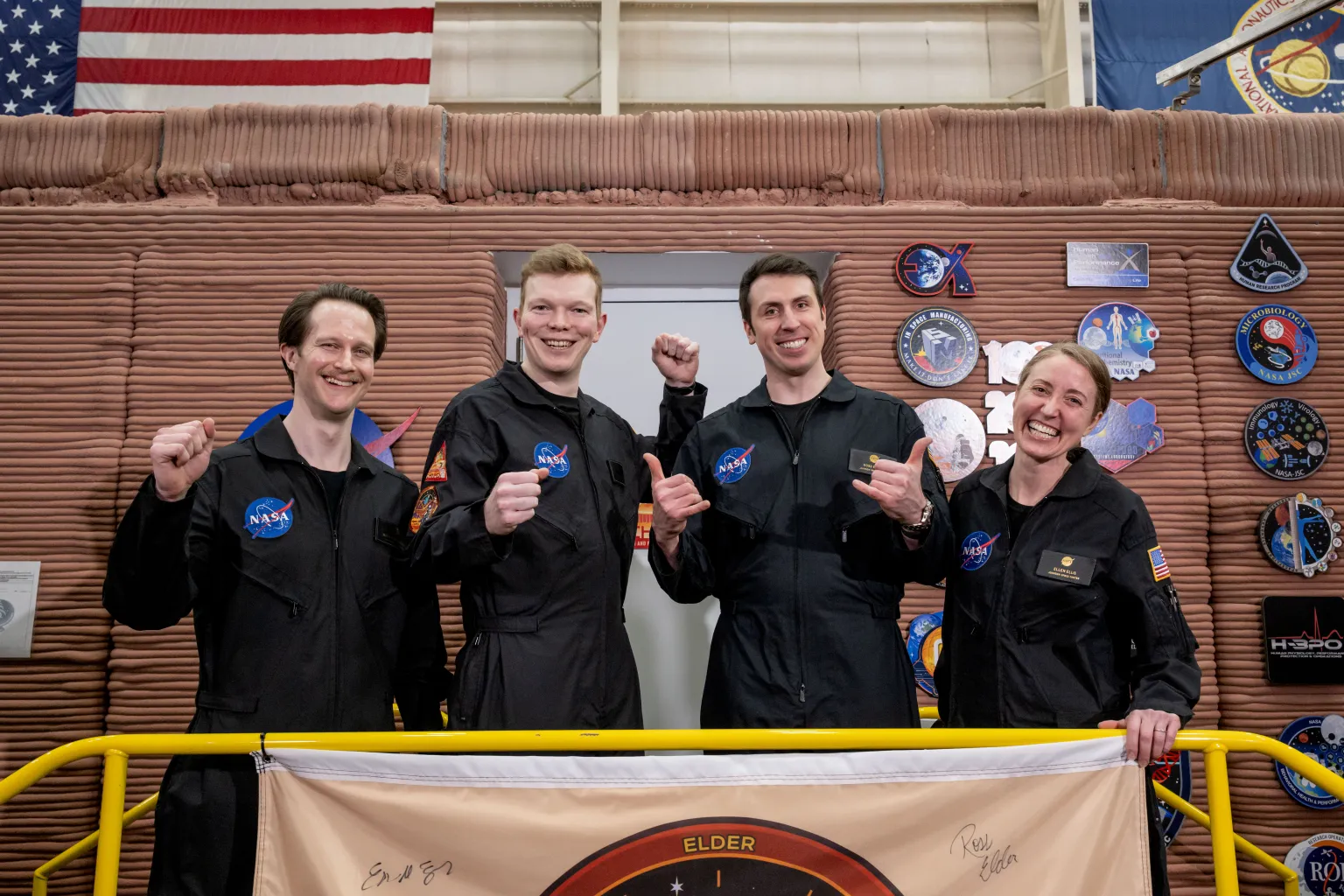
Mission debrief: Habitat Alpha
The second cohort of NASA’s Crew Health and Performance Exploration Analog (CHAPEA) has successfully egressed from their isolated habitat at the Johnson Space Center. After 378 days of confinement, the four-person crew—comprising Commander Kelly Haston, Flight Engineer Ross Brockwell, Medical Officer Nathan Jones, and Science Officer Anca Selariu—has concluded one of the most rigorous simulations of Martian surface life to date.
Operational Parameters
According to NASA Breaking News, the crew resided within a 1,700-square-foot, 3D-printed structure designed to replicate the environmental and resource constraints of a Red Planet outpost. To ensure high-fidelity data, the mission integrated several mission-critical stressors:
- Signal Latency: Communication with "Earth" ground control was subjected to a 20-minute delay.
- Resource Management: Restricted food supplies and strict power rationing.
- Extravehicular Activities (EVAs): Simulated Marswalks using virtual reality and physical treadmills.
- Habitat Maintenance: Regular systems repair and crop cultivation for supplemental nutrition.
Human Factors and Data Analysis
The primary objective of CHAPEA is to quantify the performance impacts of long-term isolation and limited resources. Data collected during the 378-day stint will inform future Artemis missions and the eventual human transit to Mars. NASA researchers are now analyzing the crew's health metrics, cognitive performance, and behavioral dynamics. These findings are vital for developing countermeasures against the psychological fatigue and physiological degradation inherent in deep space travel.
With Mission 2 finalized, the agency continues to iterate on its architectural requirements for a permanent Martian presence. The data suggests that while the 3D-printed basalt-substitute habitat remained structurally sound, the human element remains the most complex variable in the mission profile.