CHAPEA-1: Crew Concludes Year-Long Martian Isolation
NASA’s first CHAPEA mission crew has completed 378 days of isolation in a 3D-printed Mars habitat, providing critical data on the physiological and psychological hurdles of long-duration deep space exploration.
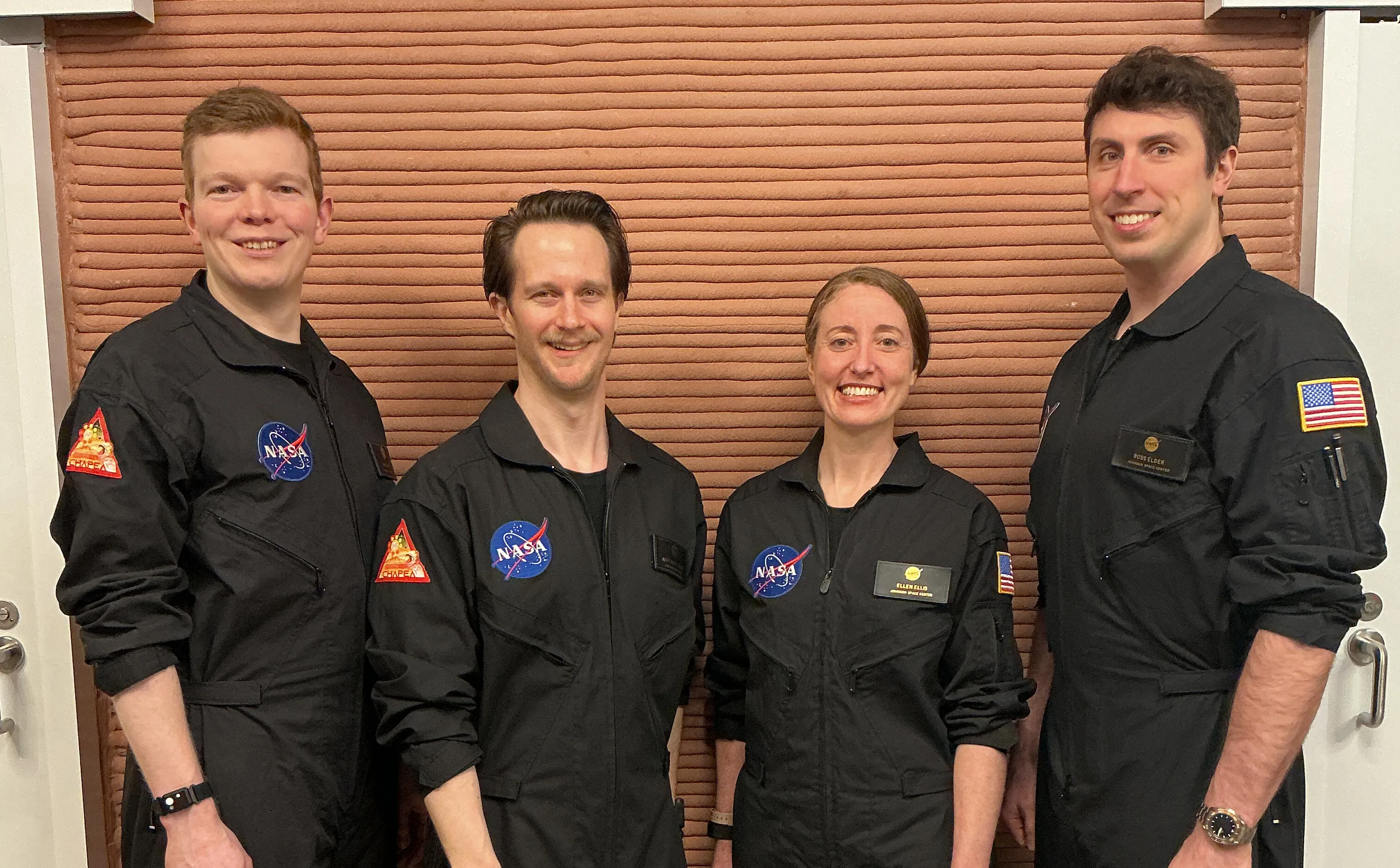
Mission Terminal Update
HOUSTON, TEXAS — The first analog Mars crew has emerged from the Crew Health and Performance Exploration Analog (CHAPEA) habitat at Johnson Space Center. According to NASA Breaking News, the four-person volunteer crew concluded a 378-day mission, marking a significant milestone in the agency’s preparation for human exploration of the Red Planet.
Habitat and Operational Parameters
The crew—consisting of Kelly Haston, Anca Selariu, Ross Brockwell, and Nathan Jones—lived within a 1,700-square-foot, 3D-printed structure dubbed Mars Dune Alpha. To maintain high-fidelity simulation, the mission parameters included:
Resource Scarcity: Limited food supplies and strict water rationing.
Communication Lag: Time-delayed signals to replicate the distance between Earth and Mars.
Environmental Stressors: High workload and equipment failure simulations.
Marswalks: Extravéhicular activities conducted in a dedicated “sandbox” environment.
Scientific Objectives
This mission was the first of three planned CHAPEA simulations. Data collected during the year-long stint focuses on human health and performance under extreme isolation. The objective is to understand how crews manage the logistical and psychological strain of deep-space transit and surface operations. NASA researchers will use these findings to refine food systems and behavioral health protocols for future Artemis and Mars-bound missions.
By stressing the crew in a controlled environment, NASA aims to mitigate risks before hardware leaves Earth's orbit. The next CHAPEA mission is slated to begin in 2025.