Chandra Observatory Identifies Stellar Outburst Trigger
NASA's Chandra X-ray Observatory has localized the source of irregular energy spikes in a distant star, revealing a hidden companion causing periodic orbital disruption.
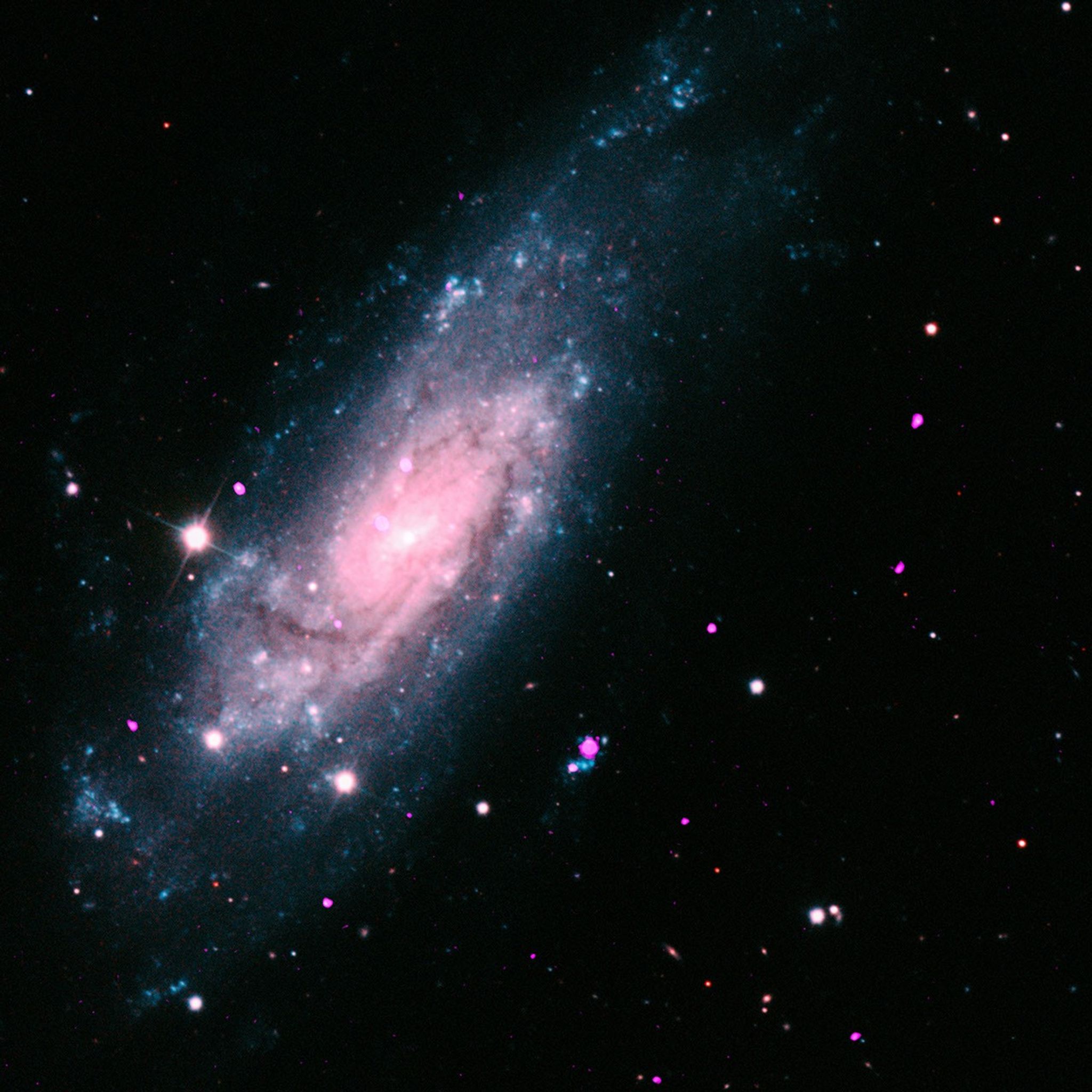
DATA ACQUISITION: CHANDRA X-RAY OBSERVATORY
According to NASA Breaking News, astrophysicists have successfully identified the mechanism behind the erratic and mysterious outbursts of a distant star. Utilizing the high-resolution imaging capabilities of the Chandra X-ray Observatory, investigators localized the source of periodic energy surges that had previously defied standard classification.
ORBITAL MECHANICS
The investigation reveals that the primary star is not an isolated system. The bursts are triggered by a dense, compact companion—likely a white dwarf or a neutron star—moving along a highly elliptical orbit. As this companion reaches its periastron, it interacts violently with the primary star's extended atmosphere. The resulting gravitational pull and subsequent accretion of material generate high-energy X-ray flares.
ANALYSIS REPORT
This discovery resolves a long-standing anomaly in deep-space telemetry. Previous observations noted the flux in brightness but lacked the spatial resolution to distinguish between internal stellar instability and external orbital interference. Chandra’s X-ray data provided the necessary evidentiary bridge, confirming that the "outbursts" are actually catastrophic accretion events.
SECTOR IMPACT
The identification of this binary interaction provides a new template for analyzing irregular stellar behavior across the galactic disk. By mapping the frequency and intensity of these X-ray signatures, researchers can now more accurately predict the evolution of binary systems nearing their final stages.