Chandra and Webb Synthesize RCW 7th Nebula Data
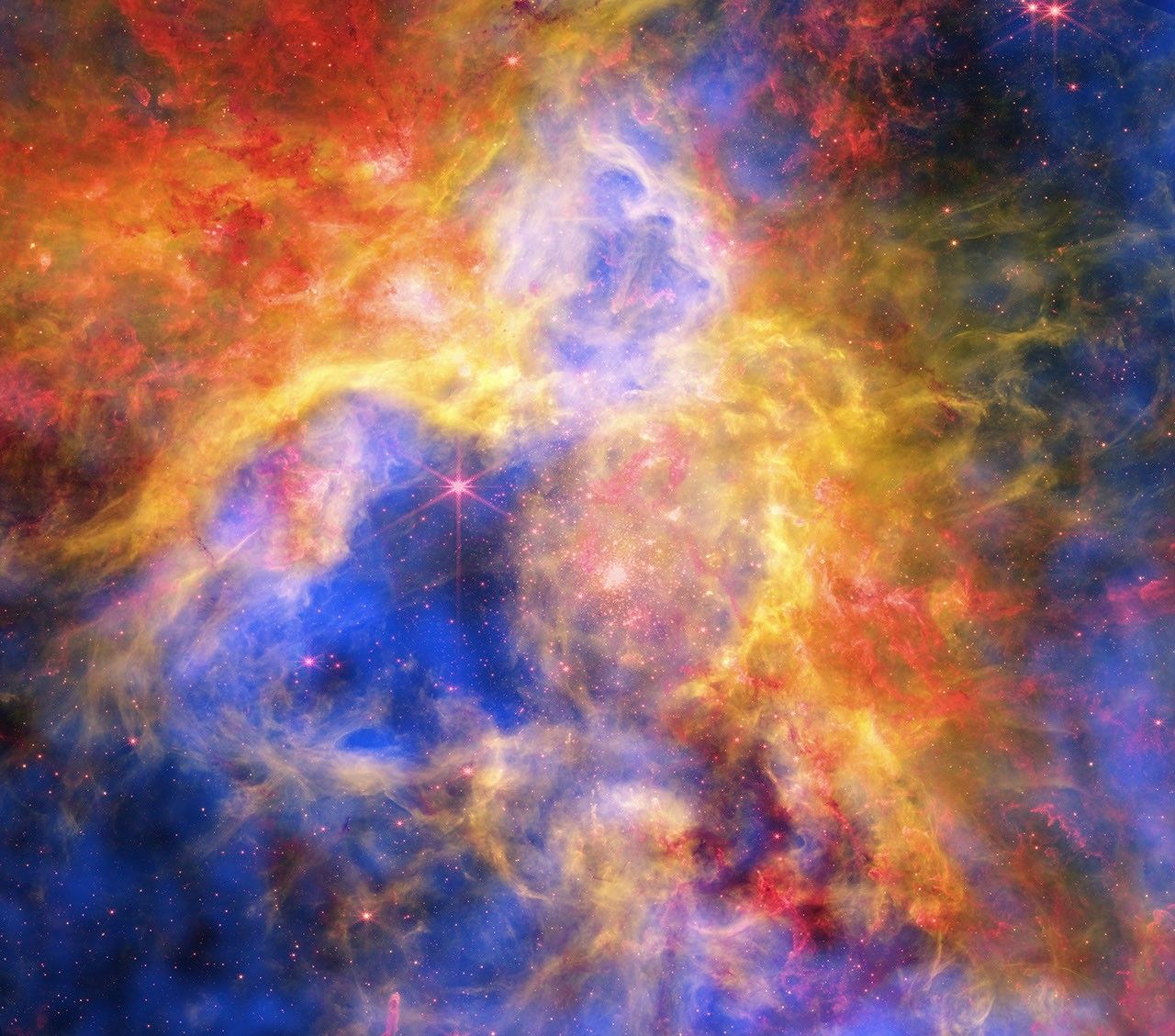
NASA’s premier orbital observatories have merged X-ray and infrared data to visualize RCW 7, a massive star-forming region located 5,300 light-years away in the constellation Puppis.
Data Fusion in Puppis
Deep-space surveillance has yielded a new high-fidelity composite of RCW 7, a dense molecular cloud and star-forming region located approximately 5,300 light-years from Earth. According to NASA Breaking News, the visualization integrates multi-wavelength datasets from the Chandra X-ray Observatory and the James Webb Space Telescope (JWST), revealing the complex mechanics of stellar evolution.
Multi-Spectral Analysis
The composite image leverages the unique capabilities of both orbital assets. Chandra’s X-ray instrumentation detected high-energy emissions from young, massive stars within the nebula, represented in the blue and purple spectral bands. These point sources indicate concentrated thermal activity and intense magnetic fields typical of protostellar development.
Simultaneously, the JWST’s Near-Infrared Camera (NIRCam) captured the surrounding gas and dust architecture. The infrared data, visualized in greens and reds, maps the structural "cradle" of the nebula—gaseous filaments that are typically obscured by dust in the visible spectrum. This synthesis provides a comprehensive view of how stellar winds and radiation pressure from new stars reshape their parent molecular clouds.
Operational Context
RCW 7 serves as a critical laboratory for understanding the lifecycle of high-mass stars. While Chandra tracks the high-energy output of the stellar population, Webb monitors the cold material fueling their growth. This cross-platform synchronization allows researchers to track the flow of energy and matter across light-years of space, refining models of galactic evolution.
By layering these disparate wavelengths, mission controllers can isolate specific physical processes within the nebula, ensuring that no thermal or kinetic signature is overlooked in the study of our local galactic neighborhood.