Centaurus A: Imaging the Core of a Galactic Behemoth
A new visual analysis of Centaurus A reveals the intricate dust lanes and active nucleus of one of the closest radio galaxies to Earth.
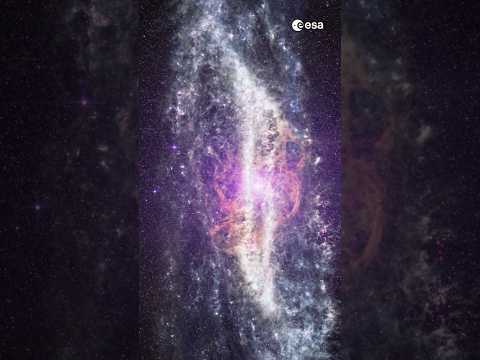
Deep Space Analysis: NGC 5128
Data transmitted via the ESA YouTube channel provides a high-fidelity zoom into Centaurus A (NGC 5128), a prominent elliptical galaxy located approximately 12 million light-years away in the constellation Centaurus. As one of the brightest objects in the southern hemisphere's night sky, Centaurus A serves as a critical laboratory for studying active galactic nuclei (AGN).
Structural Morphology
The visual sequence highlights the galaxy's distinctive morphology—a massive elliptical structure bisected by a dense, warped lane of dark dust. This dust disk is the remnant of a smaller spiral galaxy consumed by Centaurus A during a galactic merger approximately 200 to 700 million years ago. This collision triggered intense star formation and fueled the supermassive black hole at the core, which has a mass equivalent to 55 million suns.
Multi-Wavelength Significance
Centaurus A is categorized as a starburst galaxy and a potent radio source. The imaging demonstrates the transition from wide-field optical views to the high-resolution interior, where relativistic jets are known to erupt from the central singularity, extending thousands of light-years into intergalactic space. According to ESA YouTube reporting, these visualizations assist in mapping the complex interplay between cold gas and high-energy radiation.
Terminal Summary
Centaurus A remains a primary target for European observational assets. By dissecting the light from its dense stellar population and obscuring dust, researchers continue to refine models of galactic evolution and black hole dynamics.