Celestial Symmetry: Meteor and Galactic Plane Over Salar de Uyuni
A rare astronomical alignment captures the Milky Way and a bolide meteor reflected in the hyper-flat lithium crust of Bolivia's Salar de Uyuni.
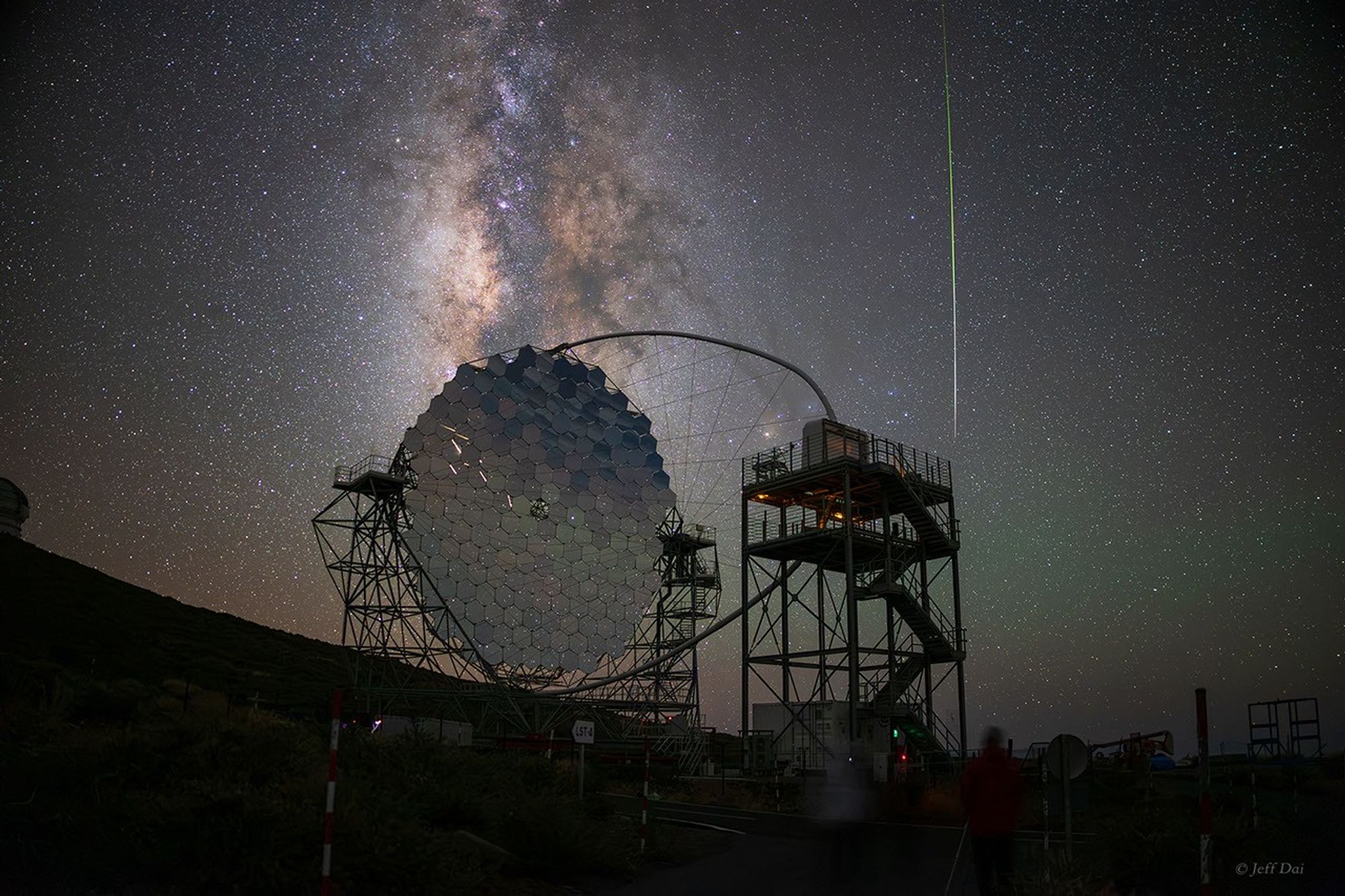
Data Capture: Bolide Reflectivity
Atmospheric monitoring and astronomical imaging have converged on the Salar de Uyuni in Bolivia to document a rare instance of celestial symmetry. According to NASA Breaking News, a high-intensity meteor streak—a bolide—was captured alongside the galactic plane of the Milky Way, both perfectly mirrored in the shallow aqueous layer covering the world’s largest salt flat.
Geological and Orbital Convergence
The Salar de Uyuni, spanning over 10,000 square kilometers, serves as a terrestrial calibration target for satellite altimetry due to its extreme flatness. When seasonal rainfall accumulates, the lithium-rich crust transforms into a high-fidelity natural mirror. The captured data shows the central bulge of our galaxy rising above the horizon, bisected by the kinetic energy of a meteor entering the upper atmosphere. The resulting optical output provides a dual perspective on the meteor’s trajectory, visible both in the void and on the surface of the Earth.
Mission Context: Crew Operations
Parallel to these observations, orbital logistics continue at pace. Reports confirm that NASA’s SpaceX Crew-13 is scheduled for arrival at Kennedy Space Center this Saturday. The mission profile includes extensive biological and physical research, focusing on human health and performance metrics in microgravity. Furthermore, flight assignments for the subsequent Crew-14 rotation have been finalized, ensuring continuous human presence aboard the International Space Station. While Earth-bound observers track meteors through the atmosphere, these crews manage the operational frontline of the LEO economy.