CAPSTONE Completes Orbit Validation Mission for Gateway Station
NASA’s CAPSTONE CubeSat has finalized its extended operations, successfully verifying the unique NRHO orbit and deep-space navigation tech essential for the upcoming lunar Gateway station.
Mission Protocol: Success
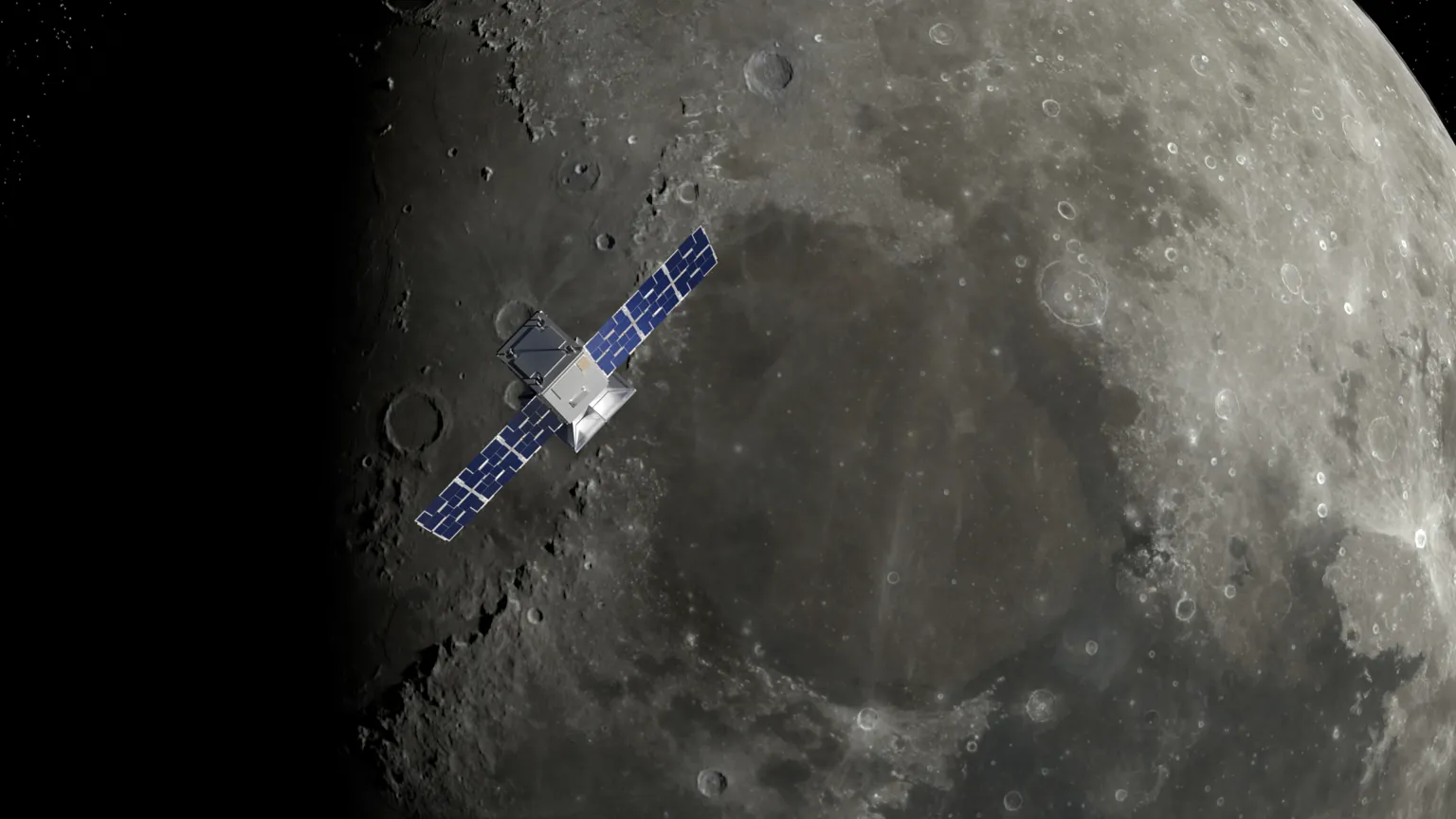
According to NASA Breaking News, the CAPSTONE (Cislunar Autonomous Positioning System Technology Operations and Navigation Experiment) spacecraft has officially concluded its primary technology demonstration phase. After 18 months in lunar orbit, the microwave-sized CubeSat has confirmed the stability of the Near-Rectilinear Halo Orbit (NRHO)—the high-altitude, egg-shaped path slated for the future lunar Gateway orbital platform.
Navigation Hardware Validated
Beyond orbital stability, CAPSTONE executed a series of rigorous benchmarks for the Cislunar Autonomous Positioning System (CAPS). Utilizing peer-to-peer cross-linking with the Lunar Reconnaissance Orbiter (LRO), the CubeSat demonstrated that spacecraft can determine their precise location in the lunar theater without exclusive reliance on ground stations from Earth. This autonomous capability is viewed as a mission-critical redundancy for deep-space logistics.
Terminal Phase Architecture
During its extended mission, CAPSTONE tested the limits of small-satellite propulsion and communication in the deep-space environment. The data gathered provides a flight-proven baseline for fuel consumption and station-keeping requirements in the NRHO. While the primary technology objectives are finalized, the spacecraft remains a high-value asset for future opportunistic testing. Systems remain nominal as the data is integrated into the Artemis program framework.
Strategic Implications
This validation removes a significant unknown for the Lunar Gateway. By proving the NRHO requires minimal maintenance and establishing autonomous navigation protocols, the mission ensures that future crewed modules can maintain orbit with high efficiency.