Côte d’Ivoire Signs Artemis Accords: African Presence in Lunar Governance Expands
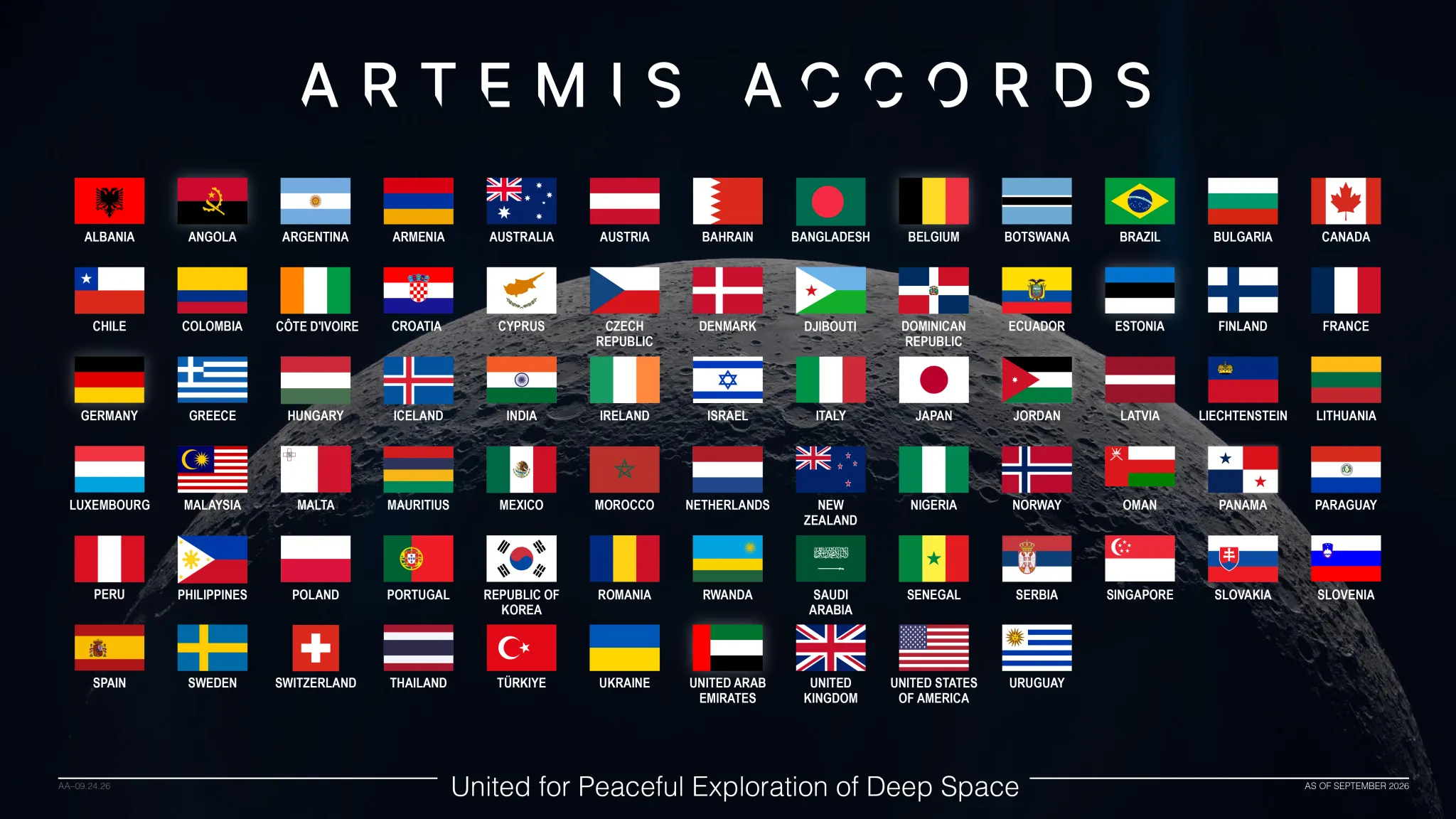
Côte d’Ivoire has officially joined the Artemis Accords, marking a strategic expansion of the international coalition for sustainable lunar exploration and space governance.
LUNAR GOVERNANCE UPDATE
ABIDJAN / WASHINGTON — Côte d’Ivoire has formally committed to the Artemis Accords, signaling a significant expansion of the international framework for peaceful lunar exploration. The West African nation becomes the latest signatory to the non-binding multilateral agreement, which establishes protocols for civil space activities in the 21st century.
According to NASA Breaking News, the signing ceremony underscores a growing global consensus regarding the 1967 Outer Space Treaty's application to modern lunar and martian operations. The Accords provide a operational blueprint for transparency, interoperability, and the mitigation of orbital debris.
STRATEGIC IMPLICATIONS
By joining the coalition, Côte d’Ivoire aligns its emerging space interests with the Artemis program’s objective of returning humans to the Moon and establishing a long-term presence on the lunar surface. The move is viewed as a strategic pivot to integrate African scientific capabilities into the broader deep-space supply chain.
Key tenets of the agreement include:
Data Sharing: Commitment to the open release of scientific findings.
De-confliction: Establishing 'safety zones' to prevent interference between international missions.
* Resource Management: Guidelines for the extraction and utilization of lunar resources under international law.
NASA Administrator Bill Nelson welcomed the inclusion, noting that the Accords now represent a diverse geographic assembly dedicated to ensuring that the next era of discovery remains collaborative and sustainable. As the Artemis mission architecture transitions from theoretical to operational, the inclusion of Ivorian stakeholders adds a new layer of diplomatic legitimacy to the U.S.-led initiative.