Bio-Deficit: The Missing Variable in NASA’s Lunar Architecture
NASA’s 'Ignition' strategy aims for a permanent lunar base by 2030, but experts warn that excluding biological sciences from commercial service models risks the health of future crews.
Terminal Entry: Lunar Sustainability Matrix
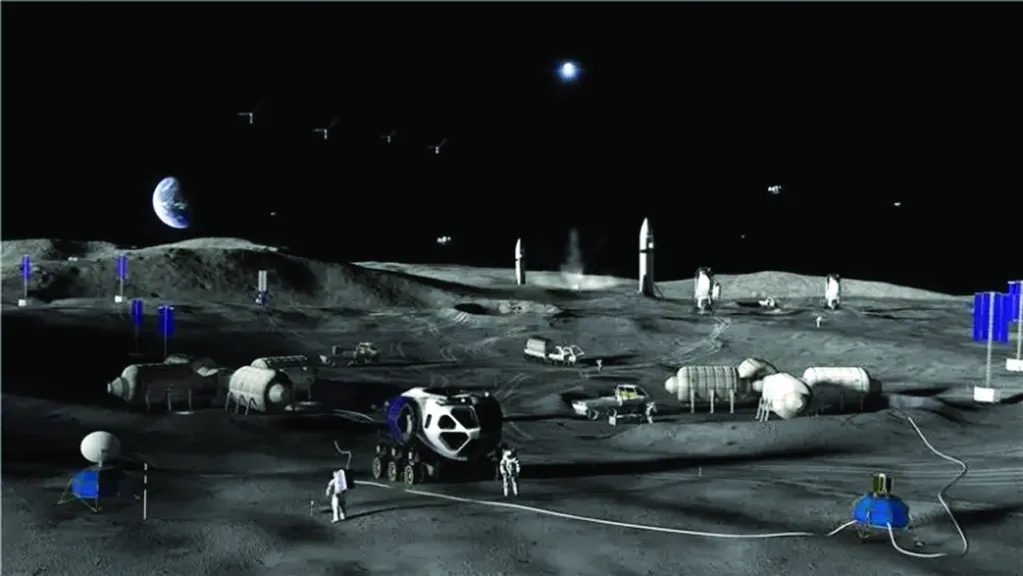
NASA is pivoting from temporary visits to a permanent presence on the lunar surface. Following the 'Ignition' event, the agency outlined a three-phase campaign to establish a continuous human foothold by 2030. This strategy leverages the Science as a Service model, designed to accelerate technology maturation through commercial partnerships. While the framework includes Earth science and astrophysics, a critical gap remains: space biology.
According to SpaceNews, the current roadmap relies on international contributions—such as Japanese rovers and Italian habitation modules—but lacks a dedicated commercial pipeline for health and biological countermeasures. Establishing a long-term station is an engineering feat that quickly evolves into a life-science crisis.
//The Gravity of the Situation
Decades of data from the International Space Station (ISS) provide a foundation for microgravity research, yet the effects of one-sixth gravity remain largely theoretical. Key risks include:
Bone Pathologies: Uncertain non-linear degradation of mineral density in partial gravity.
Regolith Toxicity: Potential for permanent respiratory scarring from lunar fines.
* Closed-Loop Failure: Total self-sufficiency requires mature bioregenerative systems for air, water, and food.
//Systems Integration
If the moon is to serve as a testbed for nuclear-propelled Mars transits, the biological prerequisites must be met. The industry is ready; biotech firms and academic centers like TRISH are already developing radiation shielding and space pharmacology. However, unless NASA integrates biology into its commercial framework, the drive for lunar superiority may stall at the most vulnerable point: the human operator.