Beyond the Snapshot: The Urgent Shift to Space-Based Measurement
Modern national security requires a transition from intermittent satellite imagery to consistent, scientific-grade measurement to ensure decision advantage in contested regions like the Pacific and the Arctic.
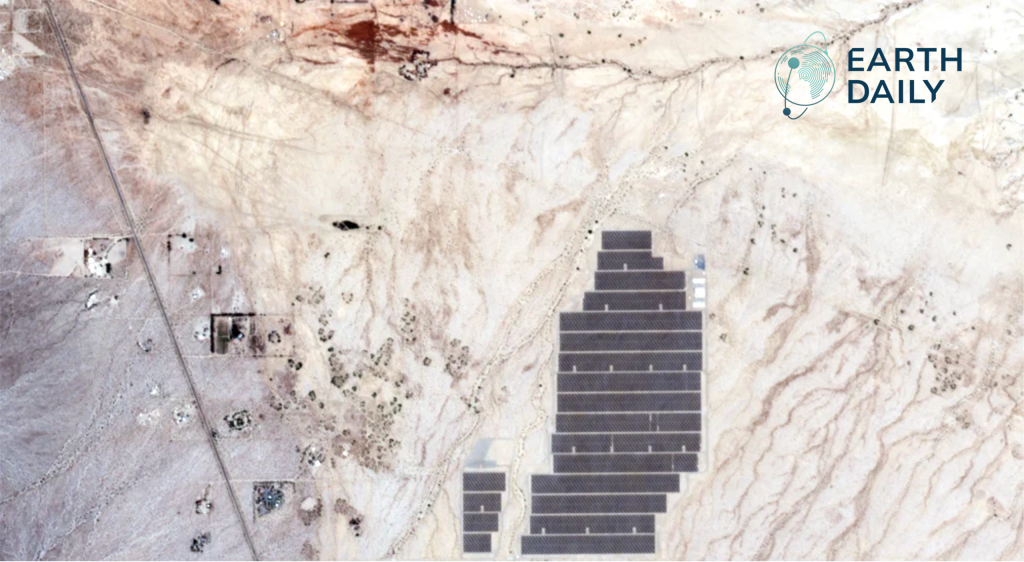
Surveillance Saturation
The era of clandestine naval maneuvers is over. A decade ago, a U.S. carrier strike group could traverse the Pacific with significant gaps in enemy surveillance. Today, according to SpaceNews, China’s space-based architecture maintains continuous, targeting-ready monitoring. Similar structural threats are accelerating in the Arctic, where a Russia-China alignment is militarizing the High North, forcing U.S. homeland defense to seek a persistent operational picture.
The Data Paradox
While satellite proliferation has reached record levels, more imagery has not translated to more clarity. Agencies like the National Geospatial-Intelligence Agency (NGA) are pivoting toward a "data agency" model to process the surge, yet much of this data remains isolated. Traditional Earth observation focused on the "three Rs"—resolution, revisit, and reach. However, a snapshot of a port or a single pass over an airstrip is insufficient if it cannot answer the fundamental question: What has changed, and how fast?
Precision Over Volume
The limitation lies in consistency. Geospatial AI (GeoAI) fails when atmospheric conditions, viewing angles, or calibration standards shift between passes. If the data isn't scientifically standardized, AI cannot distinguish between a change on the ground and a change in sensor noise.
To achieve true predictive intelligence, the industry must shift from "collection" to "measurement." This requires data with consistent timing, precise geometry, and high signal-to-noise ratios. By treating Earth observation as a scientific time-series rather than a gallery of pictures, analysts can detect the slow accumulation of change—military mobilization or infrastructure shifts—before a crisis erupts. Measurement does not just see more; it knows sooner.