BepiColombo: Six Years in Transit to Mercury
The joint ESA-JAXA mission marks its sixth launch anniversary as it navigates a complex trajectory toward Mercury's orbit.
Mission Status: Long-Duration Transit
According to ESA YouTube, the international community is marking the sixth anniversary of the BepiColombo launch. This joint venture between the European Space Agency (ESA) and the Japan Aerospace Exploration Agency (JAXA) remains one of the most technically demanding interplanetary missions currently active. Launched from the Guiana Space Centre in 2018, the spacecraft is currently navigating the final legs of a seven-year outbound journey to the innermost planet of our solar system.
Navigation and Trajectory
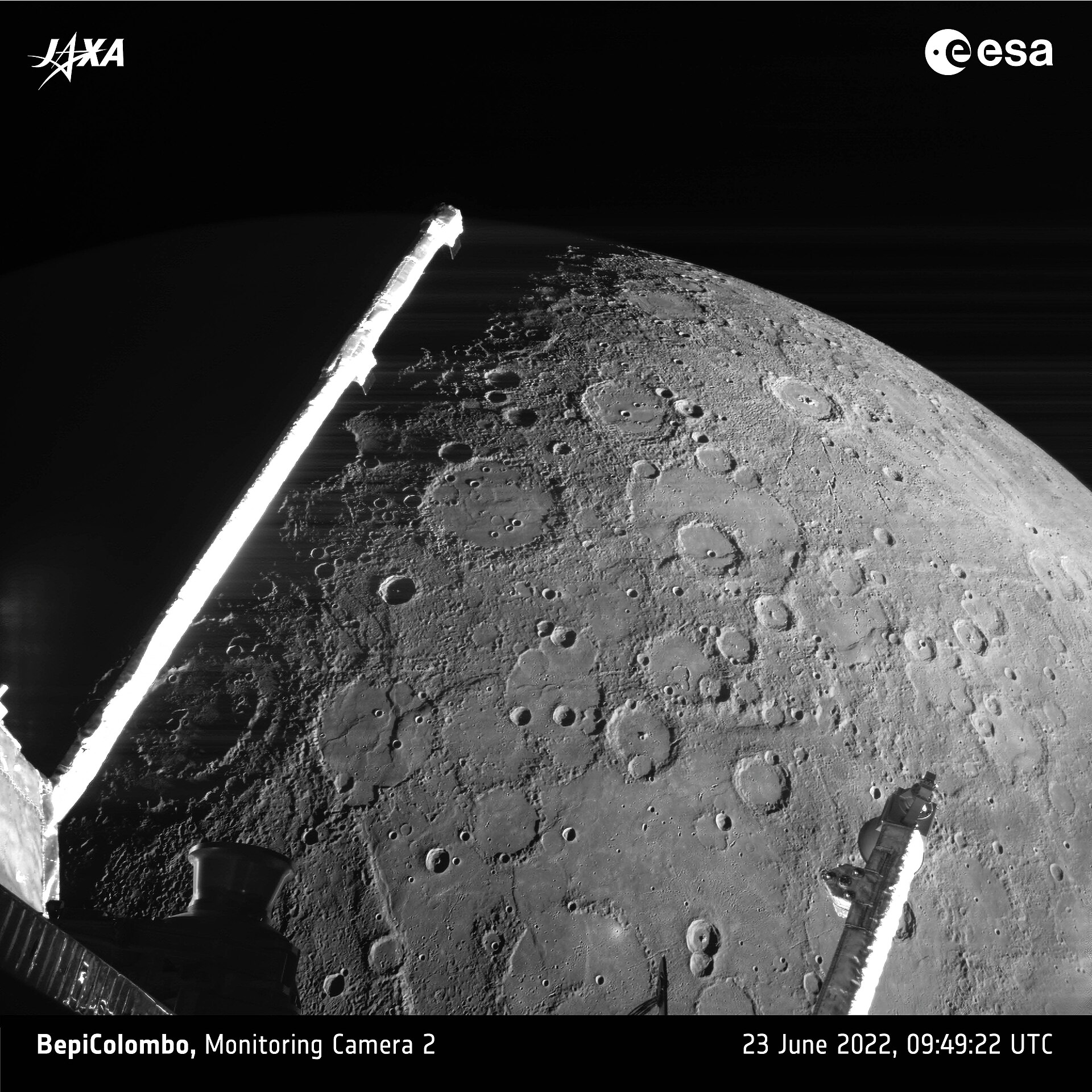
Reaching Mercury is not a matter of simple propulsion; it requires a sophisticated series of gravity assist maneuvers to shed the immense kinetic energy gained from falling toward the Sun's gravity well. BepiColombo utilizes a solar-electric propulsion system combined with nine planetary flybys—one of Earth, two of Venus, and six of Mercury—to refine its velocity. These precision maneuvers are essential for the spacecraft to eventually achieve orbit insertion around the target world.
Scientific Objectives
The mission architecture consists of two distinct orbiters: the Mercury Planetary Orbiter (MPO) and the Mercury Magnetospheric Orbiter (Mio). Once they separate in late 2025, they will conduct simultaneous measurements of Mercury’s internal structure, surface composition, and magnetic field. This dual-point perspective is designed to solve long-standing mysteries regarding the planet’s iron core and its unique interaction with the solar wind. As the mission enters its sixth year of flight, all systems continue to perform within nominal parameters, awaiting the final transition to science operations.