BepiColombo Initiates Mercury Arrival Phase After MTM Separation Success
ESA confirms the successful detachment of the Mercury Transfer Module, a critical milestone for the BepiColombo mission as it prepares to enter orbit around the solar system’s innermost planet.
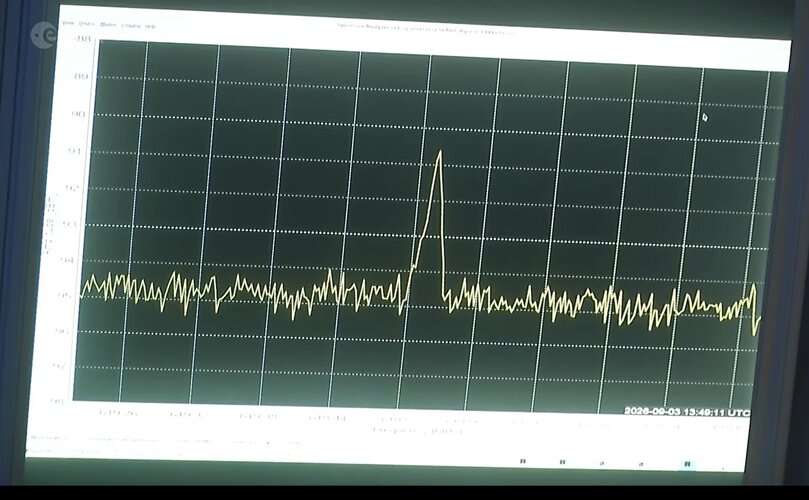
Mission Status: Separation Confirmed
The BepiColombo mission has successfully transitioned into its arrival phase. According to ESA, the Mercury Transfer Module (MTM) has officially separated from the two scientific orbiters it carried across the inner solar system for nearly seven years. This high-precision maneuver was executed to shed the propulsion system that provided the thrust necessary to reach the gravity well of Mercury.
Decoupling the Stack
Until this point, the mission traveled as a three-part stack. With the MTM discarded, the remaining components—the Mercury Planetary Orbiter (MPO), led by ESA, and the Mercury Magnetospheric Orbiter (Mio), led by JAXA—are now operating as an independent unit. The MTM’s primary function was to navigate the complex trajectory required to shed orbital energy, utilizing a combination of solar-electric propulsion and multiple planetary flybys.
Final Orbit Insertion Protocols
Separation marks the point of no return for the mission's primary objective. The spacecraft is now relying on Mercury's gravity and its own internal thrusters for the final approach. This phase involves a series of delicate braking maneuvers to ensure the orbiters are captured by the planet's weak but volatile gravitational field.
Once captured, the two orbiters will separate from each other to begin their distinct scientific observations. The MPO will focus on mapping the planet's surface and composition, while Mio will analyze the magnetic field and solar wind interactions. ESA flight controllers at the European Space Operations Centre (ESOC) in Darmstadt are currently monitoring telemetry to verify the post-separation trajectory and health of the remaining stack.