BepiColombo Discards Transfer Module for Final Mercury Approach
ESA and JAXA’s BepiColombo mission has successfully jettisoned its Mercury Transfer Module (MTM), marking the end of its seven-year interplanetary cruise and initiating the final phase of orbital insertion.
Operational Transition
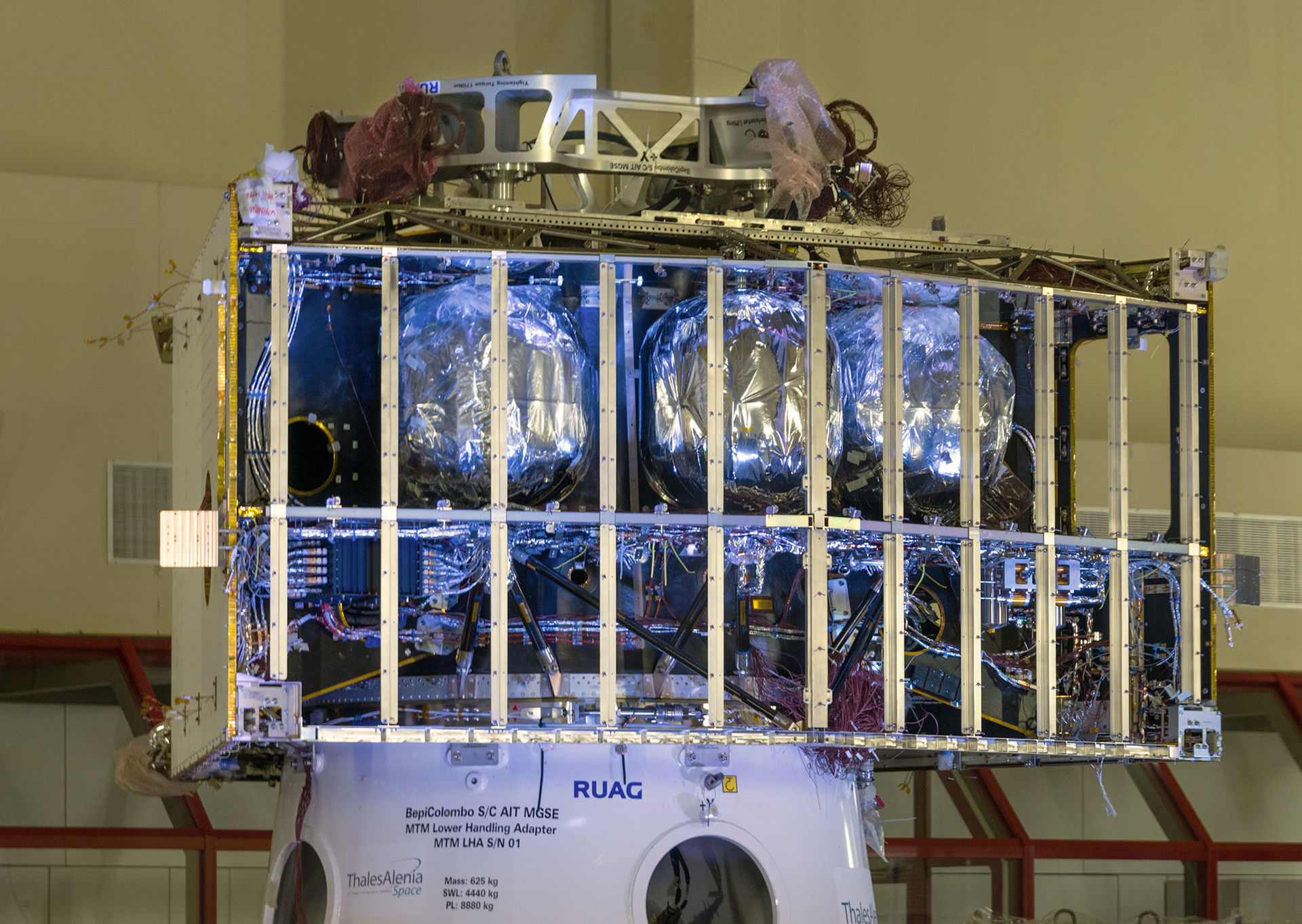
BepiColombo, the joint mission between the European Space Agency (ESA) and the Japan Aerospace Exploration Agency (JAXA), has officially transitioned to its final approach configuration. According to ESA YouTube, the spacecraft has successfully jettisoned the Mercury Transfer Module (MTM), the propulsion engine that has powered the mission since its launch in 2018.
Separation Sequence
For seven years, the MTM provided the solar-electric propulsion necessary to navigate the inner solar system's gravity wells. The separation was a critical milestone; the module, while essential for the long-duration cruise, was never designed to enter Mercury’s orbit. Its removal reveals the instruments and heat shields of the two primary science orbiters—ESA’s Mercury Planetary Orbiter (MPO) and JAXA’s Mercury Magnetospheric Orbiter (Mio)—which had been partially obscured during transit.
Terminal Phase Strategy
The jettisoning occurs as the mission prepares for a series of complex gravitational maneuvers. Without the MTM, the twin orbiters will now rely on gravity assists and their own internal propulsion systems for fine-tuning their trajectory. The mission is scheduled to enter a permanent orbit around Mercury in 2026. This terminal phase requires a lighter mass to ensure the spacecraft can be captured by the planet's weak but volatile gravitational field without overshooting into a solar orbit.
Science Objectives
Once the two orbiters separate from each other, they will begin a comprehensive survey of Mercury’s composition, geophysics, and atmosphere. By shedding the MTM, BepiColombo has effectively ended its role as a traveler and begun its life as a scientific observer, ready to withstand the extreme 450°C temperatures of the innermost planet.