Auxilium Bio-Manufacturing Milestone: First Human Organ Tissues Printed in Orbit
Auxilium Biotechnologies has successfully 3D-printed liver, kidney, and nerve tissues aboard the ISS, validating a versatile new hardware system for off-world medical manufacturing.
Orbital Bio-Fabrication Status: Operational
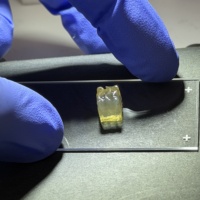
Auxilium Biotechnologies has achieved a significant technical milestone aboard the International Space Station (ISS), successfully manufacturing multiple human tissue types in microgravity. According to Payload, the company’s AMP-1 system has produced liver and kidney tissue—marking the first time these specific organ structures have been 3D-printed in space.
The mission also successfully generated cartilage tissue and over two dozen nerve-repair implants. This deployment validates the scalability of orbital bio-manufacturing, transitioning from experimental single-use runs to a versatile, multi-output production model.
Hardware Versatility and Microgravity Advantages
Central to the mission’s success is the AMP-1’s modular architecture. According to Auxilium CEO Jacob Koffler, the system utilizes specialized bioink cartridges that can be stored on-station for at least six months. Transitioning production from one tissue type to another requires only a cartridge swap, allowing the hardware to pivot based on immediate clinical demand.
Manufacturing in Low Earth Orbit (LEO) provides two critical physical advantages over terrestrial methods:
1. Structural Integrity: The absence of gravity prevents the collapse of cellular structures, allowing tissues to form complex, three-dimensional architectures naturally.
2. Accelerated Maturation: Biological processes appear to accelerate in orbit; stem cells differentiate and mature into usable organ tissue faster than in Earth-based labs.
Strategic Outlook
While the technology faces a rigorous path through FDA approval and medical trials for Earth-side application, the long-term utility extends to deep-space exploration. Auxilium envisions a future where "libraries" of bioink cartridges allow lunar or Martian colonies to respond to medical emergencies by printing custom implants or drug-delivery systems on-site. This capability reduces reliance on Earth-bound supply chains for complex biological medical assets.