Atmospheric Optics: The Anticrepuscular Rainbow Fan
NASA’s Astronomy Picture of the Day for October 20, 2026, details a rare convergence of light and shadow, illustrating the complex geometry of anticrepuscular rays.
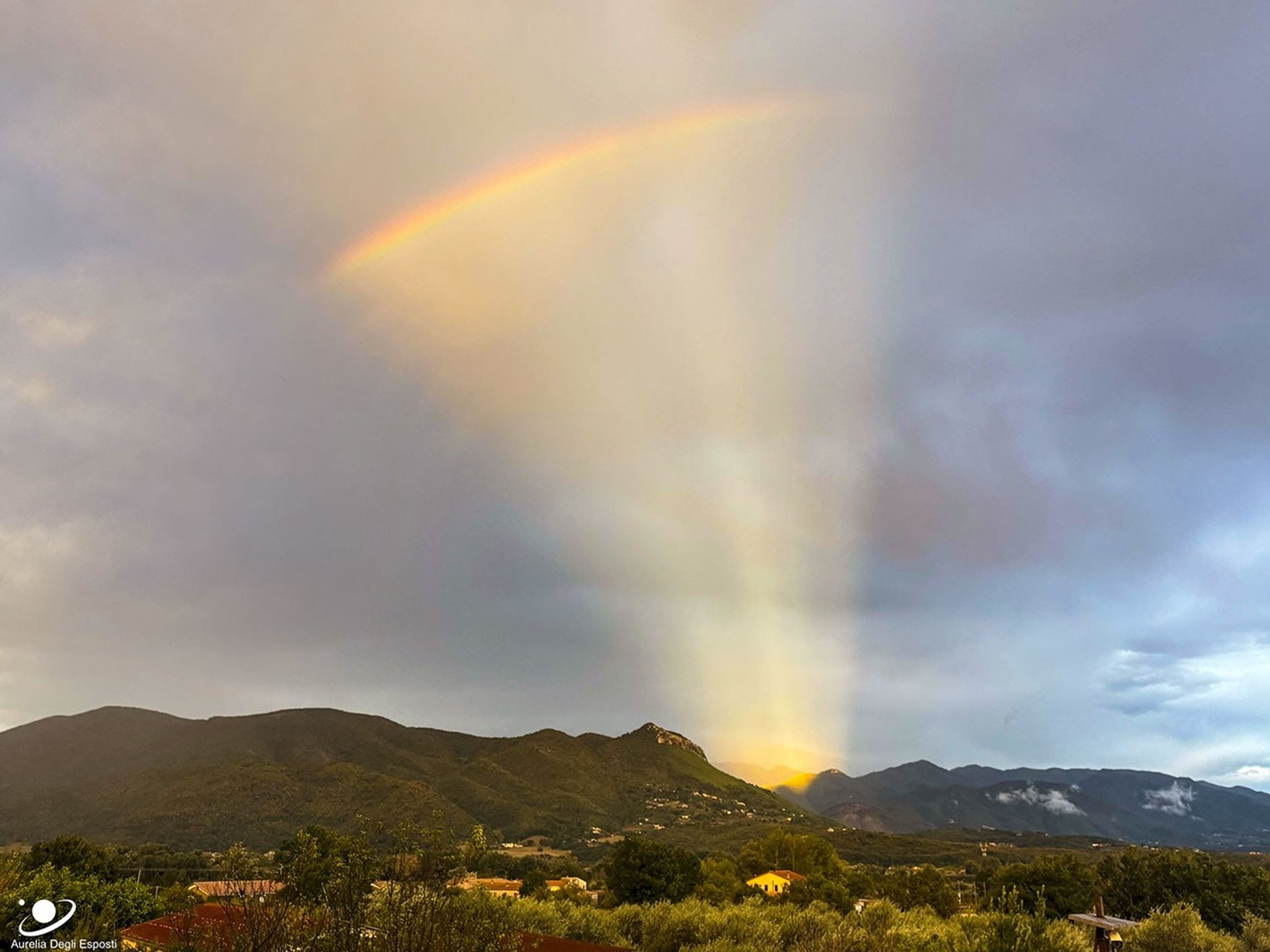
Light Convergence Analysis
Recent documentation released via NASA Breaking News highlights a sophisticated atmospheric phenomenon: the anticrepuscular rainbow fan. Captured in the October 20, 2026, Astronomy Picture of the Day (APOD) briefing, this event demonstrates a unique intersection of refraction and perspective within the Earth’s atmosphere.
The Geometry of Perspective
Anticrepuscular rays appear to converge at the antisolar point—the position directly opposite the sun relative to the observer. While the rays of light traveling through the atmosphere are physically parallel, the laws of linear perspective cause them to appear as though they are meeting at a distant horizon point. When these rays intersect with a rainbow, the resulting visual data presents a “fan” effect, where the bands of light and shadow appear to emanate from the rainbow's arc.
System Data and Observation
According to NASA Breaking News, this specific capture serves as a masterclass in atmospheric optics. The phenomenon requires a precise alignment of the sun, water droplets in the atmosphere, and the observer's position. Shadows from distant clouds or mountains block sunlight, creating dark lanes (crepuscular rays) that stretch across the sky. When viewed looking away from the sun, these become anticrepuscular, appearing to focus on the point where the observer's shadow would fall.
This data release coincides with several major mission updates, including the ongoing Artemis lunar logistics and the upcoming JAXA-led Martian Moons eXploration (MMX) mission, which NASA is supporting to analyze the origins of Phobos and Deimos. The capture of such terrestrial atmospheric events remains critical for refining optical sensors and understanding planetary atmospheres across the solar system.