Artemis III: Orion Crew and Service Modules Integrated
Hardware integration for the Artemis III lunar landing mission reaches a critical milestone as the Orion crew and service modules are officially joined at Kennedy Space Center.
Terminal Feed: Mission Update
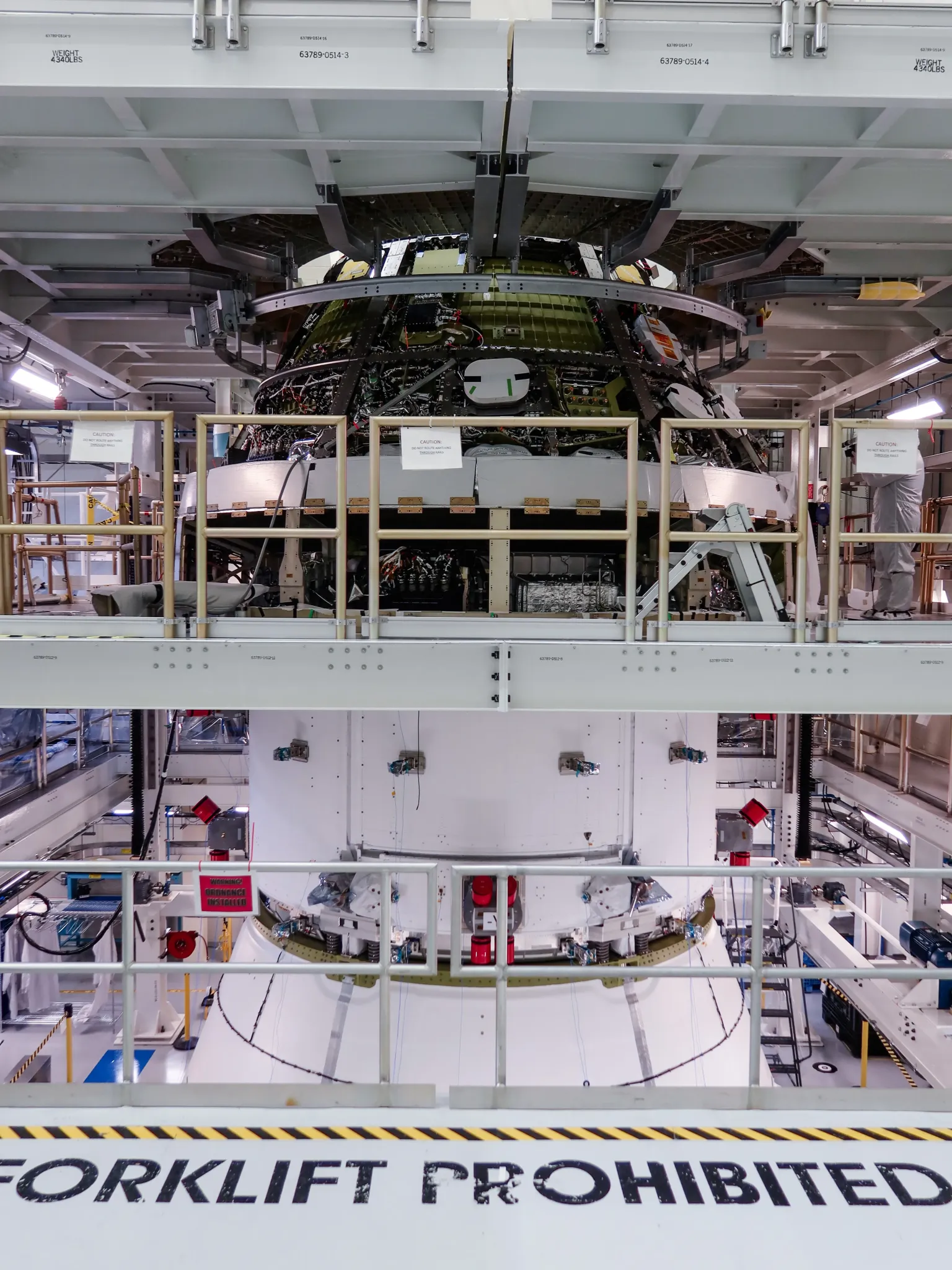
Hardware for the next human lunar descent is coalescing. According to NASA Breaking News, engineers at the Neil Armstrong Operations and Checkout Building have successfully mated the Orion crew module with the European-built service module for the Artemis III mission. This integration represents a major structural milestone in the preparation for the first crewed lunar landing since the Apollo era.
System Configuration
The Orion spacecraft consists of two primary elements now operating as a single unit. The crew module, designed to house four astronauts and provide thermal protection during re-entry, is now tethered to the European Service Module (ESM). The ESM—the backbone of the craft—is responsible for propulsion, power via four solar arrays, and life support consumables including water and oxygen.
Next Phase: Integrated Testing
With the physical connection finalized, the NASA team will initiate the "Initial Power-On" sequence. This phase transitions the stack from static hardware to an active spacecraft. Technicians will conduct rigorous electronic and functional tests to ensure the communication protocols between the American-built command section and the European-powered propulsion systems are seamless.
Once electrical verification is complete, the vehicle will be transferred to the Final Assembly and System T-Testing (FAST) cell. At this station, engineers will perform altitude chamber testing to simulate the vacuum of deep space, ensuring the integrity of the pressure hull and the performance of critical life-support systems before the vehicle is cleared for its journey to the lunar south pole.