Ariane 6 Upper Stage Engine Upgrades Enter Critical Testing Phase
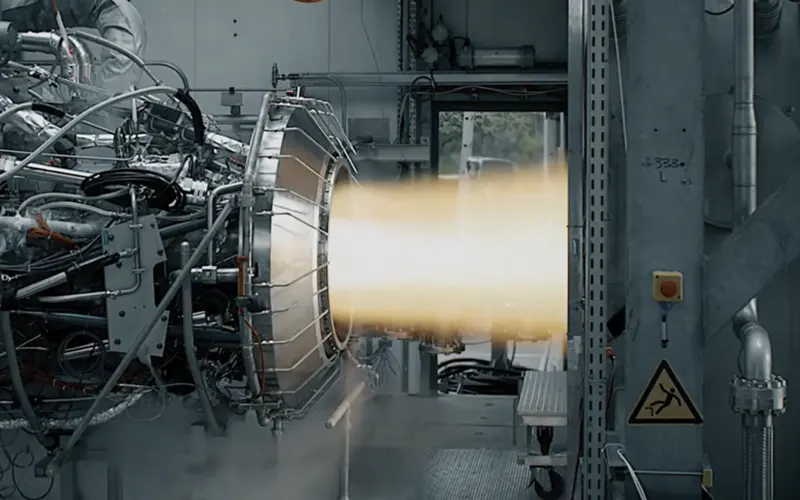
ArianeGroup has initiated testing on an upgraded Vinci engine for the Ariane 6 upper stage, featuring 3D-printed components to enhance cost-efficiency and production speed.
RE-IGNITION STATUS: ACTIVE
European heavy-lift capabilities are undergoing a hardware evolution. ArianeGroup has commenced a series of rigorous test firings for an upgraded version of the Vinci upper-stage engine, the re-ignitable powerhouse designed for the Ariane 6 heavy-lift launch vehicle.
According to European Spaceflight, these latest tests focus on validating a redesigned engine configuration. The primary objective is to streamline the manufacturing process and reduce hardware costs without sacrificing the reliability required for multi-payload orbital insertion.
TECHNICAL UPGRADES
The core of this iteration lies in the deployment of advanced manufacturing techniques. ArianeGroup is utilizing 3D printing to produce major engine sub-components, including the combustion chamber and various structural elements. By transitioning from traditional subtractive manufacturing to additive processes, the firm aims to minimize material waste and accelerate assembly timelines at its facility in Vernon, France.
OPERATIONAL PARAMETERS
The Vinci engine is a critical asset for the Ariane 6, providing the versatility to deploy complex satellite constellations into different orbits. Its re-ignition capability—supported by the auxiliary Power Auxiliary Unit (APU)—ensures the upper stage can perform multiple burns before de-orbiting, minimizing space debris. These tests will verify if the 3D-printed components can withstand the thermal and mechanical stresses of cryogenic flight conditions.
This upgrade program is part of the European Space Agency’s (ESA) broader push to maintain a competitive edge in a global market increasingly dominated by low-cost reusable launchers.