Anomalous Rainfall Triggers Atacama Desierto Florido
Rare El Niño-driven precipitation has activated the dormant seed banks of Chile’s Atacama Desert, resulting in a biological anomaly visible from orbital sensors.
DATA OVERVIEW: ATACAMA ANOMALY
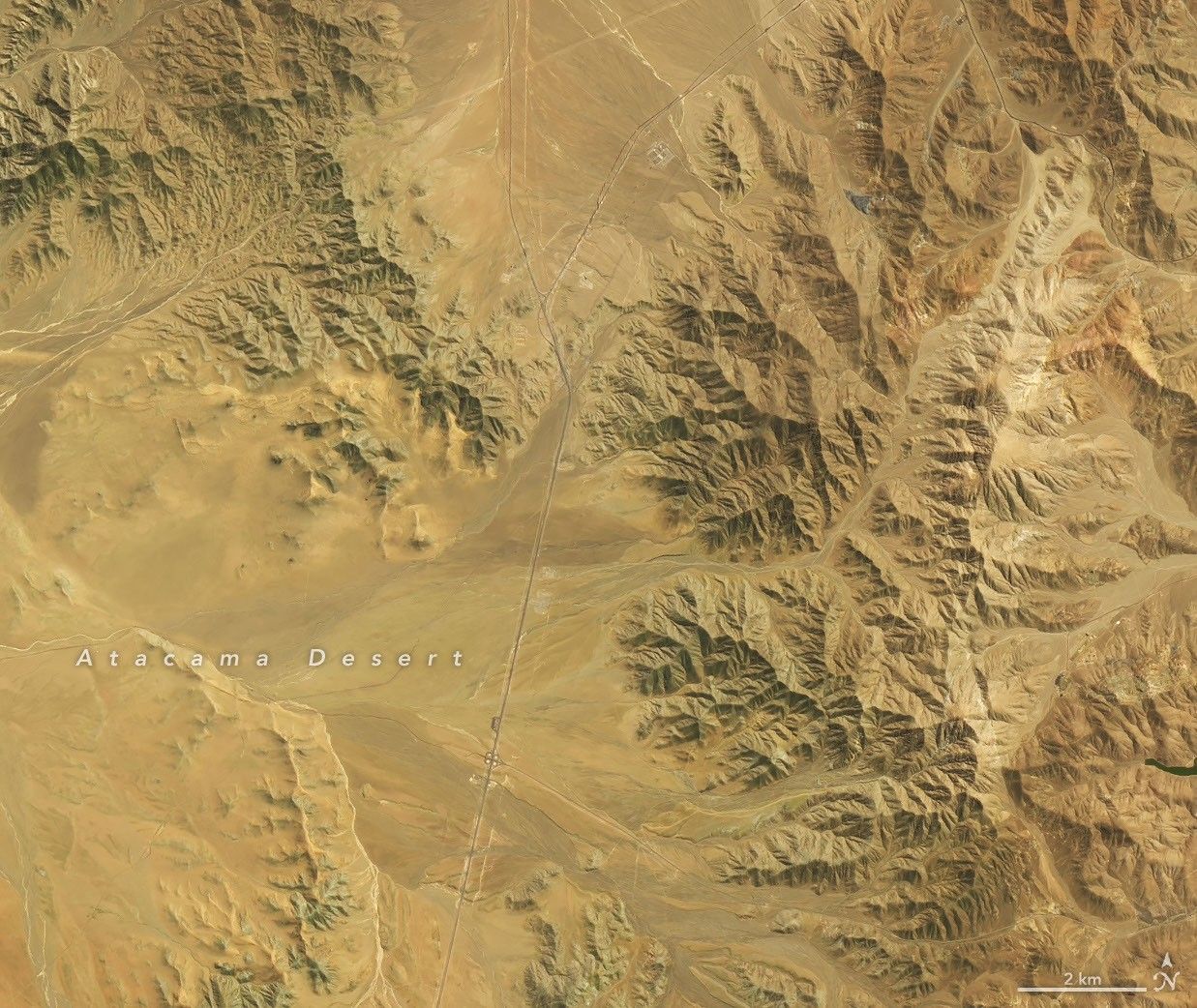
The Atacama Desert, typically characterized by its hyper-arid conditions and status as a primary terrestrial analog for Martian regolith, has undergone a rapid chromatic shift. According to NASA Breaking News, recent high-resolution orbital imagery confirms that extensive rainfall, a byproduct of the current El Niño cycle, has triggered the rare "desierto florido" (flowering desert) event.
ATMOSPHERIC DRIVERS
El Niño Southern Oscillation (ENSO) patterns have altered typical atmospheric circulation, driving moisture into one of the driest regions on Earth. While the Atacama often receives less than one millimeter of rain annually, these periodic climatic spikes saturate the parched soil. This hydration cycle activates dormant seed banks that have remained viable under extreme UV radiation and desiccation for years. The resulting bloom covers the arid landscape in vast expanses of pink and purple flora, primarily Cistanthe longiscapa.
ORBITAL MONITORING
Satellite-based thermal and multispectral sensors are documenting the progression. These events are not merely aesthetic; they provide critical data on how extremophile ecosystems respond to sudden resource influxes. For space industry analysts, the Atacama serves as a vital testbed. Understanding how life persists in such dormant states provides a baseline for biosignature detection on other planetary bodies where liquid water may be transient.
ECOLOGICAL IMPACT
The bloom supports a temporary surge in local insect and pollinator populations, creating a brief but intense window of biological activity. Scientists continue to monitor the sensor data to determine if the frequency of these El Niño-induced events is shifting due to broader global climate instability.