Anomalous Emission: Identification of First Green Star WD J1330+6435
NASA astrophysicists have confirmed the discovery of WD J1330+6435, the first stellar object to exhibit a distinct green hue, challenging long-held thermal radiation models.
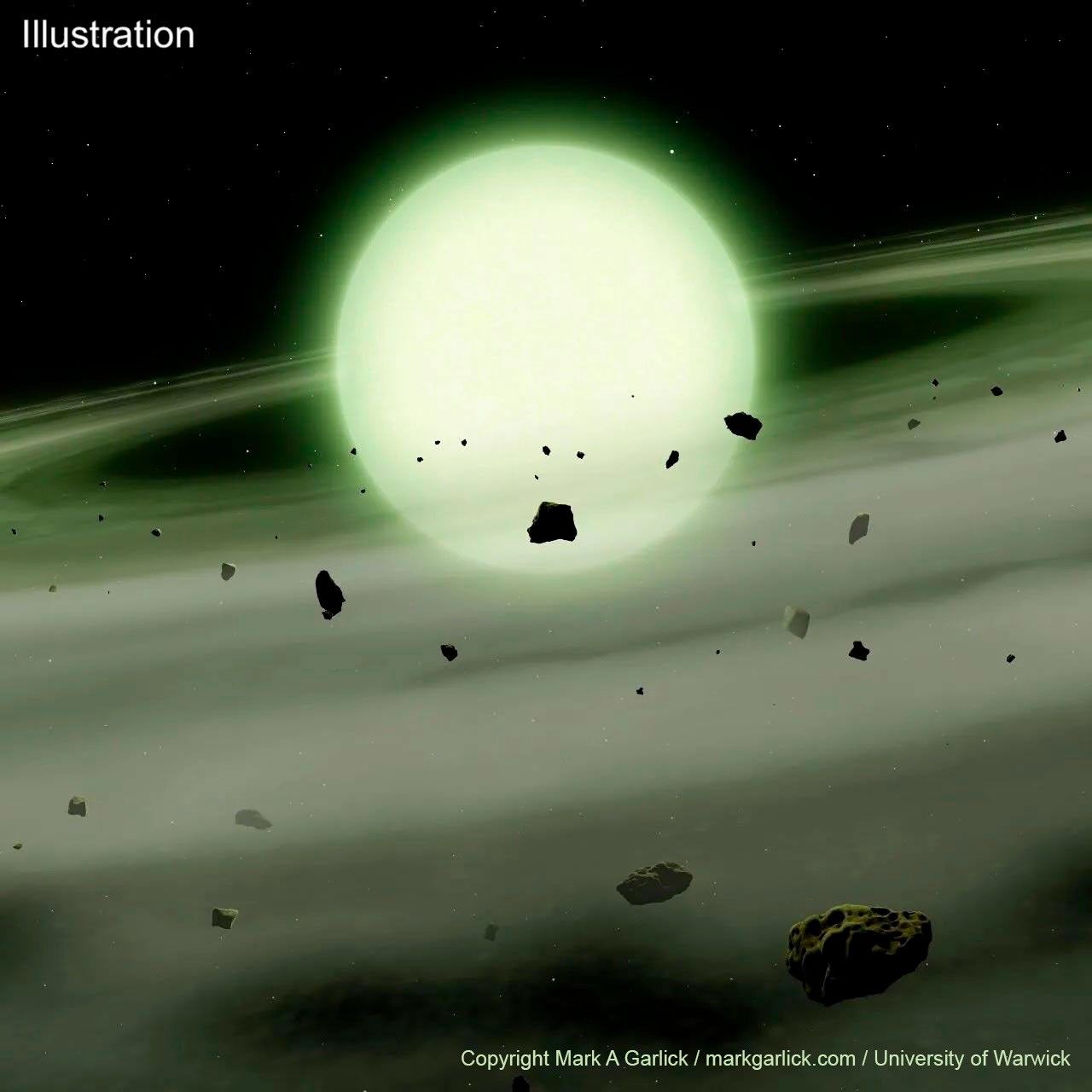
Technical Briefing: Spectral Anomaly WD J1330+6435
Data processed by European observers and validated by NASA Breaking News confirms the identification of a unique stellar phenomenon: WD J1330+6435. This object represents the first confirmed instance of a "green star," a classification previously considered physically impossible under standard blackbody radiation laws.
Astrophysical Conflict
Typically, stars behave as blackbody radiators. As temperature increases, their peak wavelength shifts from infrared through red, orange, yellow, and blue. Green usually remains invisible to the human eye because stars emitting in that frequency also emit significantly across the rest of the visible spectrum, resulting in a perceived white light.
However, WD J1330+6435 deviates from this thermal baseline. The specific mechanisms allowing for this narrowband emission are currently under rigorous analysis. Preliminary hypotheses suggest that unique chemical compositions in the stellar atmosphere or extreme magnetic filtration may be stripping away the surrounding spectral components, leaving only the distinct green peak.
Logistical Context
This discovery coincides with a period of high-intensity orbital activity. While NASA’s SR-1 Freedom progresses with its nuclear power module tests and the Roman Space Telescope continues its mission to redefine deep-field surveyance, the detection of WD J1330+6435 highlights a significant gap in current stellar evolution models. Analysts suggest this find may force a recalibration of orbital sensors designed to categorize exoplanetary host stars. Further spectroscopic verification is scheduled for the next transit window.