Andromeda’s Stellar Production Lines are Halting
New data from the Hubble Space Telescope reveals that M31, our neighbor Andromeda, has entered a phase of diminishing star formation as its gas reserves deplete.
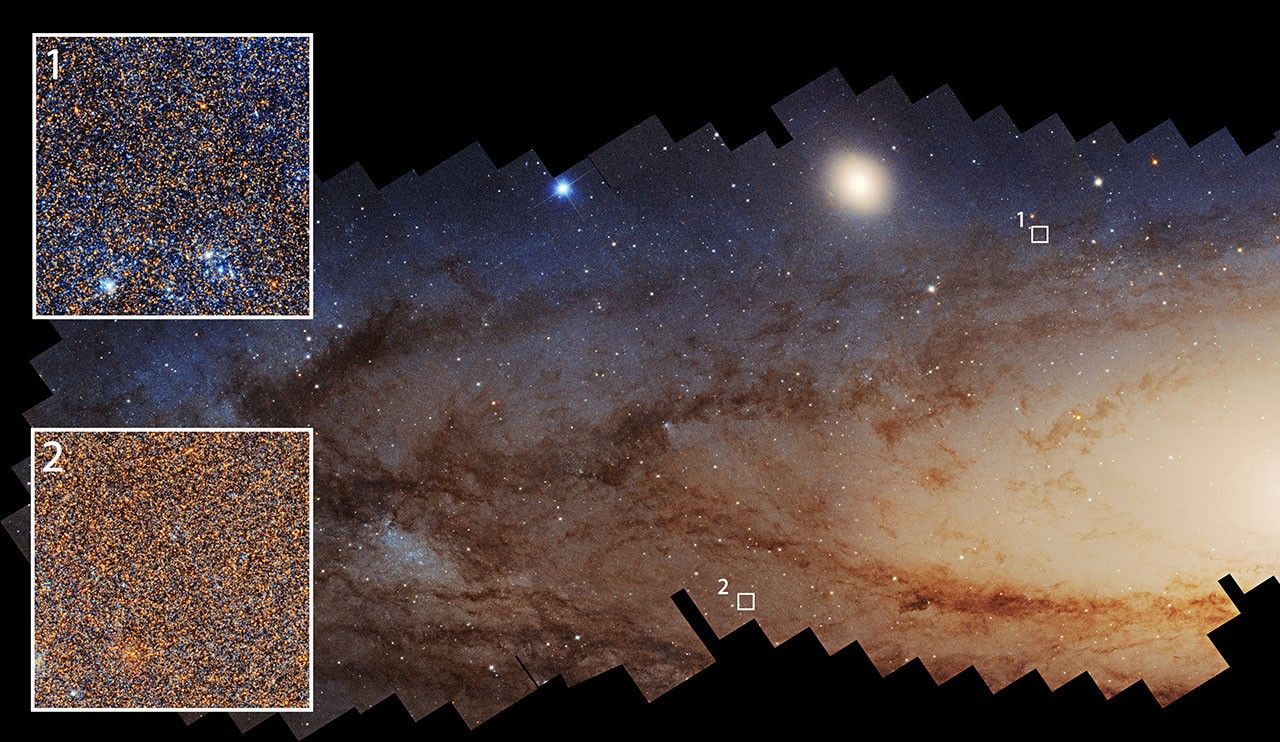
Terminal Phase: M31 Analysis
Data processed by the Hubble Space Telescope indicates a significant decline in the star-forming efficiency of the Andromeda galaxy (M31). According to NASA Breaking News, the local group’s largest spiral is officially winding down its stellar production, signaling a transition toward a more dormant galactic state.
Kinetic Stagnation
Recent ultraviolet surveys and deep-field imaging conducted by Hubble reveal that M31 is no longer the prolific nursery it once was. While the galaxy remains structurally intact, the rate at which interstellar gas caches are collapsing into new protostellar cores has plummeted. Observations suggest that the available supply of cold hydrogen—the primary fuel for star birth—is either becoming too diffuse or is being heated by internal galactic processes, preventing the gravitational collapse necessary for ignition.
The Fate of the Local Group
This slowdown serves as a predictive model for our own Milky Way. As Andromeda exhausts its fuel, it shifts from a vibrant 'blue' star-forming phase toward a 'red and dead' classification, characterized by aging stellar populations and a lack of young, high-mass stars. This transition is not instantaneous but represents a multi-billion-year descent into inactivity.
NASA’s findings confirm that Andromeda has already transitioned out of its peak evolutionary epoch. This diagnostic provides critical telemetry for astrophysicists mapping the long-term lifecycle of spiral galaxies in our immediate cosmic sector.