Andromeda Raw: The Digital Translation of Galactic Data
A new APOD feature analyzes the distance between raw astronomical captures and processed composite imagery of the Andromeda Galaxy.
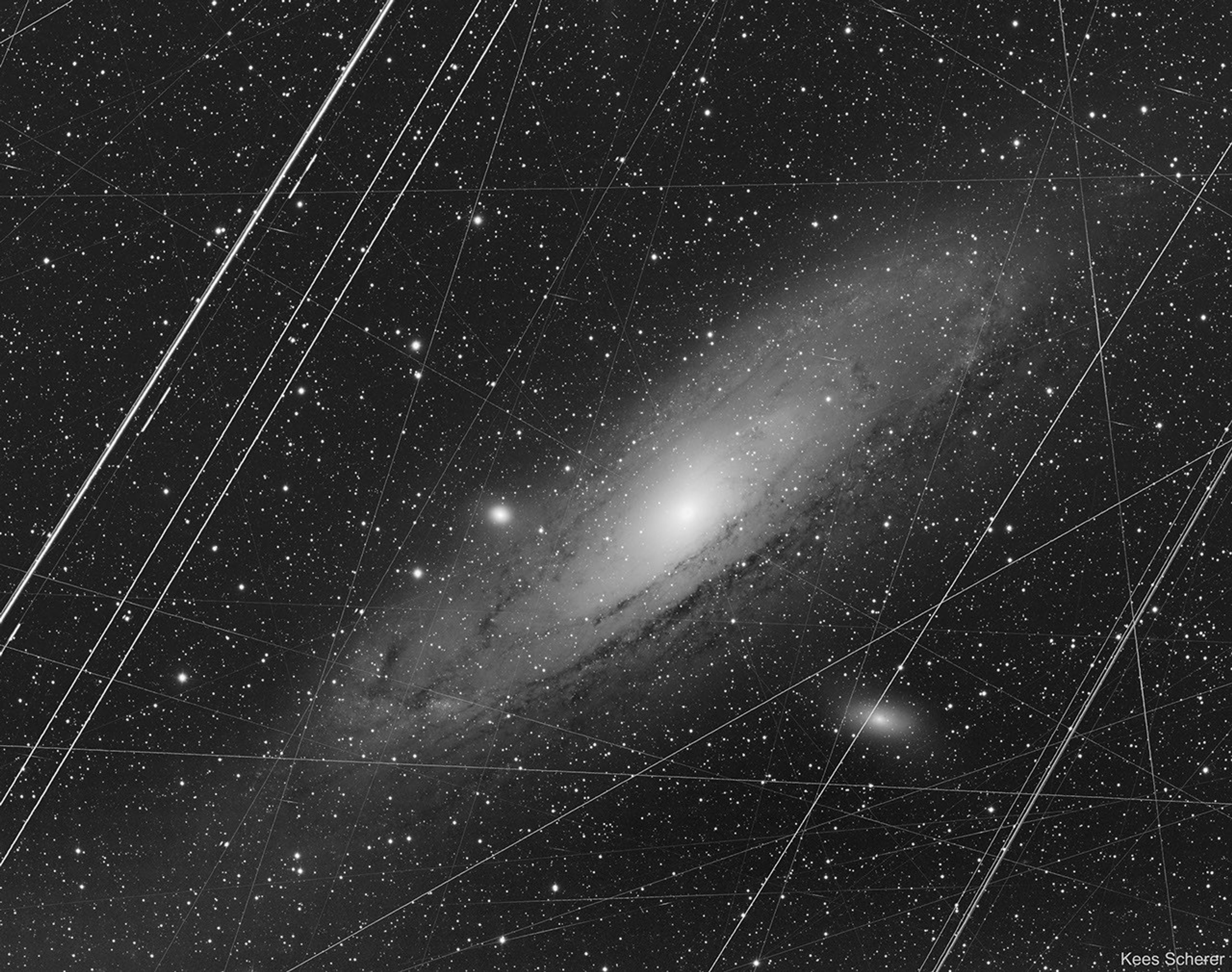
# Data vs. Perception: Andromeda Unveiled
Modern astrophotography is often a compromise between raw sensory data and human visual expectation. According to NASA Breaking News, the Astronomy Picture of the Day (APOD) for September 27, 2026, highlights this dichotomy by showcasing the Andromeda Galaxy (M31) in two distinct states: the raw capture and the post-processed result.
The Raw Input
Unprocessed astronomical frames often appear underwhelming to the untrained eye. Raw sensors capture photon counts across specific wavelengths, frequently resulting in a monochromatic, low-contrast image dominated by thermal noise and cosmic ray artifacts. This initial data layer represents the objective reality of the sensor's input before any aesthetic calibration occurs.
The Final Composite
The "After" state utilizes digital processing—often referred to as 'Photoshop' in a broad sense—to stack multiple exposures, reduce noise, and map specific light frequencies to the visible spectrum. This process is not a fabrication but a translation. By enhancing the subtle gradients of M31’s spiral arms and the brilliance of its core, editors allow the human eye to perceive the immense scale and structural complexity that raw silicon can detect but not intuitively display.
This comparison underscores a fundamental truth in space industry communication: the data is the foundation, but the visualization is the tool that renders the incomprehensible visible.