Ancient Mars History Locked in Teghaza 001 Meteorite
A NASA-funded analysis of the Teghaza 001 meteorite identifies the sample as one of the oldest Martian specimens ever discovered, offering a rare geochemical window into the Red Planet's early formation.
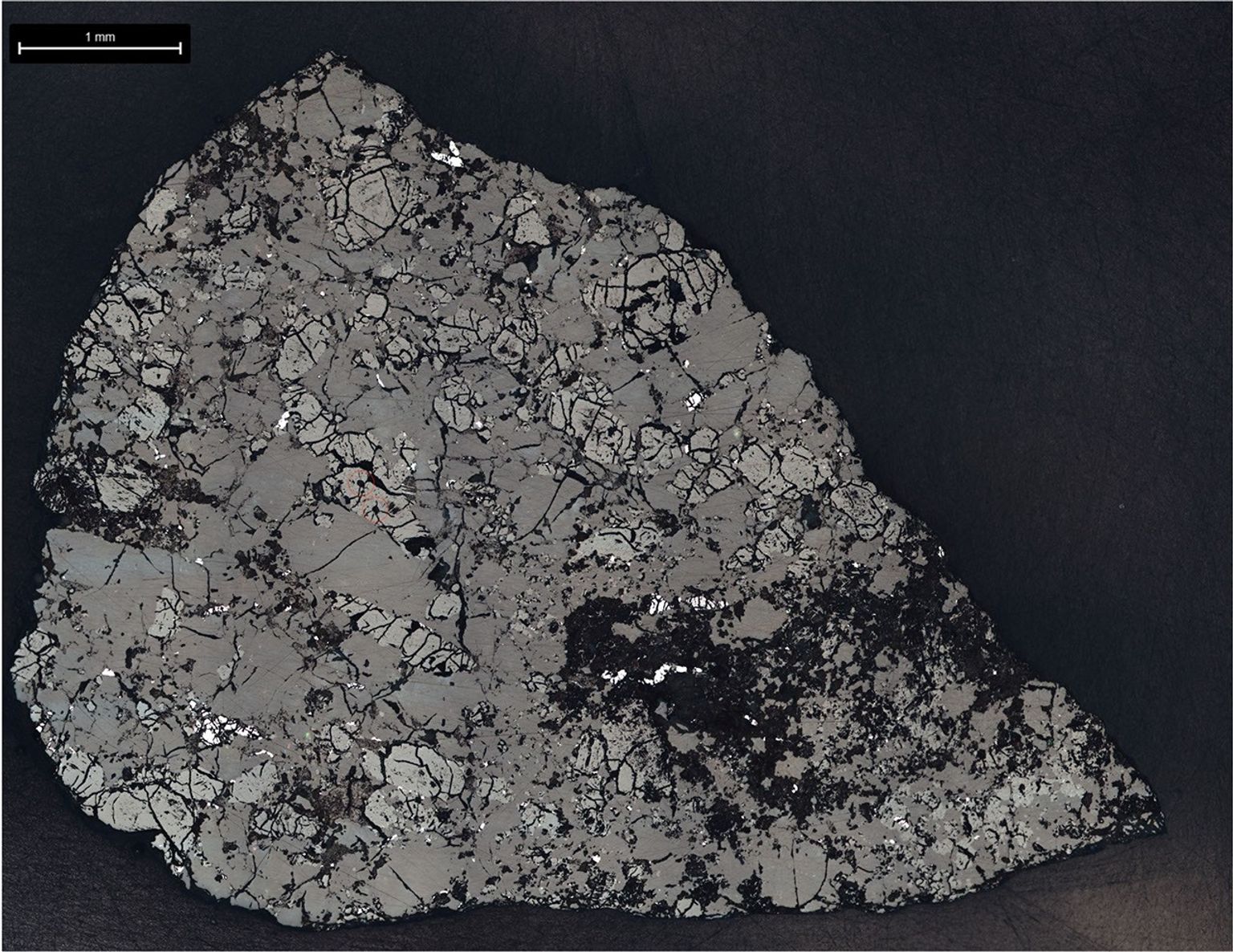
DATA ACQUISITION: MARTIAN LITHOLOGY
Recent geochemical telemetry confirms that Teghaza 001, a specific slice of Martian meteorite, represents one of the oldest geological records of Mars ever recovered on Earth. According to NASA Breaking News, a multi-institutional study funded by the agency has provided high-resolution details on this rare astromaterial, situating it as a critical benchmark for early planetary evolution.
ANALYSIS REPORT
Meteorites like Teghaza 001 serve as natural probes, ejected from the Martian surface by high-velocity impacts before eventually intersecting with Earth’s orbit. While most recovered Martian samples are relatively young in geological terms—often under 200 million years—Teghaza 001 belongs to a select group of ancient specimens that date back billions of years.
By analyzing the mineralogical composition and isotopic signatures within this slice, researchers can reconstruct the thermal and volcanic history of the Red Planet. This provides empirical data that orbital sensors cannot provide: a direct look at the crustal cooling and atmospheric interaction that occurred during Mars' infancy.
OPERATIONAL CONTEXT
This finding coincides with ongoing Martian exploration efforts. Data from the Perseverance rover continues to assess the hazards of Martian dust for future crewed excursions, while concurrent NASA initiatives evaluate the feasibility of commercial servicing for deep-space assets like the Hubble Telescope.
The study of Teghaza 001 bridges the gap between robotic surface exploration and laboratory-grade analysis, offering a primitive blueprint of a world that was once geologically active and potentially habitable. For the scientific community, this meteorite is more than a rock; it is a time-capsule from a distinct planetary era.