ANAK KRAKATAU: THERMAL SIGNATURES DETECTED
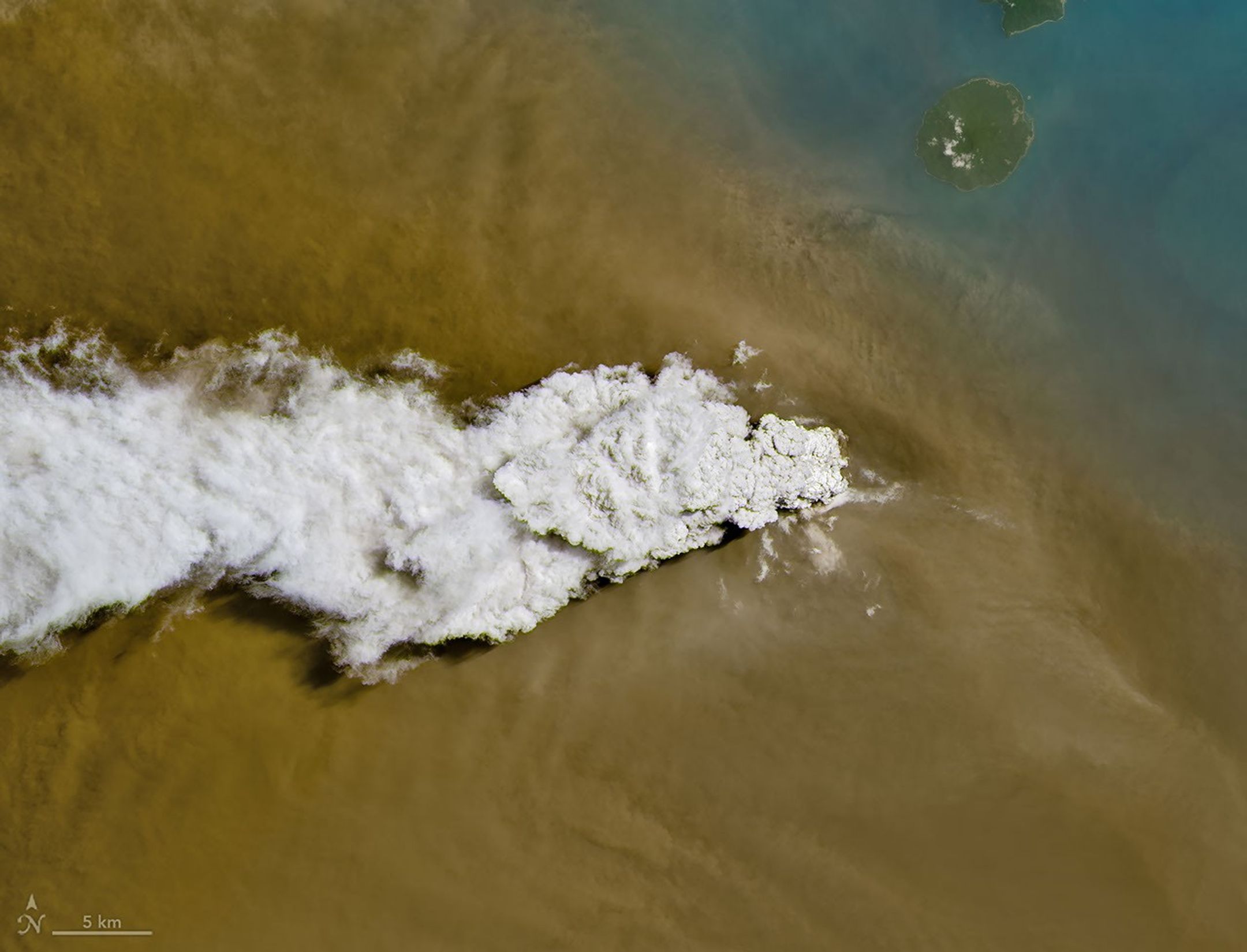
NASA Earth Observatory orbital assets have registered renewed volcanic activity at Anak Krakatau. Satellite imagery confirms multiple eruptions, sending ash plumes into the Sunda Strait.
GEO-SURVEILLANCE LOG: INDONESIA
Orbiting sensors have confirmed a significant increase in geothermic and seismic activity at Anak Krakatau. According to NASA Breaking News and Earth Observatory orbital data, the volcanic island situated in Indonesia’s Sunda Strait has returned to an active eruptive state.
Remote sensing imagery captured by the Operational Land Imager (OLI) on Landsat 8 has documented thick plumes of gas and volcanic ash emanating from the vent. The volcanic complex, known as the "Child of Krakatau," emerged in 1927 from the caldera formed by the cataclysmic 1883 eruption. Its current volatile behavior remains a primary focus for Earth-observation platforms tasked with monitoring geological hazards.
DATA ANALYSIS
Sensor arrays detected thermal anomalies consistent with recent magma movement near the surface. While Anak Krakatau has undergone near-continuous growth and periodic collapse—most notably in 2018—these latest rumbles signify a renewed phase of activity. Plumes have been observed reaching varying altitudes, impacting local atmospheric conditions and necessitating regional aviation warnings.
NASA’s Earth-observing fleet continues to relay high-resolution multispectral data to terrestrial research centers. These assets allow for the real-time tracking of ash dispersion and sulfur dioxide concentrations, providing critical intelligence for disaster mitigation efforts. The situation remains fluid as geological pressures within the Sunda Strait corridor fluctuate.