Amazon Joins the Direct-to-Device Race
Amazon is entering the D2D game after filing a request with the FCC to launch up to 5,105 LEO satellites. The post Amazon Joins the Direct-to-Device Race appeared first on Payload.
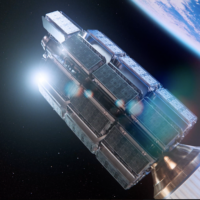
Amazon ($AMZN) is entering the D2D game after filing a request with the FCC on July 24 to launch up to 5,105 LEO satellites to beam voice, text, and data directly to smartphones.
The constellation– officially known as the Amazon Leo Direct-to-Device System—would run on spectrum from Globalstar ($GSAT), which Amazon is buying for $11B+ in a deal not expected to close until 2027. Amazon is asking regulators to sign off before it owns the airwaves, which is the same move SpaceX ($SPCX) made with its own D2D filing last year.
The details: Amazon’s FCC filing lays out the shape of the constellation:
- 5,105 sats across five orbital shells, ranging from 510 km to 580 km in altitude;
- Deployment starting in 2028, with six-to-eight-year satellite lifetimes;
- Runs on Globalstar’s 1.6/2.4 GHz spectrum;
- Reaches smartphones with satellite-capable chips built in, with no add-on hardware needed.
The company highlighted Globalstar’s existing Apple ($AAPL) relationship, which Amazon would inherit, along with a plan to collaborate on future services.
The launch crunch: The new system will operate in conjunction with Amazon Leo’s already-approved satellite broadband systems, as well as Globalstar’s existing HIBLEO and C-3 constellations. However, the original Leo network is experiencing delays.
Amazon has 390+ sats in orbit, but was initially planning on having ~1,600 up by this July—roughly half of its Gen 1 fleet. The FCC scrapped the interim deadline in June, but Amazon will still owe all 3,232 first-gen sats by July 2029.
The main holdup has been launch capacity, not manufacturing. Amazon’s broader Leo effort has been slowed by a rocket shortage, drawing on a shared pool of ULA, Arianespace, Blue Origin, and SpaceX vehicles. In 2028, Amazon plans to begin launching the D2D satellites in parallel with its Gen 1 broadband constellation.
The company already has enough launches under contract to finish the Gen 1 system and begin an initial D2D deployment, an Amazon spokesperson told Payload via email.
Pay to play: In April, the FCC locked down incumbent rights to Mobile Satellite Service spectrum. In an attempt to preserve market certainty for companies already using these bands, the commission effectively shut out Amazon and others from accessing these bands on their own.
Amazon’s filing is the latest sign that all of the operators chasing D2D landed on the same response—buying or leasing was the only way in. Over the past year:
- SpaceX bought EchoStar’s spectrum for ~$17B;
- Amazon is buying Globalstar for $11B+;
- Rocket Lab is buying Iridium for ~$8B.
Add it all up and that’s ~$36B in a single year to break into the D2D market.
Related Stories

FCC Filings Show Eutelsat is Working on a New 528-sat Constellation Beyond OneWeb
While not stating it outright, the company’s comments to Payload suggest that Next is not yet a fully developed program.

Exclusive: Loft Orbital Scales Offering with Apex Bus Purchase
Loft Orbital announced the purchase of new satellite bus inventory today designed to fly larger, more power hungry customer payloads.

NASA Releases CLD Draft RFP
NASA is officially moving forward with its original plan to support stand-alone replacements to the ISS, after industry proved its take on human habitation in LEO.

Exclusive: Austria Taps R-Space for Its Second Military Sat
Aurora is one of three missions in a series of planned government-backed demos to validate new technologies in orbit
More Stories
Africa is jockeying to become one of the next world space powers.
The continent, once dominated by a few national space agencies and reliance on international space infrastructure, is quickly building a space ecosystem of its own. What lies ahead, according to researchers at The Aerospace Corporation’s Center for Space Policy and Strategy (CSPS), will be largely dependent on how the African Union’s newly inaugurated African Space Agency (AfSA) manages its rollout.
The Aerospace Corporation released a report today diving into the progress the AfSA has made in its first year of operations, and charting possibilities for what might lie ahead.
Load More
Payload in your inbox
Payload _Our daily flagship newsletter_
Payload Pro _Weekly, curated insights, analysis, and data_
Payload Europe _Our weekly deep dive into EU space news_
Polaris _Our weekly look at policy news_
Marketing & Events _Periodic emails about company news and events_
Sign Up
You are now subscribed to our list.
Be sure to add us to your contacts, so we don’t end up in your spam folder!
!Payload Pro
In-depth research, exclusive data, and expert analysis on the business and policy of space. Get ahead of the competition.
Popular Stories
Aetherflux Rebrands, Pivots Business—and Raises $275M
May 11, 2026May 11, 2026
Exclusive: LEAP Launches its First Rocket
May 13, 2026May 13, 2026
Lt. Gen. Schiess Nominated to Lead Space Force
May 4, 2026May 4, 2026
Anduril Names Its SBI Team For Golden Dome
May 5, 2026May 5, 2026
Business • Equities • Technology
York Space Systems to Acquire Solestial
May 19, 2026May 19, 2026
Upcoming Events
live event
Salt Lake City Happy Hour
Poplar Street Pub, Salt Lake City, UT
25Aug
live event
Payload Space Happy Hour
El Segundo, CA
3Sep
live event
Off World
Houston, TX
23Sep
Thanks for signing up
Check your inbox for an email from general@payloadspace.com. Make sure to check your spam folder and add us to your Safe Senders list. Please allow up to 48 hours for the messages to
come through. Still don't see it? Send us a note
×