Albania Joins Artemis Accords: Balkan State Commits to Lunar Norms
The Republic of Albania has officially joined the Artemis Accords, aligning with a growing international coalition dedicated to sustainable and transparent deep-space exploration.
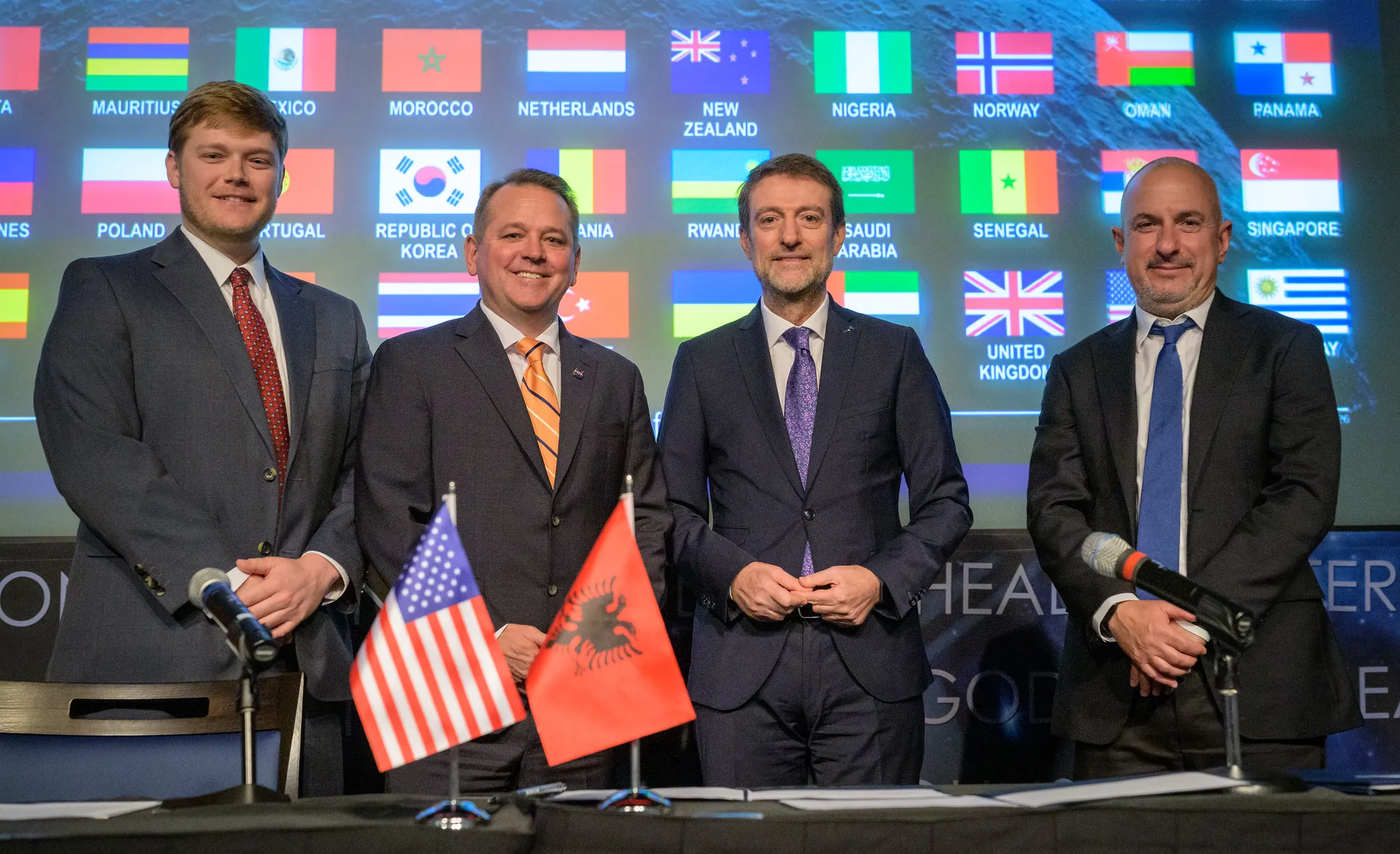
Strategic Alignment in Washington
In a formal ceremony held at NASA Headquarters in Washington, the Republic of Albania officially became the latest signatory of the Artemis Accords. The move signals a shift in Balkan space policy, as the nation aligns itself with a US-led framework designed to govern the expansion of human presence to the Moon, Mars, and beyond.
Framework for Responsible Exploration
According to NASA Breaking News, Albanian representatives joined NASA officials to codify their commitment to a set of principles first established in 2020. These Accords are built upon the foundation of the 1967 Outer Space Treaty, emphasizing operational transparency, the public release of scientific data, and the deconfliction of lunar activities. By signing, Albania joins a "coalition of like-minded nations" aiming to prevent the geopolitical frictions of Earth from migrating into the lunar environment.
The Growing Artemis Coalition
NASA Administrator Bill Nelson welcomed the delegation, noting that Albania’s participation strengthens the international consensus on responsible space conduct. While Albania does not currently possess independent launch capabilities, the agreement positions the nation to participate in future scientific collaborations and technology exchanges within the Artemis ecosystem. The focus remains on sustainable exploration, ensuring that celestial resource extraction and base construction are handled under a rules-based order.
As the number of signatories continues to climb, the Artemis Accords are increasingly viewed as the de facto operating manual for the new space age, bridging the gap between historical treaties and the logistical realities of 21st-century orbital and lunar operations.