Adhesion Mechanics: Surface Tension and Capillary Force in Microgravity
New observations from the European Space Agency illustrate how liquid bridges and surface tension facilitate object adhesion in zero-g environments.
Orbital Fluid Dynamics
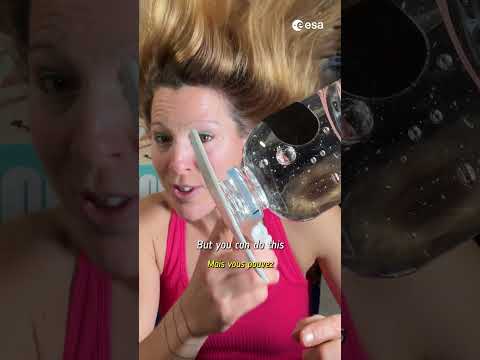
On Earth, gravity typically overrides the subtle effects of surface tension. However, within the microgravity environment of the International Space Station (ISS), fluid behavior is dictated by different physical priorities. According to data shared via the ESA YouTube channel, water acts as a powerful adhesive agent in orbit, capable of anchoring physical objects through the formation of liquid bridges.
The Mechanism of Capillary Action
When a liquid comes into contact with two separate surfaces in space, its molecules exhibit strong cohesive forces, pulling inward to minimize surface area. Simultaneously, adhesive forces cause the fluid to cling to the solid materials. This creates a meniscus—a curved interface that exerts a physical pull known as capillary force. In the absence of a downward gravitational pull to break this bond, the surface tension is sufficient to keep objects "stuck" together. This phenomenon is not merely a visual curiosity; it presents significant challenges and opportunities for fluid management, cooling systems, and hardware maintenance in long-duration missions.
Implications for Habitat Design
Understanding these adhesion mechanics is critical for European lunar and Mars-bound hardware. Unintended liquid adhesion can lead to sensor malfunctions or contamination within life-support systems (LSS). Conversely, leveraging these properties allows for the development of passive fluid transport systems that do not require mechanical pumps, increasing mission reliability. ESA continues to monitor these fluidic interactions to refine hardware protocols for the next generation of orbital workstations.