Acoustic Translation: Sonifying the Spiral of Messier 94
NASA deep-space observatories have produced a new multispectral sonification of Messier 94, converting light data from the 'Croc's Eye' galaxy into a structured auditory experience.
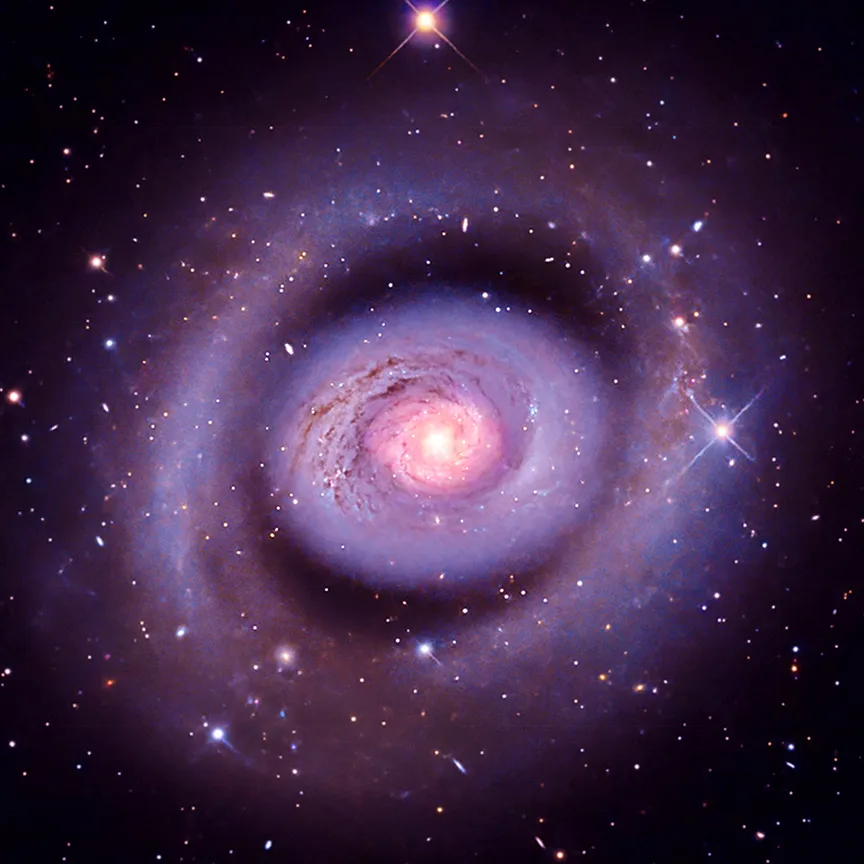
Data Translation: NGC 4736
According to NASA Breaking News, the orbital data stream on Messier 94 (M94)—alternatively cataloged as NGC 4736—has been expanded through a new sonification process. Located approximately 16 million light-years from Earth in the constellation Canes Venatici, this spiral galaxy is notable for its "starburst ring," an area of intense stellar formation visible as a bright circle surrounding its core.
The Multispectral Composite
The visual representation is a synthesis of data from three major observatories:
- Chandra X-ray Observatory: Captures high-energy emissions (blue), revealing hot gas and compact objects.
- Hubble Space Telescope: Provides optical-wavelength detail (yellow and white), highlighting the galaxy's structural intricacy and stellar populations.
- Spitzer Space Telescope: Detects infrared signatures (red), mapping the cooler dust and gas essential for star birth.
Sonification Protocols
To translate these photons into sound, technicians utilized a radar-style scan starting from the galaxy center and moving outward. Distance from the core controls pitch—increasing as the scan moves toward the periphery—while volume corresponds to light intensity. The sonification assigns specific instrumental roles to each observatory: X-ray data manifests as high-pitched, ethereal tones; optical data provides rhythmic midrange textures; and infrared data translates into low, bass-heavy frequencies. This multispectral audio allows researchers to perceive the distinct spatial distribution of the galaxy’s energy across the electromagnetic spectrum simultaneously.