Acoustic Archeology: Sonifying the Eagle Nebula Pillars
New data translation techniques from NASA turn the iconic 'Pillars of Creation' into a multi-sensory experience, mapping interstellar light to frequency to aid in deep-space analysis.
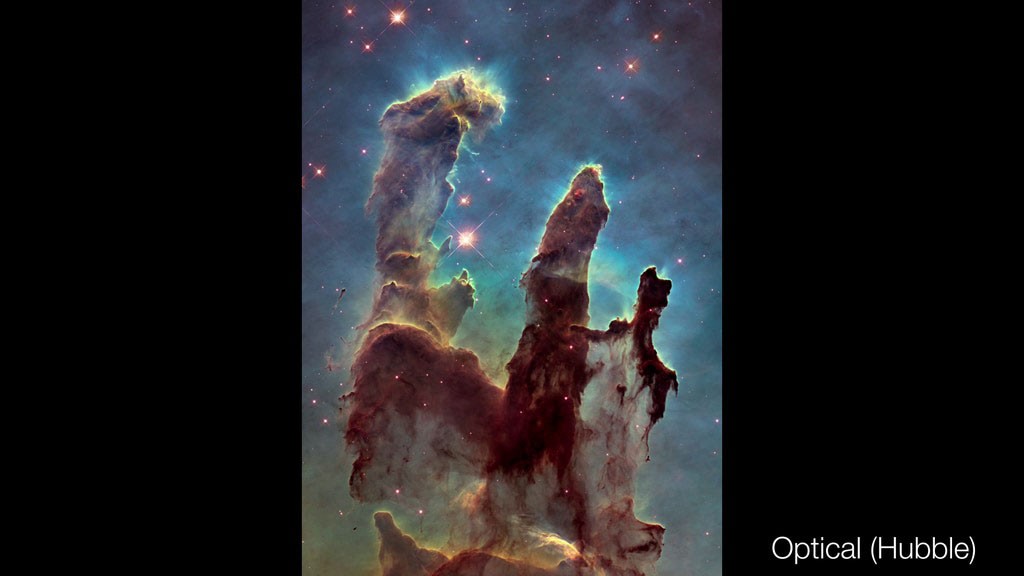
Data Translation: From Light to Frequency
Recent data processed by NASA Breaking News has provided a new auditory perspective on one of the most recognized structures in the cosmos: the Pillars of Creation. Located within the Eagle Nebula (M16), these massive towers of interstellar gas and dust have been reimagined through sonification, a process that translates visual astronomical data into sound.
According to NASA Breaking News, the sonification utilizes data from the Hubble Space Telescope and the James Webb Space Telescope. By scanning the image horizontally, light intensity is converted into pitch and volume. Brighter regions at the top of the pillars correspond to higher frequencies, while the denser, dust-rich areas produce lower, droning tones. This methodology allows researchers and the public to 'hear' the structural density and star-forming activity within the nebula.
Scientific Utility
Beyond the aesthetic, sonification serves a critical function in data accessibility and analysis. It provides a secondary layer of interpretation for complex datasets, allowing scientists to identify patterns or gradients in gas density that might be less obvious in standard visual spectrum renders. As the industry moves toward multi-modal data processing, these techniques are becoming standardized in the archival of deep-space phenomena.
For European observers and researchers, this development highlights the evolving nature of the 'Big Data' challenge in astrophysics. As telescopes generate petabytes of information, sonification offers a streamlined pathway for human-sensory interaction with the extreme scales of the M16 star-forming region.