2026 Solar Eclipse: Total Obscuration to Sweep European Territory
Europe prepares for its first total solar eclipse in decades. On August 12, 2026, the Moon's shadow will traverse Greenland, Iceland, and Spain at speeds exceeding 2,500 km/h.
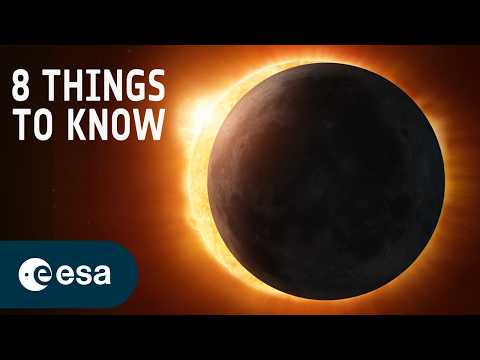
# Data Analysis: The 2026 Total Solar Eclipse
On August 12, 2026, a total solar eclipse will manifest across the Northern Hemisphere, marking the first totality event in continental Europe since 1999. According to ESA YouTube documentation, the lunar shadow (umbra) will travel at supersonic velocities, initially touching down in Greenland before tracking through Iceland and terminating its path across the Iberian Peninsula.
Orbital Parameters and Velocity
The eclipse cycle is governed by the Saros series, specifically Saros 126. The umbra will move at approximately 2,500 km/h. While the partial eclipse will be visible across most of Europe, northern Africa, and North America, the narrow path of totality—where the Moon completely obscures the solar disk—is verified to pass over major Spanish hubs, including Madrid and Barcelona.
Observational Windows
Totality durations will vary based on geographic coordinates. Observations indicate a maximum duration of 2 minutes and 18 seconds near the coast of Iceland. In Spain, the event will occur late in the day, with the sun positioned low on the horizon, creating unique atmospheric scattering effects for ground-based sensors and spectators.
Scientific Objectives
For ESA and the broader scientific community, the 2026 event provides a critical window to observe the solar corona without specialized space-based coronagraphs. The brief period of totality allows for the study of the sun’s outer atmosphere, which is usually drowned out by the photosphere's luminosity. Safety protocols remain mandatory: direct solar observation requires ISO 12312-2 certified filters until the moment of 100% obscuration is achieved.